


More news on this day
China’s peak summer travel season has been thrown into turmoil as publicly available aviation data and media coverage indicate that 4,341 flights were delayed and 120 were canceled across major Chinese hubs in a single disruptive day, snarling airport operations and leaving tens of thousands of passengers facing missed connections, overnight stays, and rapidly changing itineraries.
Get the latest news straight to your inbox!
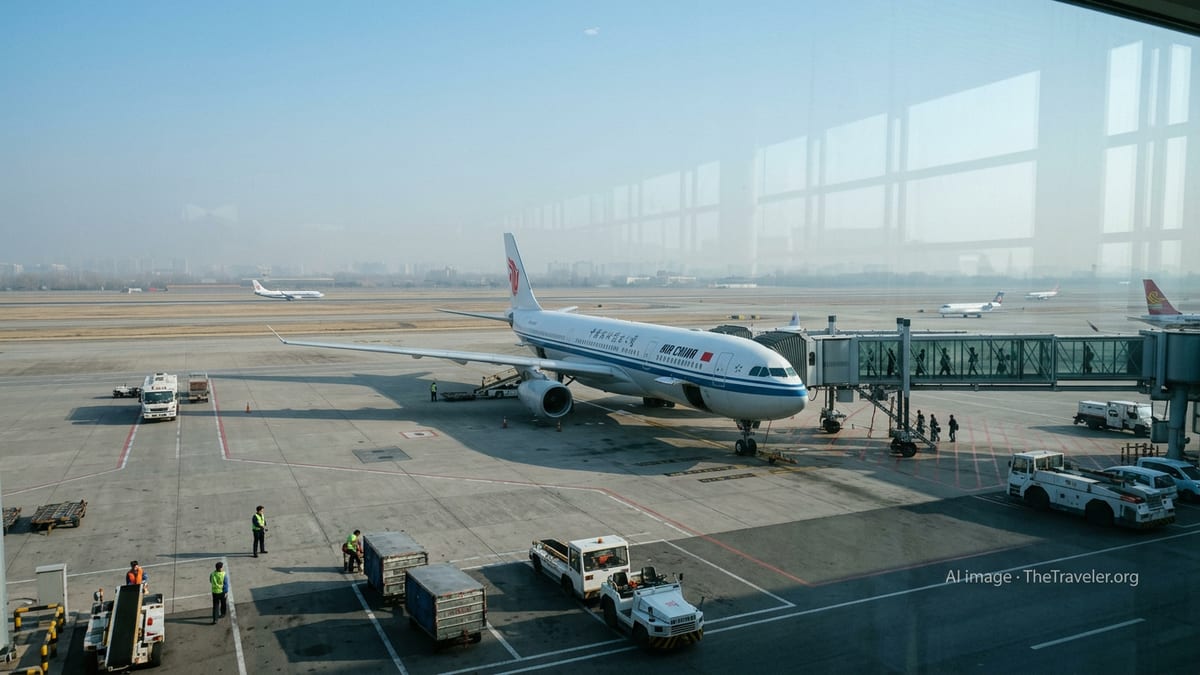
Weather, Typhoon Systems and Congested Skies Converge
Reports from Chinese and regional media point to a combination of severe summer weather, including outer rainbands from Typhoon Bavi, and already congested airspace as key drivers of the disruption. Intense thunderstorms over eastern and coastal provinces forced pilots to deviate from planned routes, while strong crosswinds and low visibility reduced runway capacity at Shanghai, Hangzhou, Nanjing and other high-traffic airports just as peak holiday travel surged.
China’s civil aviation system was already entering its busiest stretch of the year, with the summer transport season formally running from early July through the end of August. Regulators had approved aggressive seasonal schedules, expecting a further rebound in domestic and short-haul international demand. Once convective storms began to build over the Yangtze River Delta and nearby coastal regions, flight volumes that looked manageable on paper quickly overwhelmed the reduced arrival and departure slots that could be safely operated.
Air-traffic management measures designed to keep safe distances between aircraft in stormy conditions further compressed capacity. Holding patterns multiplied above major hubs as controllers spaced out arrivals, triggering a cascade of reactionary delays. What might normally have remained a localized weather event rippled rapidly through the country’s tightly interconnected network.
Major Hubs Bear the Brunt of Disruption
The most significant impacts were reported at China’s largest and most strategically important hubs, which serve as transfer points for both domestic and international itineraries. Shanghai’s two main airports, Pudong and Hongqiao, experienced extended ground delays, with departure banks pushed back by several hours and arriving aircraft diverted to secondary airports when slots ran out.
Beijing Capital and the newer Beijing Daxing airport also saw schedules skewed as aircraft and crews failed to arrive from the storm-affected east. Once planes and flight crews fell out of position, carriers struggled to restore rotations, particularly on high-density trunk routes linking Beijing, Shanghai, Guangzhou, Shenzhen and Chengdu. The high concentration of connecting traffic through these gateways meant that a single delayed inbound could disrupt multiple onward connections.
Regional airports across the Yangtze River Delta and along the southeast coast reported a mix of full-day ground stops and rolling suspensions of departures. In several cases, publicly available airport bulletins showed waves of cancellations grouped around the peak of the storm system, followed by hours of incremental resumptions as conditions slowly improved and inspection checks were completed.
Airlines Struggle With Crew and Fleet Imbalances
For airlines, the immediate challenge extended beyond bad weather itself to the secondary effects on fleet and crew availability. When early-morning flights were delayed or scrubbed, aircraft that were supposed to operate multiple legs throughout the day never reached their subsequent departure points. This created a widening gap between the day’s planned schedule and what could realistically be flown by midafternoon.
Crew duty-time limits added further constraints. Pilots and cabin crew who had already spent hours on standby or in extended tarmac queues risked timing out before they could complete their rosters. To remain within safety regulations, carriers consolidated lightly booked flights, reassigned aircraft at short notice, and in some cases left aircraft parked even after weather improved because no fresh crew was available.
According to analyses published by travel and aviation outlets, such imbalances tend to turn a weather shock into a full-day operational crisis. Once a network crosses a certain threshold of disruption, it becomes mathematically impossible to operate every scheduled flight without extensive knock-on delays. The 120 cancellations reported during this episode reflect airlines choosing to remove some services entirely in order to preserve at least partial punctuality and limit further late-night disruptions.
Passengers Confront Long Queues and Limited Options
For passengers, the numbers translated into long lines at check-in counters, customer service desks and boarding gates. With 4,341 delayed flights across the system, even relatively short pushbacks compounded into missed connections, tight transfers and uncertain arrival times. By late afternoon, terminals at the busiest hubs were crowded with travelers seeking new itineraries or searching social media and airline apps for updates.
Rebooking options were constrained by the very nature of peak season. Most remaining seats on later flights were already heavily booked, leaving little slack in the system to absorb disrupted travelers. Some passengers were shifted to late-night or early-morning departures, while others were offered seats for the following day. Those with complex international connections faced particular difficulties when onward segments from third-country carriers were affected by missed arrival windows in China.
Publicly available consumer guidance from travel rights organizations emphasizes that compensation and hotel coverage often depend on whether disruptions are classified as weather-related or operational. In this event, the mix of severe weather and network constraints created a patchwork of eligibility, adding to passenger frustration as travelers on different itineraries experienced different outcomes at the service desk.
What the Crisis Reveals About China’s Aviation System
The scale of the disruption has intensified scrutiny on how China’s aviation system is balancing rapid capacity growth with resilience. Before the current summer season, civil aviation authorities had highlighted plans for thousands of additional weekly flights, new domestic routes and a steady rebuild of international connectivity. The day of 4,341 delays and 120 cancellations suggests that, under stress, the system remains vulnerable to bottlenecks at a handful of core hubs.
Aviation analysts quoted in open reports note that China’s controlled airspace structure leaves relatively little room for flexible rerouting when storm systems sit over key corridors. When combined with dense schedules and strong pent-up demand, this limited flexibility can quickly translate into grounded aircraft and stranded passengers. Suggestions that have surfaced in public commentary include greater use of dynamic scheduling, more conservative slot allocations during known weather risk periods, and faster deployment of contingency crews.
In the near term, the episode is likely to influence how airlines and regulators plan for the remainder of the summer peak. Carriers may adjust timetables around chronically congested time windows, while airports continue investing in apron space, de-icing and weather monitoring tools to shorten recovery times after storms. For travelers, the latest crisis serves as a reminder that even in an era of rapidly expanding connectivity, a single day of extreme conditions can still bring one of the world’s largest aviation markets close to a standstill.