


More news on this day
At least five people were killed and five others injured when a cargo jet operating for Amazon overran a runway at Miami International Airport, crashed through the airport perimeter and struck several vehicles on a nearby road, according to multiple news and aviation reports.
Get the latest news straight to your inbox!
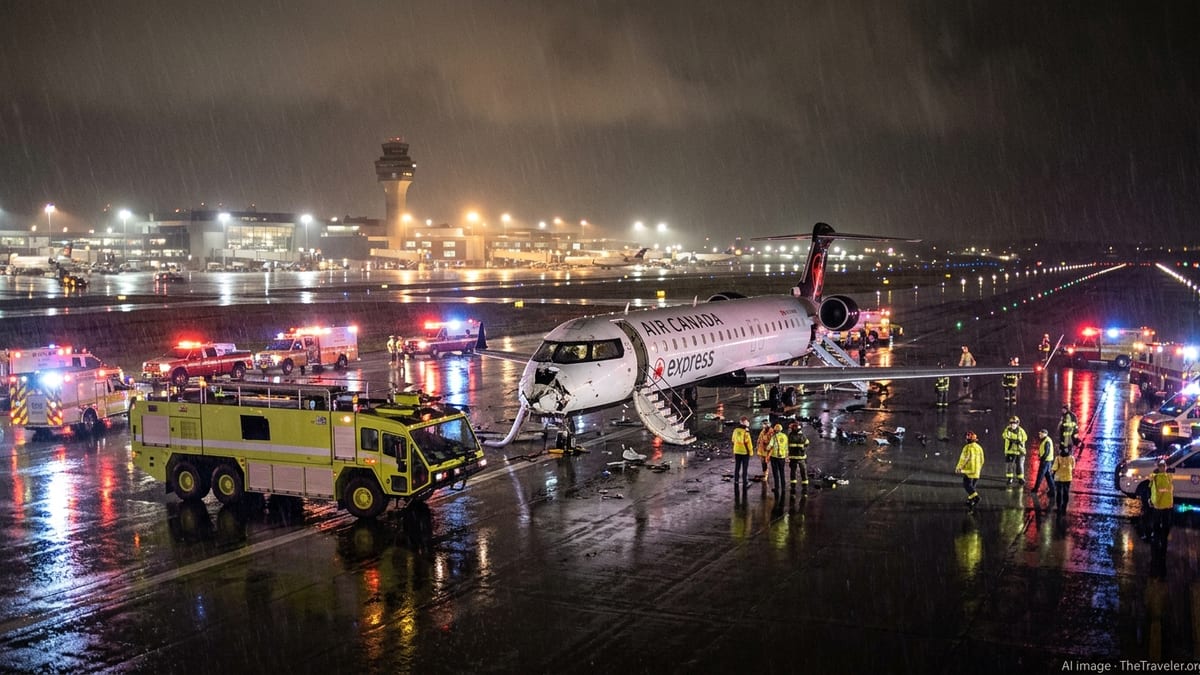
Runway overrun sends jet through fence and onto service road
Published coverage indicates the incident occurred on Sunday afternoon, September 6, 2026, when a Boeing 767-300 freighter arriving at Miami International Airport failed to stop on landing and continued beyond the end of the runway.
Reports describe the aircraft barreling through the runway safety area and breaching a perimeter fence before crossing a service road adjacent to the airport. The jet then struck multiple vehicles, came to rest tipped forward on its nose and was rapidly engulfed in fire, with thick black smoke visible for miles around the busy hub.
Miami-Dade emergency officials reported that at least five people were killed in the crash and five others were transported to local hospitals. Early summaries from local outlets indicate that the fatalities occurred primarily in vehicles on the ground, while the number of crew members onboard and their conditions were still being clarified in the hours after the crash.
Accident footage shared on social media and compiled by local broadcasters shows the cargo jet landing long and fast before overrunning the paved surface, highlighting how quickly the situation unfolded. More than 60 fire and rescue units were dispatched as the scale of the emergency became clear.
Ground traffic caught in the path of the overshooting jet
According to local news coverage and aviation-focused reports, the 767’s trajectory after leaving the runway took it across airport infrastructure and onto an area used by nearby road traffic. Several cars and light trucks were struck or dragged as the aircraft plowed forward, with at least one vehicle reported to have been trapped beneath part of the fuselage or engine.
Publicly available information from Miami-Dade Fire Rescue indicates that technical rescue teams were required to free at least one person from underneath a vehicle. Images from the scene show burned-out cars amid foam and debris, underscoring how the overrun extended far beyond the airport boundary and into an active ground corridor.
Witness accounts compiled by local media describe a chaotic scene as drivers on the adjacent roadway suddenly found an aircraft crossing their path. Several videos filmed from nearby buildings and vehicles captured the moment the jet left the runway and the immediate aftermath, when the burning aircraft came to rest just short of a cluster of airport support buildings.
The unusual path of destruction, cutting across a service road outside the airfield, has renewed questions in the aviation community about the layout of land at the ends of major runways and the protections in place for people using roads and facilities just beyond airport fences.
Miami International operations disrupted but gradually resume
The crash triggered an immediate ground stop at Miami International Airport, one of the busiest air hubs in the United States and a critical cargo gateway for Latin America and the Caribbean. Flight tracking data and airport statements cited in news reports show that arrivals were diverted and departures temporarily held while fire crews worked the scene and safety checks were carried out.
Several runways remained open during the response, but congestion and delays rippled through passenger operations as controllers rerouted traffic around the accident area. Airlines serving Miami warned travelers to expect disruptions and urged them to monitor updated schedules as the evening progressed.
Cargo operations were also affected, given Miami’s role as a major freight hub and the accident’s involvement of a cargo carrier operating on behalf of Amazon’s Prime Air network. Logistics analysts quoted in industry coverage noted that the impact on overall freight flows is likely to be temporary, but that some regional deliveries and overnight shipments may face delays as operators adjust routing and capacity.
Airport officials have indicated through public postings that cleanup and initial repairs near the runway end and affected roadway could take several days, during which some taxiways and ground access routes may remain closed or restricted.
Investigators focus on landing, weather and runway conditions
Federal accident investigators and aviation safety specialists are now assembling a detailed timeline of the flight’s final approach, touchdown point and braking performance. Early assessments referenced in national and local coverage indicate that conditions at the time were consistent with typical late-summer South Florida weather, though officials have not yet ruled out rain-slicked pavement or shifting winds as potential contributing factors.
Analysts following the case note that investigators will examine whether the aircraft crossed the runway threshold too high or too fast, landed farther down the strip than planned, or encountered a loss of braking efficiency. The performance of thrust reversers, spoilers and anti-skid systems, as well as the crew’s decision-making during the approach, will be central lines of inquiry.
Attention is also expected to focus on the design and maintenance of the runway end safety area and the terrain beyond the pavement. Aviation safety organizations have long advocated for engineered materials arresting systems or additional buffer zones to help stop overrunning aircraft before they reach public roads or buildings. The extent to which such protections were present at this particular runway end is likely to feature prominently in the final report.
Investigators will additionally review the airline operator’s training practices, fatigue management and standard operating procedures, especially given that the jet was flying a nighttime or late-evening cargo rotation into a high-traffic hub where runway excursions, while rare, can have outsized consequences.
Questions for cargo safety and communities near airports
The Miami crash has reignited discussion about the growth of e-commerce cargo operations and the safety footprint of large freighter aircraft operating at airports closely bordered by highways, rental car centers and commercial districts. Communities near major hubs have increasingly raised concerns about what happens when a runway overrun or other emergency spills beyond traditional airport boundaries.
Travel and aviation experts point out that while serious runway overruns involving widebody jets are infrequent, their consequences can be severe when aircraft encounter populated areas beyond the fence. The fatalities in vehicles near Miami International illustrate how people with no connection to a flight can be drawn into an aviation disaster simply by being in the wrong place at the wrong time.
For travelers and airport-area workers, the incident is a stark reminder of the dense, overlapping use of land around busy hubs. Rental car facilities, hotel shuttles, rideshare staging zones and local commuters often operate within sight of runway thresholds, relying on layers of engineering and procedural safeguards that, in most cases, prevent accidents from reaching them.
In the coming months, findings from the Miami investigation may inform new recommendations on runway safety areas, road alignments and emergency planning near large airports worldwide, influencing how cities balance aviation growth with the safety of those who live, work and drive in the shadows of major runways.