


For frequent private flyers who want more control and consistency than ad hoc charter, Flexjet is often one of the first names to come up. The company positions itself as a premium alternative in the fractional ownership and jet leasing space, with a modern fleet and its signature Red Label service. But is Flexjet the right solution for your travel profile and budget? The answer depends heavily on how often you fly, where you go, and what you value most in the private aviation experience.
Get the latest updates straight to your inbox!
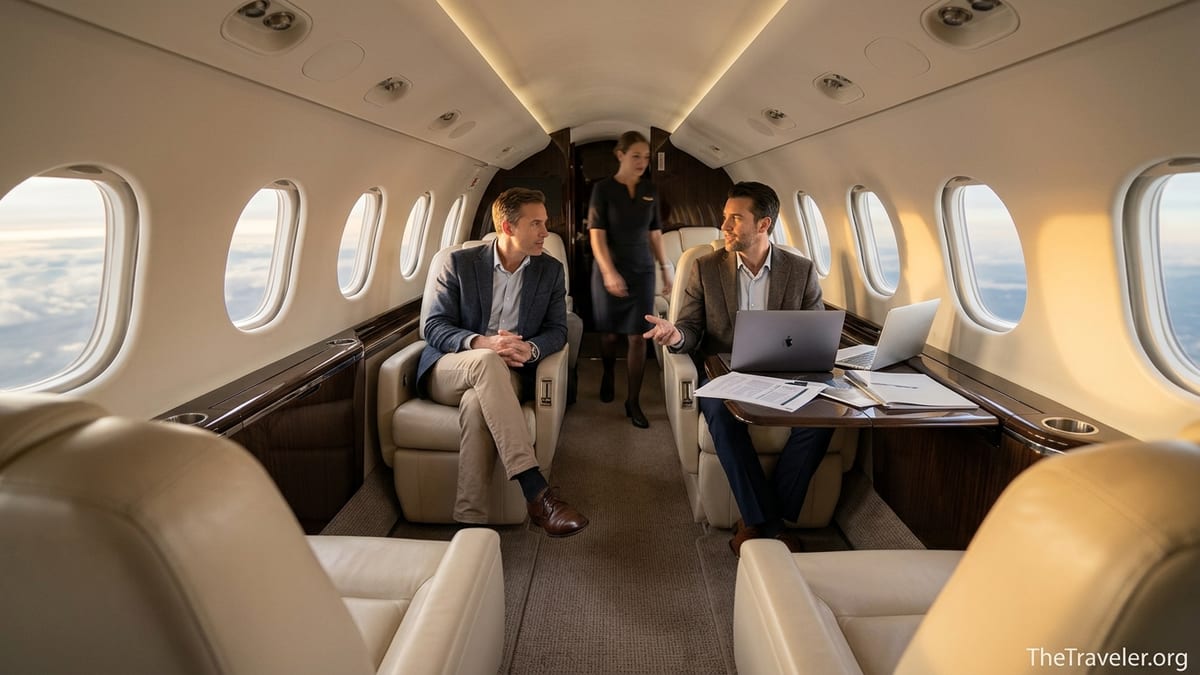
What Flexjet Is and Who It Suits Best
Flexjet is a private aviation company focused on fractional jet ownership, jet leasing, and jet card-style access, with additional helicopter options in some markets. In practice, that means you can buy or lease a share of an aircraft in Flexjet’s fleet and then fly a set number of hours each year, with the company handling crewing, maintenance, and operations. For travelers who typically fly between 50 and 200 hours annually, this model can offer more predictability and control than chartering each trip.
Flexjet particularly appeals to business owners, C-suite executives, and high-net-worth individuals who need frequent, short-notice travel on similar routes. For example, a New York–based private equity partner commuting weekly to portfolio companies in Chicago, Atlanta, and Dallas may see value in owning a 1/8 or 1/4 share of a super-midsize jet such as a Praetor 600, locking in predictable access and cabin standards. Families who split time between homes in cities like Los Angeles and Aspen, or London and the South of France, also use Flexjet to avoid the variability of the charter market.
On the other hand, travelers who only fly privately a few times a year, or who have highly irregular patterns, may find Flexjet’s commitment and cost structure excessive. For someone who books one or two long-haul leisure trips each year, a reputable charter broker or on-demand membership platform often offers more flexibility without long-term obligations.
Key Advantages of the Flexjet Model
One of Flexjet’s strongest selling points is its focus on fractional ownership and leasing rather than operating primarily as a pure charter broker. When you own or lease a share in a specific cabin class, you gain priority access to that category of aircraft, along with contractual guarantees such as maximum call-out times and fixed hourly rates for the term of your agreement. This can be a major advantage over fluctuating charter prices, especially on high-demand dates around major events or holidays.
Another advantage is the breadth and modernity of Flexjet’s fleet. The company operates aircraft such as the Embraer Phenom 300 light jet, Praetor 500 and Praetor 600 super mids, and large-cabin Gulfstream models like the G450 and G650, along with helicopters in some regions. In practical terms, this allows a regular flyer to choose the right aircraft for the mission: a Phenom 300 for short hops like Miami to the Bahamas, a Praetor 600 for cross-country routes such as Los Angeles to New York, and a G650 for nonstop flights like New York to London.
Flexjet’s Red Label concept is another differentiator on the pro side. Red Label aircraft have dedicated flight crews and custom interiors, with cabin designs that are distinct to each tail number rather than a uniform corporate look. For a traveler who wants to feel like they are stepping into “their” jet each time, with familiar pilots and cabin attendants, this can create a more personal, almost whole-ownership experience, even though you technically own or lease a fraction.
For some owners, the ecosystem around Flexjet also matters. The parent group is affiliated with other aviation brands that cover jet cards, charter, and aircraft management. While each offering is separate, this network can make it easier to scale up or down in how you access private aviation over time as your travel patterns or financial situation change.
Flexjet Pricing: What Flyers Really Pay
Flexjet, like other top-tier fractional providers, does not publish a simple price list, and exact numbers vary with aircraft type, share size, and contract terms. That said, real-world examples shared by prospective and current owners provide a sense of the ballpark costs. For a super-midsize jet such as the Praetor 600, some flyers report all-in occupied hourly rates in the low five figures in U.S. dollars, often in the range of roughly ten thousand to eleven thousand per hour, once base rate and fuel components are combined. Actual numbers will depend on when you sign, fuel pricing, and any incentives.
Beyond hourly rates, fractional ownership involves an upfront acquisition cost. For a 1/8 share, which typically gives you about 100 flight hours per year, that capital outlay will typically run into seven figures for current-production super-midsize or large-cabin aircraft, with a contractual term often around five years. At the end of the term, your share is usually sold back under a defined formula. Leasing eliminates that equity purchase but replaces it with higher monthly fees and no residual value at the end.
In addition to hourly charges, owners pay monthly management fees that cover fixed costs such as hangar, insurance, crew salaries, and administration. For a business traveler flying 100 hours a year, the combined effect can put annual spend solidly into the mid- to high-six-figure range, especially on larger aircraft. For example, a company using a 1/8 share in a Gulfstream G450 for coast-to-coast trips might reasonably expect total annual costs, including acquisition amortization, to approach or exceed one million dollars depending on how intensively they fly.
By comparison, on-demand charter pricing for similar aircraft can look attractive on paper for low utilization, especially if you are flexible on exact aircraft vintage and operator. However, once you cross a threshold of roughly 50 to 75 private flight hours per year, the predictability of Flexjet’s fixed rates and guaranteed access can outweigh the apparent savings of chasing one-off charter quotes, particularly during peak periods like Christmas week or international sporting events.
Service Experience and Operational Strengths
Flexjet’s service experience is built around consistency and high-touch support. Owners typically interact with a dedicated account manager and owner services team that handles everything from flight bookings to ground transportation. For a frequent flyer juggling multiple itineraries, this single point of contact can be a meaningful advantage over booking each trip through different charter brokers or apps.
The Red Label program heightens that experience by assigning dedicated crews to specific aircraft. That means you are more likely to see the same pilots and cabin attendants on recurring routes, such as a weekly shuttle between Teterboro and West Palm Beach. Over time, crews can learn your preferences, from preferred catering brands to exact cabin temperature and work setup, making each trip feel more seamless and tailored.
Operationally, Flexjet’s scale and fleet depth can be another strength. With hundreds of aircraft in service across multiple cabin classes, the company is better positioned than smaller boutique operators to recover from disruptions. If a jet develops a maintenance issue before your flight from Dallas to Napa, for example, a large provider has more options for substituting another aircraft of similar size and range to avoid cancellation.
It is important to note that, as with any large operation, experiences can vary. Some travelers praise the consistency and attentiveness, while others report occasional frustrations such as schedule changes, peak-day restrictions, or aircraft swaps into different models than originally requested. In general, feedback from regular users suggests that service is strongly competitive at the top end of the market, but managing expectations around peak travel dates and aircraft type guarantees is crucial.
Limitations, Risks, and Common Complaints
Despite its strengths, Flexjet is not without downsides. The most obvious is financial commitment. Whether you buy a fractional share or sign a multi-year lease, you are locking yourself into a long-term relationship with a specific provider and aircraft category. If your business is sold, your travel pattern changes, or you simply decide you want to switch to another provider, exiting early can be complex and potentially costly.
Another limitation is that, although Flexjet’s fleet is modern relative to many charter options, you are still sharing access with a pool of other owners. On high-demand days such as the Sunday after Thanksgiving or during major events like the Super Bowl, you may encounter additional peak-day surcharges, booking restrictions, or slightly longer call-out windows. A New York–based family hoping to add a last-minute return from Vail right after a holiday weekend might find that availability is tight or comes with extra fees.
Some prospective owners also express concern about cost transparency. Because fractional contracts involve multiple components, including acquisition price, hourly rate, fuel adjustments, and management fees, it can be challenging to compare apples to apples against a charter quote or a competitor’s program. Travelers on online forums often share detailed offers they have received from Flexjet and rivals in an attempt to benchmark programs, highlighting just how nuanced the evaluation can be.
Finally, while Flexjet’s scale is generally a strength, it can mean a more structured experience than working with a very small operator or full aircraft management company. Flyers who prefer complete control over every operational detail, from crew selection to interior customization beyond standard options, may still gravitate toward whole aircraft ownership or ultra-boutique operators even if the cost is higher.
How Flexjet Compares to Other Private Aviation Options
When deciding whether Flexjet is right for you, it helps to compare it directly with alternatives such as NetJets, Vista group brands, and pure charter solutions. NetJets is arguably Flexjet’s most direct competitor in the fractional space, with a long-established program and similarly broad fleet. Many prospective owners solicit proposals from both companies for the same aircraft category, such as a super-midsize jet, and then compare all-in hourly rates, management fees, and contract terms line by line.
One real-world example discussed among private flyers is using a large-cabin share as a way to buy “more hours” via downgrades. A traveler might purchase a 1/8 share of a Gulfstream G450 to secure the ability to fly transcontinental or transatlantic when needed, then downgrade a portion of those hours to smaller jets like the Praetor series or Phenom 300 for shorter missions. The cost formulas can effectively turn 75 hours in a large-cabin jet into well over 100 hours of flying in smaller aircraft, which is attractive for families or businesses with a mix of long- and short-haul trips.
Compared with Vista’s membership and lease offerings, Flexjet’s model tends to emphasize ownership-style commitment and Red Label’s more personalized service, while Vista often leans more heavily on flexible membership and charter access across brands such as XO and VistaJet. Travelers who prefer not to commit capital upfront and who value maximum global flexibility may look more closely at those “asset-light” solutions, while those who value equity, tax considerations, and a feeling of “their own” aircraft gravitate to Flexjet.
Versus straightforward charter, the trade-off is primarily between flexibility and predictability. A tech founder who occasionally needs to fly San Francisco to Austin for investor meetings might stick with on-demand charter to avoid fixed costs, especially if their calendar is uncertain. In contrast, a regional CEO who knows they will be flying 8 to 10 times per month on repeat routes like Chicago to Toronto or Houston to Mexico City may appreciate the stability and planning certainty of a Flexjet agreement.
Practical Tips for Evaluating a Flexjet Proposal
If you are seriously considering Flexjet, the most important step is to match their program structure to your actual flying habits. Start by analyzing your last 12 to 24 months of private and premium cabin commercial travel: routes, frequency, passenger counts, and how often trips changed at the last minute. Then build a realistic flight plan for the next three to five years. This will help you determine whether a light jet, super-midsize, or large-cabin aircraft best fits most of your missions.
When you receive a proposal, insist on a fully loaded cost comparison. This should include acquisition or lease payments, all management fees, estimated fuel components, and projected hourly usage over the contract term. Ask Flexjet to model scenarios at different utilization levels, for example 75, 100, and 150 flight hours per year, to see how your effective cost per hour changes if your travel increases or decreases.
It is also wise to request clear explanations of peak-day policies, call-out times, and any penalties for cancellations or schedule changes. For instance, if you often book trips within 24 to 48 hours of departure, confirm whether Flexjet’s standard notice periods and availability guarantees meet your needs, especially during busy seasons such as winter holidays or major industry conferences.
Finally, speak with current or recent Flexjet owners whose travel patterns resemble yours. A family using a Praetor 600 for North America and Caribbean leisure will have different expectations than a multinational company using multiple aircraft types for global business travel. Their candid feedback on reliability, service quality, and billing transparency can be invaluable as you weigh a long-term decision involving substantial capital and recurring costs.
The Takeaway
Flexjet offers a compelling package for private flyers who value consistent access, modern aircraft, and a more personalized ownership-style experience, particularly through its Red Label program. For frequent travelers who log between 50 and 200 private flight hours per year, the combination of fixed hourly rates, guaranteed availability, and dedicated crews can deliver both peace of mind and a sense of familiarity that on-demand charter often cannot match.
However, the model is not for everyone. The financial commitment is significant, contracts are multi-year, and flexibility on peak days is not unlimited. For occasional private flyers or those whose travel patterns are highly unpredictable, a jet card, membership, or charter-first approach may remain more practical and cost-effective.
Ultimately, the decision comes down to fit. If you are prepared to invest both capital and commitment in exchange for a more controlled and curated private aviation experience, Flexjet deserves a close look alongside its main competitors. With thorough analysis of your travel needs and careful comparison of proposals, you can determine whether its pros outweigh the cons for the way you actually fly.
FAQ
Q1. Is Flexjet cheaper than chartering private jets trip by trip?
In many cases, Flexjet is not cheaper on a pure per-hour basis for low utilization, but can become competitive or better value once you fly enough hours each year and factor in guaranteed access and service consistency.
Q2. How many hours a year do I need to fly for Flexjet to make sense?
While it varies by aircraft type and contract, many travelers start to see Flexjet as compelling once they fly roughly 50 to 75 private hours per year, with the strongest value often appearing above 100 hours.
Q3. What types of aircraft does Flexjet operate?
Flexjet operates a mix of light, super-midsize, and large-cabin jets, including models such as the Embraer Phenom 300, Praetor 500 and 600, and Gulfstream G450 and G650, with some helicopter options in certain regions.
Q4. What is the Red Label program at Flexjet?
Red Label is Flexjet’s premium service tier, featuring dedicated crews for each aircraft, distinctive custom interiors, and a more personalized, ownership-like cabin experience compared with standard fleet setups.
Q5. Can I use my Flexjet share to fly internationally?
Yes, depending on the aircraft type and your agreement, you can use Flexjet for international trips, such as flying a Gulfstream G650 from New York to London or a Praetor 600 from Chicago to Mexico or the Caribbean.
Q6. Are there peak-day restrictions or surcharges with Flexjet?
Most Flexjet agreements include defined peak days, such as major holidays or high-demand weekends, which can involve stricter booking rules, limited flexibility, and sometimes additional surcharges.
Q7. What happens at the end of a fractional ownership term with Flexjet?
Typically, your share is offered back under a predetermined resale formula laid out in the contract, and you can either exit the program, roll into a new share, or switch to a different aircraft type.
Q8. How far in advance do I need to book flights with Flexjet?
Standard call-out times are usually measured in days rather than hours, with shorter notice often available but subject to aircraft availability and potential peak-day limitations, especially during busy travel seasons.
Q9. Can I downgrade or upgrade aircraft types within Flexjet?
Most programs allow you to “upgrade” to a larger jet or “downgrade” to a smaller one using a conversion formula, so you might buy a share in a large-cabin jet but regularly fly smaller aircraft for shorter missions.
Q10. How should I compare a Flexjet quote to competitors like NetJets?
Ask each provider for a fully loaded cost projection, including acquisition or lease, hourly rates, fuel components, and management fees over the same number of hours, then compare side by side along with service policies and fleet options.