


For travelers who have graduated from the occasional charter flight and now find themselves in the air 50 hours a year or more, Flexjet is often one of the first names to enter the conversation. Marketed as a premium alternative to both traditional private jet ownership and ad hoc charter, it competes in the same rarefied space as NetJets, VistaJet, Wheels Up and a growing roster of boutique operators. The question is not simply whether Flexjet is good. It is whether Flexjet is worth it compared with the many other ways to buy time on a private jet today.
Get the latest updates straight to your inbox!
Where Flexjet Sits In The Private Aviation Landscape
Flexjet is a U.S.-based provider of fractional ownership, jet leasing and jet card products, with a large in-house fleet that ranges from Embraer Phenom 300 light jets to Gulfstream G650 and G700 long-range aircraft. In practical terms, it targets frequent flyers who want predictable availability and a consistent cabin experience without taking on the full burden of owning and managing an entire aircraft.
The company is often mentioned in the same breath as NetJets and VistaJet, which also focus on owning or controlling fleets and selling access through long-term contracts. Where a pure charter broker pieces together flights from many independent operators, a Flexjet client on a Praetor 500 share, for example, will almost always be on a Flexjet-operated Praetor. That appeals to travelers who are particular about aircraft age, interior design and maintenance standards.
Flexjet also sits inside a broader ecosystem. Through affiliated companies it is connected to on-demand charter, jet cards and aircraft management. A business owner who starts with a Flexjet fractional share might later move to whole aircraft ownership managed by one of its sister firms, while still using the Flexjet fleet when a different cabin size is needed. This “ladder” of options is part of the brand’s pitch to travelers thinking long term about private aviation.
Understanding where Flexjet fits is important because “worth it” depends heavily on what you are comparing it to: a NetJets share with similar hours, a VistaJet membership with global coverage, a Wheels Up membership for U.S. flying, or a patchwork of charter trips through a broker.
How Flexjet Programs Work In Practice
Flexjet’s flagship products are fractional ownership and leases. In a typical scenario, a traveler might buy a one-sixteenth share in a midsize jet such as the Embraer Praetor 500, which usually equates to about 50 occupied flight hours per year. Industry comparisons and owner reports indicate that recent buy-ins for comparable aircraft and hours are often in the low to mid seven-figure range, with ongoing monthly management fees and separate hourly rates when you actually fly.
For travelers not ready to commit millions of dollars up front, Flexjet promotes its 25-hour jet card as a trial product. Instead of buying equity in an aircraft, you prepay for a block of hours on a specific cabin type at an all-in hourly rate. For example, a traveler based in New York who wants 25 hours on a super-midsize jet for flights to Florida and Colorado may buy a one-time Flexjet 25 card, then simply draw down hours as they schedule trips, with fuel and standard catering included in the quoted rate.
Leasing sits between these two extremes. A lease client commits to a similar number of hours as a fractional owner but avoids the large capital outlay of buying a share. Instead, they pay a fixed lease payment plus hourly charges. A small law firm that knows it will fly clients between Chicago, Dallas and coastal cities about 100 hours a year, but does not want aircraft depreciation on its balance sheet, might opt for a Flexjet lease on a midsize jet and treat the payments as an operating expense.
Underlying all of these models is a promise of guaranteed access with defined notice periods. Flexjet owners can generally book with 10 to 24 hours’ notice on their primary aircraft type, even at peak times, something that is difficult to replicate consistently through one-off charters during holiday periods or major events.
Cost: When Flexjet Makes Financial Sense
While providers rarely publish full price sheets, industry comparisons of fractional programs provide some useful benchmarks. Recent analyses of NetJets fractional shares suggest that a one-sixteenth share on a light jet can start at several hundred thousand dollars plus five-figure monthly fees and an all-in hourly rate typically in the low to mid-thousands. Buyers on larger aircraft, including super-midsize and long-range jets, often see initial investments around or above the one to three million dollar mark with higher monthly fees and hourly costs.
Flexjet’s pricing generally lives in the same neighborhood as NetJets for comparable aircraft and hours, with some travelers finding Flexjet slightly sharper in certain cabin categories and others seeing NetJets ahead, depending on promotions and aircraft type. VistaJet, which sells hours via program memberships rather than fractional shares, frequently prices on the higher side for similar aircraft and mission profiles, reflecting its focus on long-range, global operations and uniform cabin experience on its silver-and-red fleet.
For a concrete example, consider a family that flies New York to Aspen round-trip six times a year, plus a handful of shorter regional trips, totaling around 75 to 100 flight hours annually. Chartering these trips on super-midsize jets with a reputable broker might result in per-hour costs that vary from roughly 6,000 dollars to more than 12,000 dollars, depending on season and availability. Over a few busy holiday weeks, last-minute quotes could spike even higher. Moving into a Flexjet or NetJets fractional program for that same mission profile often raises the predictability of cost but can bring the effective hourly rate into a similar overall band once buy-in, monthly management and hourly charges are amortized over several years.
By contrast, a traveler who only flies privately a few times a year, such as two ski trips and an occasional business hop, might be better off sticking with on-demand charter or a limited-hours jet card. In those cases, tying up over a million dollars in a fractional share is rarely justified, and the premium Flexjet charges for guaranteed access and ownership-level service may not deliver enough incremental value per hour flown.
Service, Fleet And Experience: Flexjet Versus Key Rivals
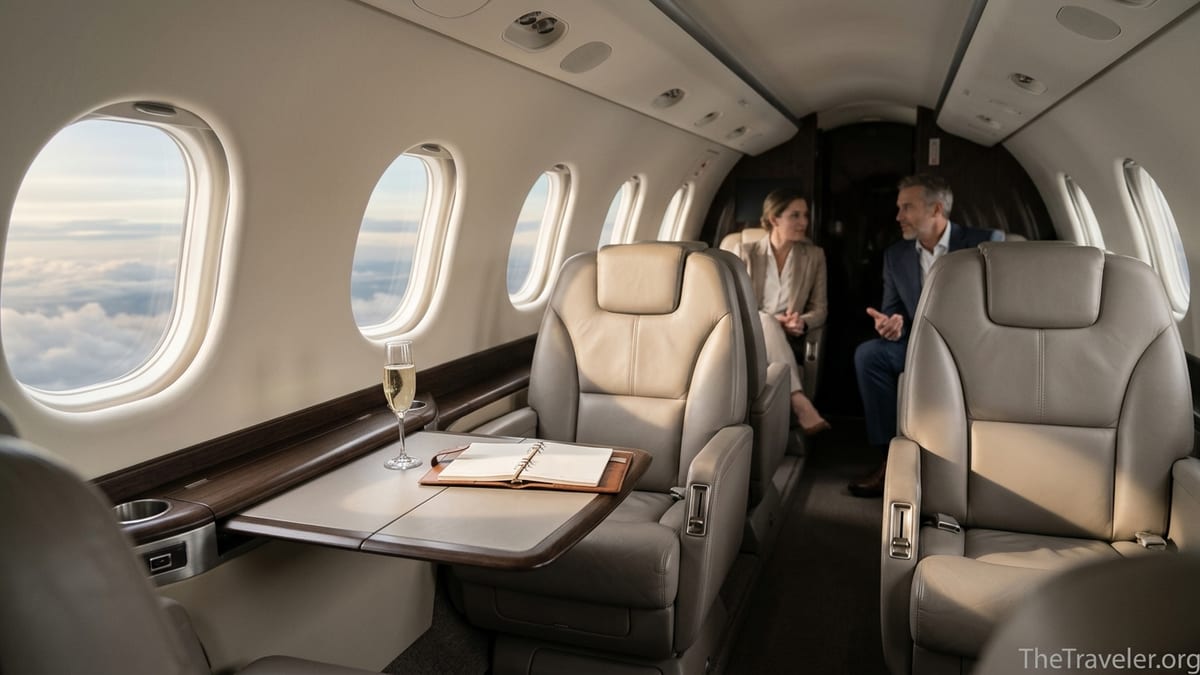
Flexjet leans heavily on service differentiation and aircraft quality. The fleet includes new-generation aircraft such as the Embraer Praetor family and Gulfstream G650 and G700, with bespoke cabin designs, curated interiors and a strong emphasis on consistency. For a traveler used to older charter aircraft with mixed interiors and varying Wi-Fi reliability, stepping into a Flexjet cabin often feels more like entering a high-end boutique hotel: similar finishes, attentive cabin crew and reliable connectivity.
In service reputation, NetJets is still the largest and arguably the most conservative of the major fractional providers, with a vast fleet and deep operational experience. Travelers who prize scale and the comfort of a Berkshire Hathaway-owned brand may gravitate toward NetJets. However, some frequent flyers report feeling like one of many at a very large operation, while Flexjet markets itself as a more customized, high-touch experience with more distinctive interiors and a more boutique feel despite its growing size.
VistaJet occupies a different niche. It emphasizes a uniform, globally roaming fleet, especially super-midsize and large-cabin aircraft, with no ownership buy-in but long-term hour commitments. A London-based executive who spends much of the year flying between Europe, the Middle East and the United States may choose VistaJet specifically because of its strong non-U.S. coverage and consistent cabin design worldwide. For a U.S.-based traveler who rarely leaves North America, a Flexjet fractional share or lease could provide similar or better value on a per-hour basis than a VistaJet program membership.
Wheels Up, which has undergone restructuring and now focuses on a streamlined membership model in partnership with a major U.S. airline, tends to target a slightly different segment: travelers with predictable annual spend who want fixed-rate, shorter-range flying on turboprops and light to midsize jets, mostly within North America. An Atlanta-based entrepreneur frequently shuttling between Southeast cities might find a Wheels Up membership on a King Air 350i or Citation jet more cost-effective than buying into Flexjet or NetJets, though without the equity component or some of the ultra-premium touches found in the larger fractional fleets.
Operational Reliability, Safety And Recent Scrutiny
When evaluating whether Flexjet is worth it, many travelers place reliability above all else. Industry data on flight hours in recent years shows Flexjet among the fastest-growing large providers, suggesting robust demand and an ability to scale operations. Large, dedicated fleets allow Flexjet to reposition aircraft and crews to meet contracted availability in ways that small charter operators simply cannot match during high-demand periods.
Safety is another non-negotiable. Flexjet, like its major competitors, operates under Part 135 or equivalent regulations, with professional crews and modern aircraft subject to rigorous maintenance and safety oversight. Travelers comparing options often look at third-party safety ratings and internal safety management systems across providers. On this front, Flexjet, NetJets and VistaJet all position themselves at the top of the market, and it would be unusual for a high-net-worth family office or corporate travel department to choose any of them without careful due diligence.
No operator is entirely free from operational incidents or service complaints, and occasional headlines can spark concern. For informed travelers, the key is not whether an event has ever occurred but how transparent, responsive and proactive the provider is in addressing safety findings, crew training and customer communication afterward. Large fractional operators tend to have structured processes and dedicated teams for incident review and client outreach, which is part of what their premium pricing is intended to support.
For a real-world example, some corporate flight departments that have shifted from managing their own aircraft to supplementing with Flexjet or NetJets report appreciating the redundancy that comes with a fleet-based provider: if a scheduled aircraft goes tech, another can often be substituted with minimal disruption. That kind of operational backup is much harder to guarantee when relying on single-aircraft charter operators scattered around the country.
Who Gets The Best Value Out Of Flexjet
Not every private flyer is a good fit for Flexjet. The model is optimized for travelers who fly enough hours per year and value consistency enough that they are willing to commit capital and time to a multi-year relationship. A useful rough threshold is around 50 to 75 hours a year. Below that, the overhead of a fractional share or lease can outweigh the benefits, especially if your trip patterns are flexible and you can shop among charter quotes.
Consider a retired couple based in Dallas who spend winters in Scottsdale and summers visiting grandchildren around the Midwest. They fly approximately 60 to 80 private hours per year, mostly on predictable seasonal routes. After several years of booking charters through brokers and dealing with variable aircraft quality and shifting pricing, they might find a Flexjet fractional share on a light or midsize jet appealing. The stable costs, familiar cabin, and guaranteed access during peak holiday weeks can make the experience feel more like a seamless extension of their lifestyle than a series of one-off purchases.
By contrast, a technology founder in San Francisco who travels irregularly, sometimes chartering a heavy jet for a team roadshow and other times hopping on commercial airlines, might discover that an on-demand charter strategy via a reputable broker or digital platform offers more flexibility. On years when flying drops sharply, they are not locked into the fixed costs of a share or lease. For such travelers, Flexjet may feel too rigid and capital-intensive relative to the benefit.
Corporate users occupy a middle ground. A mid-market private equity firm that shuttles deal teams between New York, Chicago, Dallas and European capitals might blend solutions: a Flexjet fractional share on a super-midsize jet to cover predictable U.S. routes, plus on-demand charter or a VistaJet or NetJets program for occasional transatlantic trips. In that context, Flexjet can be worth it as a reliable backbone of the travel program rather than the sole solution.
The Takeaway
Flexjet is not a discount way to fly private, nor is it meant to be. It is a premium offering designed for travelers who value guaranteed access, a curated fleet and high-touch service enough to justify multi-year commitments and substantial financial outlays. When compared directly with NetJets on similar aircraft and hours, Flexjet often competes head-to-head on both price and service, with personal preferences about cabin design, company culture and scale frequently tipping the balance.
Against VistaJet, Flexjet can be particularly compelling for North America-focused travelers who do not need VistaJet’s global reach or its specific brand of uniformly branded cabins. For these clients, Flexjet’s mix of fractional ownership, leasing and a one-time jet card trial can provide a tailored path into and through the world of private aviation.
The alternative, especially for those flying fewer than 50 hours a year or with very uneven travel patterns, is to remain in the world of on-demand charter or more flexible membership models. For that group, Flexjet’s strengths are less critical, and locking up capital in a share or lease may feel excessive.
Ultimately, Flexjet is “worth it” when you are flying enough, value consistency enough and think long-term enough that the stability, service and structure of a fractional or lease program align with how you actually travel. The best way to test that hypothesis is to map your last two or three years of flying, assign realistic dollar values to the hours you expect to fly, and compare those numbers against detailed proposals from Flexjet and at least one or two competing providers.
FAQ
Q1. How many hours a year do I need to fly for Flexjet to make sense?
Most travelers start seriously considering Flexjet once they reach roughly 50 to 75 private flight hours per year, with stronger value emerging above 100 hours, especially if their routes and seasons are predictable.
Q2. Is Flexjet cheaper than NetJets?
For similar aircraft and hours, Flexjet and NetJets usually fall into a comparable price band, with specific quotes varying by aircraft type, term length, peak-day rules and current promotions rather than one brand being universally cheaper.
Q3. How does Flexjet compare with VistaJet for international travel?
VistaJet is often stronger for frequent intercontinental flying thanks to its globally roaming large-cabin fleet, while Flexjet tends to be more compelling for North America-based travelers whose flying is mostly domestic or transcontinental within the region.
Q4. Can I try Flexjet without buying a fractional share?
Yes, Flexjet offers a limited 25-hour jet card product intended as a one-time trial, allowing new clients to experience the service and aircraft on a specific cabin type before deciding whether to move into a share or lease.
Q5. What happens if my Flexjet aircraft goes out of service before a trip?
If an assigned aircraft has a mechanical issue or becomes unavailable, Flexjet will typically substitute another aircraft from its fleet or an approved partner operator in order to honor guaranteed availability under your program terms.
Q6. Is Flexjet a good option if my travel is highly unpredictable?
If your private flying swings dramatically from year to year or you often shift trips at the last minute, on-demand charter or more flexible membership models may suit you better than a multi-year fractional or lease commitment with Flexjet.
Q7. Do Flexjet programs include catering and Wi-Fi?
Standard cabin refreshments and basic catering are normally included in hourly rates, and most of the modern Flexjet fleet offers inflight Wi-Fi, although service specifics and any surcharges can vary by aircraft type and program.
Q8. Can businesses deduct Flexjet costs?
Many companies treat Flexjet fractional or lease costs as business expenses, but the details depend on structure, usage and local tax rules, so most travelers involve their tax adviser before signing a contract.
Q9. How long are typical Flexjet contracts?
Fractional ownership contracts commonly run for several years with defined exit provisions, while leases and jet cards may have shorter terms; exact durations are negotiated in each agreement.
Q10. Is Flexjet suitable for families traveling with children and pets?
Yes, many Flexjet clients are families, and the consistency of cabin layouts, service and scheduling can be especially appealing to those traveling with young children or pets, provided they review any pet and safety policies in advance.