


More news on this day
Air travel across Malaysia has been heavily disrupted as reports indicate that more than 40 flights have been cancelled on busy domestic and regional routes, creating scenes of confusion at Kuala Lumpur International Airport as well as at Langkawi, Penang and several secondary hubs.
Get the latest news straight to your inbox!
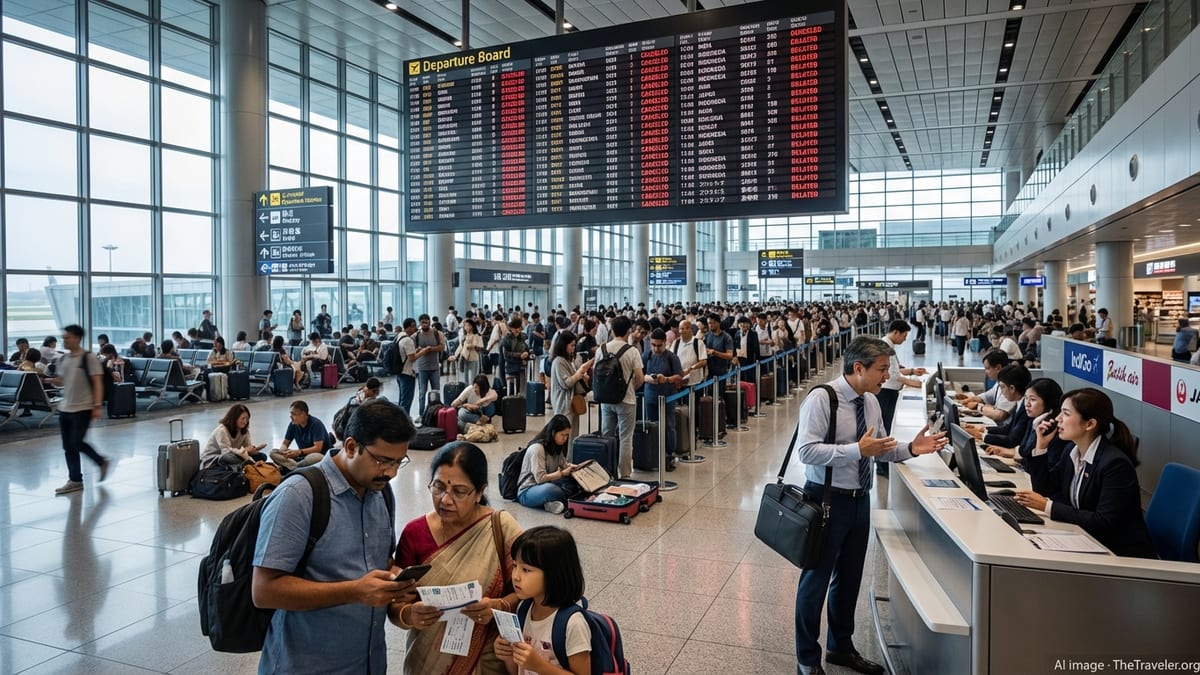
Widespread Disruptions at Major Malaysian Airports
Published coverage and live airport boards reviewed on June 10 indicate a wave of cancellations affecting multiple Malaysian airports, with Kuala Lumpur International Airport (KLIA) at the center of the disruption. Travellers arriving at the main terminals have encountered departure boards showing clusters of scrapped services alongside delays and retimings, particularly on high-frequency domestic routes.
Langkawi and Penang, two of the country’s busiest leisure gateways, have also seen schedules thinned out as airlines pull services or consolidate flights. Flight tracking portals show that connections between Kuala Lumpur, Langkawi and Penang, normally served by dense banks of departures throughout the day, have experienced a notable number of same-day cancellations and last-minute schedule changes.
The disruption has not been confined to a single carrier. Low-cost operators and full-service airlines appear to be affected, although AirAsia and Batik Air feature prominently on many of the altered timetables. The scale of the impact, with more than 40 flights reportedly cancelled across the network, has left passengers racing to rebook and crowding customer-service counters at multiple airports.
While cancellations are a regular feature of modern air travel, the clustering of so many affected flights on a single day has amplified the impact for Malaysia’s domestic and short-haul international market. Travellers heading to or from resort destinations, weekend city breaks and business meetings have all found themselves unexpectedly grounded.
AirAsia, Batik Air and Other Carriers Under Strain
Publicly available schedule and tracking data show that AirAsia and Batik Air, two of Malaysia’s most important carriers, have borne a large share of the disruption. AirAsia operates an extensive low-cost network centered on Kuala Lumpur, Penang and other Malaysian gateways, while Batik Air runs a mix of domestic and regional routes from its main base at Kuala Lumpur International Airport.
On routes such as Kuala Lumpur to Langkawi and Penang, where AirAsia typically mounts multiple flights a day, travellers have reported last-minute cancellations and consolidations, with passengers moved to later departures or offered alternative routings. Batik Air services on selected domestic sectors have similarly appeared as cancelled or retimed on third-party tracking services, reducing options for same-day travel and increasing load factors on remaining flights.
Other operators, including Malaysia Airlines and various regional carriers, also appear in revised schedules, though in smaller numbers relative to the two dominant budget and hybrid brands. For some passengers, the disruption has been compounded by codeshare arrangements, where tickets sold under one airline’s code are operated by another. When a single flight disappears from the schedule, it can therefore affect passengers booked through several different airlines at once.
The knock-on effects are particularly visible at transit hubs like Kuala Lumpur, where travellers connect between domestic and international services. Even if only a subset of flights is cancelled, missed connections can strand passengers or force last-minute overnight stays, adding to the sense of uncertainty and crowding at key points in the terminal.
Impact on Passengers: Long Queues and Tight Connections
Across the affected airports, passengers have faced long queues at check-in desks, ticket counters and transfer desks as they attempt to salvage travel plans. Reports from travellers and local media coverage describe scenes of families waiting with luggage in crowded terminal areas, while departure boards refresh with new timings and cancellation notices.
For those with connecting itineraries, particularly via Kuala Lumpur International Airport, the disruption has translated into missed onward flights and extended layovers. Travellers heading to international destinations from Langkawi or Penang via Kuala Lumpur have been among the most exposed, as a cancelled short domestic hop can break an otherwise tightly timed itinerary.
Some passengers have turned to online self-service tools and mobile apps to rebook, but high demand has meant that remaining seats on later flights can sell out quickly. This has left others negotiating for hotel vouchers, alternative routings via different cities, or refunds where travel is no longer possible or practical. Those on low-cost carriers that traditionally offer fewer inclusive protections may find that rebooking and accommodation costs fall largely on the traveller.
Complicating matters, weather-related constraints and operational bottlenecks can have a cascading effect on aircraft rotations. When an early-morning flight is cancelled, crews and aircraft may be out of position for later services, potentially magnifying the disruption into subsequent waves of cancellations or delays.
Why So Many Flights, and Why Now?
The precise blend of causes behind the latest wave of cancellations has not been fully detailed in public statements, but several familiar pressures are likely at play. Airlines worldwide have been grappling with tight aircraft availability, pilot and crew shortages, and ongoing maintenance demands as fleets operate near capacity during busy travel periods.
In Malaysia, strong post-pandemic demand for domestic and regional leisure travel continues to push airlines to operate dense schedules linking Kuala Lumpur with resort destinations such as Langkawi and Penang. When demand is high and timetables are packed, even small operational hiccups can escalate quickly into day-long disruption, particularly if spare aircraft and standby crews are limited.
Weather can also be a factor. Malaysia’s tropical climate brings seasonal heavy rain and thunderstorms that can temporarily close runways, slow arrivals and departures, or reduce visibility, creating knock-on delays and forcing airlines to reshuffle rotations. If such conditions coincide with peak travel days, carriers may elect to proactively cancel selected sectors to stabilize the rest of the day’s schedule.
Industry analysts note that high-frequency domestic routes are often where airlines make rapid adjustments, because passengers can be shifted to nearby departures more easily than on less frequent long-haul services. That pattern appears consistent with what is currently visible on several of Malaysia’s busiest short-haul corridors.
What Affected Passengers Should Do Now
Travellers booked on AirAsia, Batik Air or other carriers operating in and out of Kuala Lumpur, Langkawi, Penang and nearby airports are being advised by published guidance to check their flight status repeatedly in the hours before travel. Airline websites, mobile apps and airport flight boards are typically updated first when cancellations or major retimings occur.
Passengers whose flights have already been cancelled should review the options offered by their airline, which may include free rebooking on a later service, alternative routing via a different city, travel vouchers or refunds. The precise remedies vary by carrier and ticket type, so reading the fare conditions and any disruption notices is essential before making decisions at the airport.
Those holding separate tickets for connecting journeys, such as a domestic leg on one airline and an international sector on another, face higher risk because missed onward flights may not be automatically protected. In such cases, travel insurance that includes interruption coverage can be important, as it may reimburse additional costs for accommodation, meals or replacement tickets, subject to the policy’s terms and exclusions.
For upcoming trips in the next several days, passengers may wish to build in extra buffer time between connections, avoid the last flight of the day on critical sectors, and keep digital copies of all travel documents easily accessible for swift rebooking. With airline operations in Malaysia currently under visible strain, a cautious and flexible approach can significantly reduce the stress of navigating sudden changes.