


More news on this day
Travelers across Colombia are facing new disruption as a series of flight cancellations involving United Airlines, Avianca, and Spirit upend itineraries on busy routes linking Bogotá, Medellín, Cali, and other key cities, according to multiple operational updates and recent news coverage.
Get the latest news straight to your inbox!
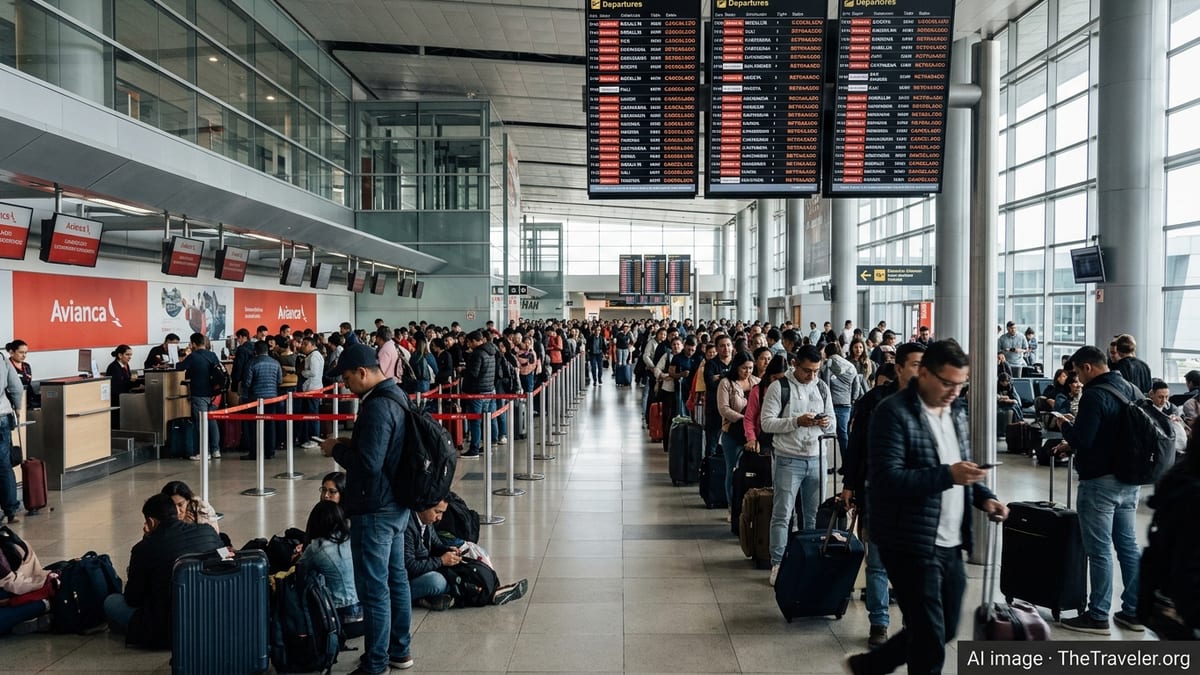
Four Cancellations Hit an Already Fragile Network
The latest wave of disruption is tied to four key flights that have been removed from schedules or halted, affecting both domestic and international connections. Operational data and published reports show that code-share services involving United and Avianca on Colombian domestic routes, as well as Spirit’s links between Colombian cities and the United States, have become flashpoints for stranded passengers.
Recent schedule information for United codeshare services operated by Avianca indicates adjustments on routes such as Bucaramanga to Bogotá and Washington to Bogotá, where selected frequencies have been canceled even as others continue to operate. At the same time, Spirit services that once connected Medellín, Cali, Cartagena, Barranquilla, and Bogotá with U.S. gateways such as Fort Lauderdale have been progressively withdrawn from booking systems following the low-cost carrier’s shutdown of operations.
Many of the passengers affected by these cancellations are point-to-point domestic travelers who rely on Bogotá as the country’s primary hub. Others are international travelers who use Colombian cities as connection points for long-haul flights to North America and Europe. The removal of even a handful of high-demand rotations can quickly ripple through the network, creating missed connections, overnight delays, and limited rebooking options.
Publicly available disruption trackers further highlight the scale of the problem, showing gaps on certain Avianca and Spirit services that previously operated daily or several times a week. The result is a patchwork of available flights, with some departures still running on time while others disappear at short notice, leaving travelers scrambling to find alternatives.
Spirit’s Exit Deepens the Capacity Crunch
Spirit Airlines’ collapse has become a central factor in Colombia’s latest travel turmoil. Aviation references and recent news coverage describe how the carrier ceased operations in early May 2026, abruptly ending a network that once included routes from Fort Lauderdale to cities such as Bogotá, Medellín, Cali, Cartagena, Barranquilla, Pereira, Bucaramanga, and Armenia.
The withdrawal has created a sudden capacity gap on historically price-sensitive corridors between Colombia and the United States. Before the shutdown, Spirit’s low fares helped anchor competition on these routes, and its absence has left fewer nonstop options, particularly for travelers originating in secondary Colombian cities that relied heavily on the carrier’s U.S. links.
Operational listings for flights such as Spirit’s Medellín to Fort Lauderdale service now show no scheduled operations on dates when the route would normally appear. Passengers with near-term bookings report being left with cancellations and refund processes, followed by the challenge of sourcing significantly higher-priced last-minute tickets on other airlines.
Colombian media coverage notes that Avianca has publicly offered certain stranded Spirit passengers complimentary return options, particularly for those already abroad and needing to get back to Colombia. While this measure helps in isolated cases, it does not fully offset the loss of Spirit’s overall seat capacity, especially during peak travel periods and holidays.
Avianca and United Adjust Domestic and Connecting Services
Alongside Spirit’s exit, Avianca and its codeshare partner United Airlines are also fine-tuning their Colombian schedules, which can translate into additional cancellations on short notice. Published timetables still show strong frequencies on core domestic routes, particularly between Bogotá’s El Dorado International Airport and Medellín’s José María Córdova International Airport, but real-time status pages reveal select flights removed or marked as not operating on certain days.
These adjustments affect travelers who rely on through-ticketed itineraries combining United long-haul segments with Avianca domestic legs. For instance, schedule data shows United flight numbers attached to Avianca-operated services such as Bucaramanga to Bogotá, feeding long-haul departures from the capital. When one of these feeder flights is canceled, travelers risk missing connections onward to hubs in the United States, Canada, or Europe.
Reports from passenger forums indicate that same-day rebooking can be particularly challenging on popular domestic legs like Bogotá to Medellín and Bogotá to Cali, which already run close to capacity throughout much of the week. Even when alternative flights exist, limited available seats mean some travelers must accept involuntary overnight stays or re-routings through different cities.
Industry analyses suggest that Avianca is still recalibrating its network after earlier fleet and schedule changes, especially involving Airbus A320-family aircraft used heavily on Colombian domestic sectors. While the majority of flights continue to operate, the selective cancellations contribute to a perception of fragility, particularly among frequent travelers who have recently experienced overbooking, schedule shifts, or last-minute gate changes.
Impact on Key Routes: Bogotá, Medellín, Cali and Beyond
The cities bearing the brunt of these disruptions are Colombia’s main air travel nodes. Bogotá remains the primary hub, funnelling the bulk of domestic and international traffic. Medellín and Cali, both significant economic centers, depend on dense shuttle-style frequencies to and from the capital, as well as direct flights to U.S. and regional destinations that have been affected by Spirit’s exit and adjustments by other carriers.
With fewer options, passengers traveling between Bogotá and Medellín are reporting tighter seat availability and higher average fares on remaining flights. Similar patterns are emerging on Bogotá to Cali and other trunk routes such as Bogotá to Cartagena and Barranquilla, where the loss of Spirit’s competitive pressure and scattered cancellations from other carriers have reduced the flexibility travelers once enjoyed.
Smaller cities that previously benefited from direct links to the United States, including Pereira, Bucaramanga, and Armenia, are now more dependent on connections through Bogotá or Medellín. Any disruption to those hubs therefore cascades outward, potentially stranding travelers in intermediate airports or forcing lengthy overland alternatives when onward flights are not immediately available.
Travelers planning multi-city itineraries within Colombia are especially vulnerable. A canceled morning flight from Medellín to Bogotá can cause missed onward legs to Cali or international departures to the United States and Europe, even when the long-haul flights themselves remain on schedule. Without robust interline arrangements across all carriers, passengers often shoulder the financial burden of hotel stays, new tickets, and additional ground transportation.
What Travelers Should Watch in the Coming Days
Given the current volatility, aviation observers recommend that travelers with near-term plans in Colombia closely monitor their bookings and prepare for potential changes. Real-time status tools have become essential, as some cancellations are being reflected in operational feeds only hours before scheduled departure, particularly on busy domestic routes.
Publicly available policy information for airlines such as Avianca and United indicates that passengers affected by cancellations are typically offered rebooking on the next available flight, refunds in certain cases, or travel credits. However, the practical value of these options depends heavily on how many seats remain for alternative departures and whether passengers are traveling on a single ticket or across multiple separate bookings.
For those who were originally booked on Spirit flights, consumer advocates emphasize the importance of confirming refund status and then comparing options across remaining carriers rather than assuming that one airline will automatically absorb all stranded travelers. In some cases, routes that once had nonstop low-cost service now require one or more connections, which can significantly extend total travel time.
With Colombia entering a period of network adjustment after Spirit’s collapse and ongoing schedule fine-tuning by Avianca and United, disruptions of the kind now seen on four emblematic flights may persist beyond the immediate news cycle. Travelers heading through Bogotá, Medellín, Cali, and other major cities in the coming weeks are likely to face a more constrained and less predictable set of choices than in previous seasons.