


More news on this day
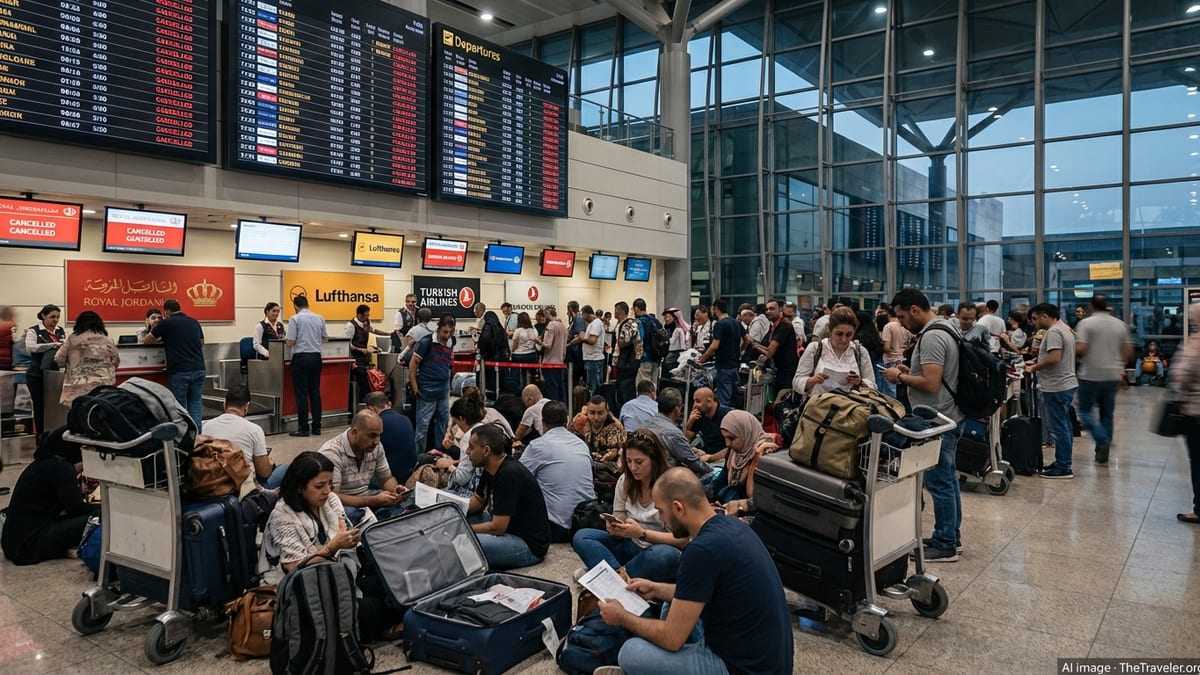
Passengers at Queen Alia International Airport in Amman faced mounting disruption on June 6 as Royal Jordanian Airlines scrubbed three departures and reported significant delays on several regional routes, snarling travel across Egypt, Saudi Arabia, Qatar, the United Arab Emirates, Kuwait and onward long haul connections.
Get the latest news straight to your inbox!
Targeted Cancellations Hit Regional Network
According to live airport boards and independent flight-tracking platforms on June 6, three Royal Jordanian flights scheduled to depart from Queen Alia International Airport were cancelled within hours of departure. The affected services were focused on short and medium haul routes, including key links to neighboring Arab capitals that typically carry a mix of business travelers, migrant workers and transit passengers.
Publicly available flight data show that Royal Jordanian operates a dense regional network from Amman, with scheduled services to Cairo, Riyadh, Jeddah, Dammam, Doha, Abu Dhabi, Dubai and Kuwait City forming the backbone of its Middle East operation. Those routes feed longer haul flights to Europe, North America and Asia, meaning that disruption on a handful of regional legs can quickly cascade into missed connections for passengers bound far beyond the Gulf.
On June 6, several departures on these corridors either failed to leave Amman or pushed back far behind schedule, with “cancelled” and “delayed” indicators appearing repeatedly beside Royal Jordanian flight numbers. Flight-tracking snapshots captured aircraft assigned to Gulf destinations sitting at gates in Amman well past their scheduled departure times, underscoring the scale of the operational difficulties.
While Royal Jordanian has not issued a detailed public breakdown of the cancellations, the pattern of affected flights highlights the strain on some of the airline’s most commercially important city pairs in the Middle East, particularly those linking Amman with Gulf hubs where onward connections are common.
Delays Ripple Across Egypt, Gulf and Transit Hubs
Travel industry monitoring sites tracking the wider Middle East on June 5 and 6 reported dozens of cancellations and more than 100 delays involving multiple carriers across Kuwait, the United Arab Emirates, Saudi Arabia, Jordan, Oman and Bahrain. Within that broader wave of disruption, Royal Jordanian’s schedule at Queen Alia International Airport showed clusters of late departures, especially on high-frequency routes to Gulf cities.
One example on June 6 was Royal Jordanian flight RJ614 from Amman to Dubai, which departed roughly three hours behind schedule and was still en route when its arrival time had already been revised later than planned. Similar delays were noted on other departures to major Gulf gateways, with knock-on effects for passengers relying on tight onward connections in Dubai, Doha or Abu Dhabi.
Services linking Amman with Egypt and Saudi Arabia were also affected by timing changes. Egypt-bound flights are a crucial link for students, medical travelers and families, while Saudi Arabia routes are heavily used by workers and religious travelers heading to Jeddah and other gateways for onward travel within the kingdom. Even when these flights operated, extended delays increased the risk of missed domestic and international connections.
In Kuwait, aviation authorities confirmed a temporary airspace closure on June 6, followed by a phased resumption of traffic after a short suspension. While Royal Jordanian’s own Kuwait operations were not singled out, the regional knock-on effect contributed to schedule volatility for carriers shuttling between Amman, Kuwait City and other Gulf hubs.
Passengers Face Missed Connections and Overnight Rebooking
The immediate impact for travelers using Queen Alia International Airport was a familiar mix of uncertainty at departure boards, long queues at airline counters and rebookings onto later flights. Regional travel forums and social media posts from recent weeks already describe passengers dealing with short-notice cancellations on Royal Jordanian routes, particularly where regional tensions or temporary airspace restrictions have complicated flight planning.
For passengers connecting in Amman from Europe or North America, the cancellations of three outbound regional flights on June 6 meant that some itineraries could no longer be completed in a single travel day. Instead, travelers were being shifted onto next-day services or rerouted through alternative hubs operated by partner airlines, adding cost and travel time to journeys that are normally straightforward.
Consumer advice resources focused on air travel stress that passengers whose flights are cancelled outright may have a right to refunds or rebooking, depending on the route and applicable regulations. Travelers are urged to keep documentation of cancellation notices, boarding passes and additional expenses, which can be important when filing compensation or reimbursement claims where legal frameworks such as European air passenger rights apply.
Reports from recent Royal Jordanian customers dealing with earlier cancellations this spring have underscored the importance of checking booking status repeatedly in the 24 hours before departure and remaining prepared for last-minute gate or timing changes. The events on June 6 at Queen Alia International Airport appeared to reinforce that guidance, particularly for those connecting onward in the Gulf.
Operational Pressures and Regional Context
Queen Alia International Airport is Jordan’s main international gateway and the primary hub for Royal Jordanian, handling millions of passengers per year across a mix of regional and long haul routes. Industry data for June 2026 show the flag carrier serving more than 60 international destinations from Amman, with Egypt, Saudi Arabia, Qatar, the United Arab Emirates and Kuwait forming a tightly interlinked regional network.
The latest round of disruption comes amid a period of elevated operational pressure for airlines across the Middle East. In recent days, multiple carriers in the region have reported cancellations and delays, citing factors that range from operational constraints and crew availability to temporary airspace restrictions around specific Gulf states. This wider context has at times amplified the effect of localized issues at individual airports such as Queen Alia.
For Royal Jordanian, maintaining reliability on its short haul network is particularly important because flights to Cairo, Riyadh, Jeddah, Dammam, Doha, Abu Dhabi, Dubai and Kuwait typically act as feeders into transatlantic and Asian services. When regional departures are cancelled or heavily delayed, the airline must decide whether to hold long haul flights to preserve connections or allow them to depart on time and accommodate disrupted passengers on later services.
Travel analysts monitoring the situation note that sporadic disruptions are not uncommon in the region’s tightly scheduled air corridors, but concentrated clusters of cancellations and delays can quickly erode passenger confidence if not managed transparently. The June 6 events in Amman have once again highlighted the vulnerability of hub-and-spoke networks when multiple regional links are simultaneously strained.
Practical Advice for Travelers Using Amman and the Gulf
With schedules in flux across Queen Alia International Airport and neighboring hubs, travel advisers recommend that passengers with imminent journeys build extra buffer time into their plans, particularly if they rely on same-day connections from Amman to Gulf cities or onward long haul departures. Checking flight status repeatedly through airline apps and airport information boards on the day of travel remains critical.
Travelers are also encouraged to review fare rules and conditions of carriage before departure, so they understand what support or reimbursement options may apply in the event of cancellation. On itineraries touching the European Union or the United Kingdom, air passenger protection regulations can provide additional rights in cases of long delay or cancellation, though eligibility depends on the specific airline, route and cause of disruption.
Those heading to Egypt, Saudi Arabia, Qatar, the United Arab Emirates or Kuwait via Amman in the coming days may wish to consider longer layovers in Queen Alia International Airport or, where possible, book through-tickets on a single carrier to simplify rebooking in the event of irregular operations. Standalone tickets on separate airlines can make it harder to secure alternative arrangements when a first leg is cancelled.
For now, publicly available schedules indicate that Royal Jordanian plans to continue operating its regional network from Queen Alia International Airport, even as isolated cancellations and delays persist. Travelers across the Middle East are watching closely in the hope that the latest turbulence in Amman proves short lived and that the region’s vital air corridors regain their usual rhythm in the days ahead.