


More news on this day
Flights at Buenos Aires’ Aeroparque Jorge Newbery were heavily disrupted on May 25, with at least eight cancellations and around 20 delays affecting services by Flybondi, LATAM, JetSMART, Aerolíneas Argentinas and other carriers and leaving passengers stranded across Argentina, Brazil and Chile.
Get the latest news straight to your inbox!
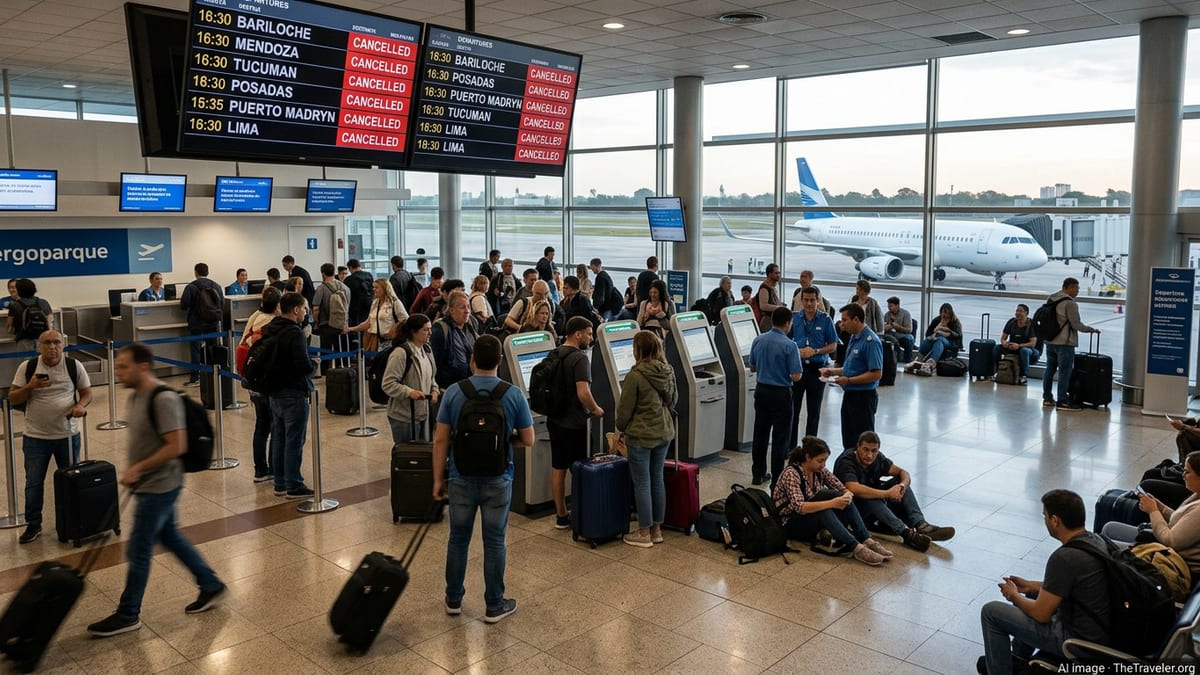
Key domestic and regional links cut in single day of disruption
According to airport departure boards and airline status portals, the disruption concentrated on routes linking Buenos Aires with interior Argentine cities such as San Juan, Posadas and Tucumán, as well as with São Paulo and Santiago. The pattern of cancellations and extended delays effectively isolated several regional centers from the country’s busiest domestic hub for much of the day.
Flight tracking data for Aerolíneas Argentinas shows repeated disruption on services between Aeroparque and San Juan and other Cuyo and Patagonian destinations, including cancellations on flights scheduled from San Juan into Buenos Aires in the early afternoon window. Publicly available information for Flybondi and JetSMART indicates rolling delays on popular leisure and visiting-friends-and-relatives routes that connect Aeroparque with cities in the north and northeast of the country.
On the regional front, schedule information for routes between São Paulo’s Guarulhos Airport and Aeroparque highlights knock-on delays affecting both Aerolíneas Argentinas and LATAM-operated services. Although many flights continued to operate, late departures and arrivals reduced connectivity for passengers connecting onward to Chile and other points in Brazil.
By early evening, operational summaries compiled from airline sites and local media tallies pointed to at least eight outright cancellations and close to 20 delayed departures and arrivals involving a mix of flag carrier and low cost operators based at Aeroparque.
Hub under strain amid labor tensions and fragile schedules
Aeroparque Jorge Newbery operates as a primary hub for Aerolíneas Argentinas and as a base for Flybondi and JetSMART Argentina, handling dense banks of departures to more than 50 domestic and regional destinations. Industry observers note that this concentration of traffic makes the airport especially vulnerable when staffing, weather or technical issues arise at the same time.
Local press coverage in Buenos Aires on May 25 linked the latest wave of disruption to labor actions and staffing constraints among aviation unions at Aeroparque, reporting partial work stoppages that slowed turnarounds and ground handling. In previous episodes described by national outlets, similar measures have quickly translated into cascading delays as aircraft and crews fall out of rotation.
In the low cost sector, Flybondi and JetSMART have faced criticism during the 2025 to 2026 period for limited fleet depth, which leaves little margin to recover when a single aircraft experiences technical issues or an earlier flight runs late. Published analyses of Flybondi operations this year have highlighted high numbers of cancellations at the start of the peak travel season, while frequent schedule changes and route suspensions by both carriers have been widely discussed by travelers.
While LATAM and other regional players typically operate with larger fleets and alliances, they are still exposed to local ground-handling constraints at Aeroparque. As a result, even flights that depart roughly on schedule from overseas hubs can encounter delays on arrival and during turnaround in Buenos Aires when bottlenecks develop on the apron or at gates.
San Juan, Posadas and Tucumán among hardest hit cities
The day’s disruptions were particularly visible on connections between Aeroparque and mid sized Argentine cities that rely on a limited number of daily flights to Buenos Aires. Real time flight boards for San Juan and Posadas showed cancellations and extended delays on services marketed by Aerolíneas Argentinas and its partners, temporarily cutting direct air links with the capital.
In San Juan, the cancellation of a key afternoon arrival into Aeroparque forced travelers to seek seats on later flights or reroute via other cities, according to local media coverage of the incident. With only a handful of direct frequencies on the route, losing even one rotation in the middle of the day significantly reduced capacity.
Passengers in Posadas and Tucumán reported on social networks that they faced long waits and confusion over rebooking options as Buenos Aires departure times shifted repeatedly. Publicly shared accounts describe travelers being moved between flights operated by different carriers under codeshare arrangements or being offered overnight travel on long distance buses instead of same day air alternatives.
For many residents of these cities, Aeroparque is the primary gateway for medical appointments, business travel and connections to international flights. The combination of cancellations and multi hour delays left some travelers concerned about missed surgeries, exams and meetings in Buenos Aires, adding a human dimension to what might otherwise appear as routine schedule changes on a departure board.
Regional ripple effects into Brazil and Chile
Beyond Argentina, the problems at Aeroparque reverberated along short haul corridors to Brazil and Chile. Airlines that operate multi leg rotations linking São Paulo and Santiago with interior Argentine cities via Buenos Aires reported out of position aircraft and missed connections, according to timetable adjustments published throughout the day.
Schedule trackers for São Paulo to Aeroparque services show clusters of flights bunching later in the morning and early afternoon than originally planned, reflecting delayed turnarounds in Buenos Aires. For travelers heading onward from Guarulhos to destinations in northern Brazil or back into Chile, such delays increased the risk of missed onward flights, particularly where minimum connection times were already tight.
Chilean media outlets monitoring operations at Santiago’s Arturo Merino Benítez Airport noted minor delays on some Argentina bound services but no large scale cancellations originating in Chile. However, passengers connecting in Buenos Aires for secondary Chilean cities faced added uncertainty as the Aeroparque situation evolved.
In Brazil, travel forums and consumer sites carried fresh complaints about disrupted itineraries involving a mix of Aerolíneas Argentinas, LATAM and Gol tickets, underlining how congestion at a single airport can ripple through multiple airline networks that share codes and passengers on the same regional routes.
Travellers face mounting frustration as reliability questions grow
The disruption on May 25 adds to a growing sense of frustration among travelers using Aeroparque and Argentina’s low cost carriers in particular. Consumer complaints logged in recent months describe repeated last minute cancellations, substantial delays and limited assistance with lodging or rebooking when flights do not operate as scheduled.
Online discussions and local reporting suggest that some passengers now actively avoid certain carriers on key domestic routes, even when fares are markedly lower, citing repeated negative experiences. Others report building extra buffer days into their itineraries when traveling to events, cruises or international connections that cannot be easily rescheduled.
Travel analysts quoted in national newspapers have argued that the combination of constrained airport infrastructure, ongoing labor tensions and thinly resourced low cost operations is eroding confidence in Argentina’s domestic air network. They point out that while weather is often cited as a factor, many of the most disruptive episodes in recent seasons have occurred under otherwise normal operating conditions.
In the wake of the latest wave of cancellations and delays at Jorge Newbery, consumer advocates are renewing calls for clearer communication, stronger enforcement of passenger rights and more resilient scheduling practices. With the southern hemisphere winter travel season approaching, the performance of Aeroparque and its main carriers is likely to remain under close scrutiny from both local travelers and international visitors planning trips across Argentina, Brazil and Chile.