


More news on this day
Travel through Muscat’s Seeb International Airport faced fresh disruption this weekend, as four flights on Gulf Air and Oman Air were suspended and a wave of delays rippled across major routes to Bahrain, Egypt, Saudi Arabia, the United Kingdom, Turkey and other key destinations.
Get the latest news straight to your inbox!
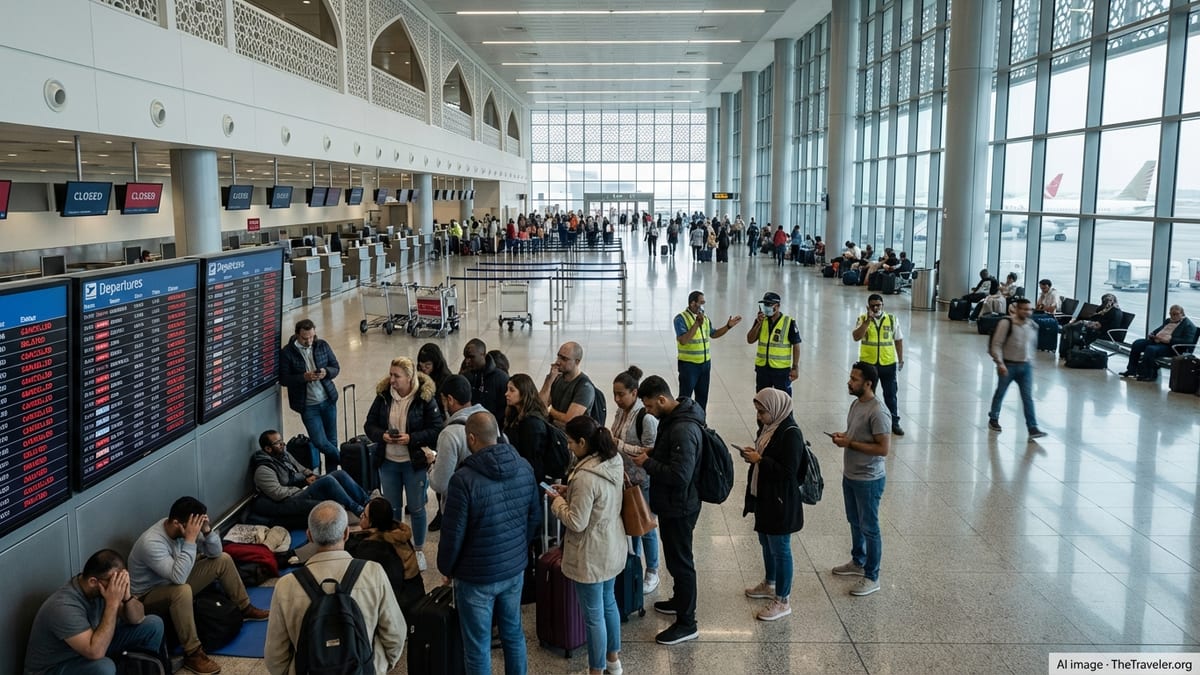
Seeb Hub Strained by Cancellations and Rolling Delays
Publicly available flight information for June 5 and June 6 indicates that Muscat’s Seeb International Airport, officially known as Muscat International Airport, is again operating under strain, with a cluster of short-notice cancellations and rolling delays involving Gulf Air and Oman Air services. Four flights on the two carriers were suspended over the period, affecting regional links into Bahrain and Saudi Arabia as well as onward long-haul itineraries.
The suspensions, combined with late-running departures and arrivals, have left passengers facing extended waits at the Omani hub and, in some cases, missed onward connections. Travel forums and aviation tracking services show travelers attempting to reroute via alternative Gulf gateways or rebook entirely, adding to pressure on already busy regional networks.
While Seeb remains operational, these latest disruptions highlight how fragile connectivity still is across parts of the Middle East aviation system in 2026, particularly on routes that rely on complex overflight permissions and tight connection banks.
Reports from passenger-tracking platforms suggest that the impact has not been limited to the four cancelled flights. Knock-on delays have spread across Muscat’s departure board, touching services to Cairo, Jeddah, London, Istanbul and other high-demand destinations that depend on smooth feeder traffic from Gulf Air and Oman Air.
Regional Airspace Tensions Continue to Hit Bahrain and Beyond
The latest turbulence at Seeb comes against the backdrop of months of disruption tied to airspace restrictions and regional tensions. Coverage from regional business outlets in March described Bahrain’s national carrier Gulf Air suspending inbound, outbound and overflight operations for an extended period as its home airspace was closed, forcing the airline to scale back or reroute services that normally pass through the kingdom.
Travel advisories and airline communications since then point to a patchwork recovery. Some services into Bahrain have gradually resumed, but capacity remains constrained and schedules are volatile. This has left Muscat carrying additional transfer traffic for journeys that once flowed more smoothly through Bahrain and other hubs, compounding the effect when Gulf Air or Oman Air withdraw even a handful of departures from Seeb’s schedule.
Other Gulf and Turkish carriers have also reported cancellations and schedule changes on routes into Oman, Saudi Arabia, Kuwait and Egypt at various points this year, as airlines adjust to shifting risk assessments and temporary airspace closures. These moves have squeezed options for travelers trying to move between the Gulf, Europe and South Asia, making any fresh disruption at a relatively stable hub such as Muscat more acutely felt.
For passengers bound to or transiting via Bahrain, the suspension of specific Gulf Air flights from Muscat can mean lengthy detours through alternative hubs in Doha, Abu Dhabi or Riyadh, or in some cases overnight stays while airlines piece together new itineraries around the remaining operational services.
Oman Air Network Under Pressure Across Middle East and Asia
Oman Air has been managing its own series of network adjustments in 2026, including earlier cancellations to several cities in the Gulf and wider region. Reports from regional media over recent months note that services to key markets such as Dubai, Doha and Bahrain have at times been reduced or suspended, citing airspace restrictions and operational challenges.
Separate travel coverage focused on Seeb International Airport on June 5 details four Oman Air cancellations and more than a dozen additional delays affecting destinations across Saudi Arabia, Egypt, Kuwait, Malaysia and India. These disruptions followed a familiar pattern for passengers at Muscat: delayed boarding calls, aircraft swaps and repeated schedule pushes as operations teams worked within constrained airspace windows.
Industry analysis suggests that the carrier is juggling limited aircraft availability and changing operational conditions while still positioning Muscat as a competitive connecting hub between Europe, the Gulf and South Asia. Each cancellation at Seeb therefore risks amplifying disruption well beyond Oman’s borders, particularly for travelers booked on tight same-day connections.
Travelers connecting from regional Oman Air flights into long-haul services to the United Kingdom or Turkey, for example, may find that a delay of only a couple of hours on a feeder leg is enough to break their onward itinerary, forcing rebooking on later departures or on different airlines entirely.
Knock-On Effects for UK, Turkey and Europe-Bound Travelers
The latest suspensions of Gulf Air and Oman Air flights at Seeb are especially disruptive for travelers heading to the United Kingdom, Turkey and other European destinations who rely on Muscat as a transfer point. With Bahrain and parts of the wider region still experiencing intermittent schedule volatility, many itineraries now combine Oman Air or Gulf Air sectors into or out of Muscat with long-haul flights operated by European or Turkish carriers.
Tracking data and passenger reports show that when Muscat-originating flights into regional hubs such as Jeddah, Riyadh, Cairo or Istanbul are delayed, onward connections to London and other major European cities can quickly unravel. In some cases, travelers have reported being rebooked onto flights several days later due to limited remaining seat availability during peak travel periods.
Airlines operating into Muscat are also facing operational complexity as they work around congested corridors and shifting overflight permissions. Public schedules show that carriers continue to adjust departure times from European and Turkish cities to better align with revised connection banks in Muscat, but these fine-tuned timetables can be thrown off when partner flights from Gulf Air or Oman Air are pulled at short notice.
The disruption has implications for tourism and business travel into Oman as well, with late arrivals and missed connections affecting inbound visitors who planned to use the country as both a destination and a springboard to neighboring markets in the Gulf and Levant.
Passengers Navigate Refunds, Rerouting and Long Waits
In the absence of fully normalized schedules, passengers affected by the latest cancellations at Seeb International Airport are turning to refunds, rebookings and alternative routings. Online travel communities include multiple first-hand accounts of travelers seeking compensation or schedule changes from Gulf Air after Bahrain-related cancellations earlier in the year, with some reporting lengthy processing times and repeated itinerary revisions.
Similar experiences are emerging for Oman Air customers caught in the June wave of disruptions at Muscat, where rolling delays and short-notice cancellations have left travelers queueing at service desks or waiting for responses from third-party booking platforms. Some passengers report opting to book entirely new tickets on other carriers departing from Muscat or nearby hubs and then pursuing refunds from the original airline afterward.
Travel advisories shared in recent months encourage passengers using Muscat as a transit point to allow significantly longer connection windows than they might have chosen before 2026, particularly when their journey involves Gulf Air or Oman Air sectors into regions where airspace and security conditions remain fluid.
For now, publicly available data suggests that Seeb International Airport continues to function as a critical, relatively stable node in a region still experiencing periodic flight disruptions. However, the suspension of four Gulf Air and Oman Air flights and the accompanying wave of delays underscore how quickly conditions can change for travelers relying on Muscat as a gateway to Bahrain, Egypt, Saudi Arabia, the United Kingdom, Turkey and beyond.