


More news on this day
Türkiye has secured up to 1.5 billion dollars in new international financing for the Istanbul North Rail Crossing Project, a high-capacity railway line that will create a fresh overland connection between the Asian and European sides of Istanbul via the Yavuz Sultan Selim Bridge.
Get the latest news straight to your inbox!
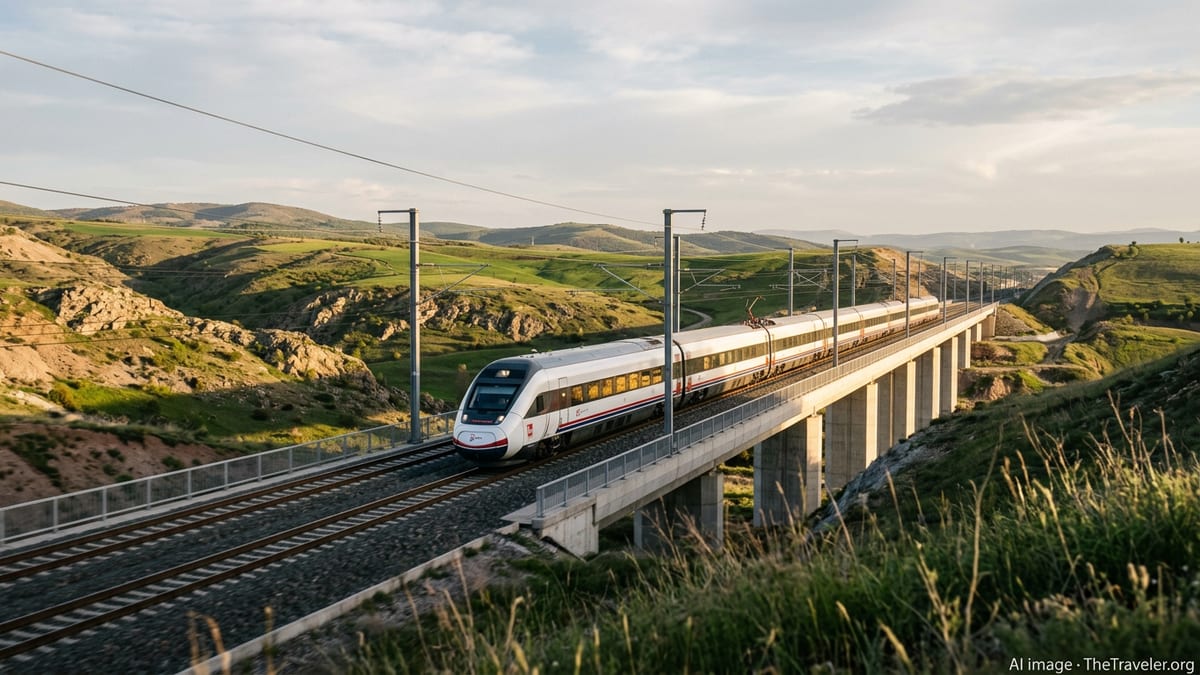
Major financing boost for Istanbul’s cross-Bosphorus rail plans
Recent project documentation and institutional statements show that the Asian Infrastructure Investment Bank has approved a financing package of up to 1.5 billion dollars for the Istanbul North Rail Crossing Project, known as INRAIL. The package forms a core component of a wider multilateral funding framework assembled for what Turkish authorities describe as the country’s largest foreign-financed railway investment.
According to publicly available information from international financial institutions, the new package follows earlier commitments led by the World Bank and other development partners. Together, these institutions are backing a broader 6.75 billion dollar funding framework intended to deliver a new high-capacity rail corridor that will move both passengers and freight across the Bosphorus without entering Istanbul’s congested inner city.
The newly approved funds will specifically support the construction of a double-track, electrified and fully signaled line stretching between the districts of Çayırova on the Asian side and Çatalca on the European side. Reports indicate that the project is designed to handle passenger services at up to 160 kilometers per hour, alongside freight trains operating at lower speeds but with substantially increased capacity compared with existing routes.
Project descriptions released by lenders highlight the strategic nature of the corridor in the context of Türkiye’s long-term transport and logistics plans. By improving rail connectivity across the Bosphorus, the scheme is expected to reinforce the country’s position as a key junction between European, Asian and Middle Eastern markets and support ongoing efforts to shift more traffic from road to rail.
A new rail route over the Yavuz Sultan Selim Bridge
Unlike the existing Marmaray tunnel under the Bosphorus, the new line will cross the strait on the Yavuz Sultan Selim Bridge, Istanbul’s third Bosphorus crossing. Project summaries indicate that the railway will form part of a northern bypass around the metropolitan core, linking major logistics hubs, industrial zones and both of the city’s main airports.
The corridor is planned to connect with the wider national high-speed rail network, tying Istanbul Airport on the European side and Sabiha Gökçen Airport on the Asian side into long-distance services across Anatolia. Publicly available government briefings describe the INRAIL alignment as a greenfield route of roughly 120 to 125 kilometers, incorporating extensive tunnel and viaduct works to navigate the hilly, forested terrain north of the urban center.
Engineering details published domestically in Türkiye refer to dozens of tunnels and bridges along the new line, reflecting the complexity of building a heavy-rail corridor through environmentally sensitive and topographically challenging areas. The choice of the Yavuz Sultan Selim Bridge as a rail crossing point is presented in official planning documents as a way to leverage an existing piece of strategic infrastructure while easing pressure on older Bosphorus bridges and the road network.
For rail travelers, the new route is intended to provide a faster, more direct option for moving between the eastern and western sides of the country, especially for journeys that do not require access to central Istanbul. For freight operators, the bridge crossing and northern bypass are designed to offer a dedicated, high-capacity rail alternative to currently road-heavy logistics chains serving ports and inland industrial centers.
Largest foreign-funded rail project in Türkiye
According to government communications and international reports, the Istanbul North Rail Crossing is considered Türkiye’s largest railway project backed predominantly by external financing. The overall investment envelope, estimated in World Bank documents at more than 8 billion dollars including public contributions, reflects the scale of civil works and accompanying systems required to deliver the line.
International development banks have framed the project as part of a broader push to modernize Türkiye’s rail sector, reduce logistics costs and support a transition toward more sustainable modes of transport. The cross-Bosphorus element is seen as particularly significant for long-distance freight flows, with some trade-focused publications noting projections that annual freight capacity over the new corridor could eventually rise from a few million tons to several tens of millions.
Türkiye’s medium-term economic and transport strategies place strong emphasis on enhancing the country’s role within what is often termed the Middle Corridor, a set of rail and road routes linking China and Central Asia with Europe. The INRAIL project is frequently cited in official planning documents as a flagship example of this connectivity agenda, given its potential to streamline east-west traffic while maintaining links to major ports and logistics parks.
The prominence of foreign financing also underscores Türkiye’s ongoing efforts to attract long-term, infrastructure-focused capital at competitive terms. Recent newsletters and policy papers from the country’s investment promotion agencies highlight the INRAIL financing structure as evidence of sustained interest from global lenders in Türkiye’s transport pipeline, even at a time of tighter international credit conditions.
Implications for Istanbul’s mobility and environment
Transport analysts following the project point to a combination of mobility and environmental benefits if the line is delivered as planned. By routing freight trains away from central Istanbul and onto a dedicated bypass, the project aims to reduce congestion on both urban roads and existing rail corridors, while freeing capacity for commuter and high-speed services in the city’s core.
Electrification of the new line is expected to play a role in cutting greenhouse gas emissions relative to diesel-powered freight movements that currently rely heavily on trucking across bridge crossings. International lenders describe the scheme as aligned with their climate and sustainability frameworks, emphasizing the potential to shift a meaningful share of long-haul freight from road to rail.
Local planning materials also suggest that the project could help relieve pressure on densely populated districts by diverting through-traffic that currently has to pass closer to the city center. However, civil society groups and urban planners are likely to scrutinize the implementation phase closely, particularly with regard to land use, forested areas north of Istanbul and integration with existing suburban and metro lines.
In the medium term, improved reliability and capacity across the Bosphorus are expected to support Istanbul’s broader economic role as a gateway city. For the wider tourism and travel sector, a more efficient railway system that links airports, business districts and regional hubs could enhance connectivity for both domestic and international visitors, complementing the city’s extensive air and urban rail networks.
Next steps for the INRAIL megaproject
With the 1.5 billion dollar financing from the Asian Infrastructure Investment Bank approved and earlier loans from institutions such as the World Bank already in place, attention now turns to procurement and construction. Public notices from the World Bank indicate that early market engagement processes for major contracts have been under way, with the project structured into multiple packages covering civil works, systems and rolling stock.
Project timelines published in lender documents position INRAIL within Türkiye’s current planning cycle, which runs through the late 2020s. Given the scale of tunnels, bridges and interface works with existing lines, industry observers expect a multi-year construction program with phased commissioning of different sections.
Experts note that coordination between national rail authorities, metropolitan planners and airport operators will be critical to realizing the full benefits of the new corridor. Successful integration would allow passengers to transfer more seamlessly between long-distance trains, city rail systems and air services, while also enabling efficient freight movements between ports, logistics hubs and inland markets.
As financing milestones are reached and contracts move forward, the Istanbul North Rail Crossing Project is emerging as one of the most closely watched rail megaprojects in the region. For Türkiye, the latest 1.5 billion dollar funding package marks another step toward reshaping cross-Bosphorus transport and consolidating its ambitions as a pivotal rail and logistics hub between continents.