


More news on this day
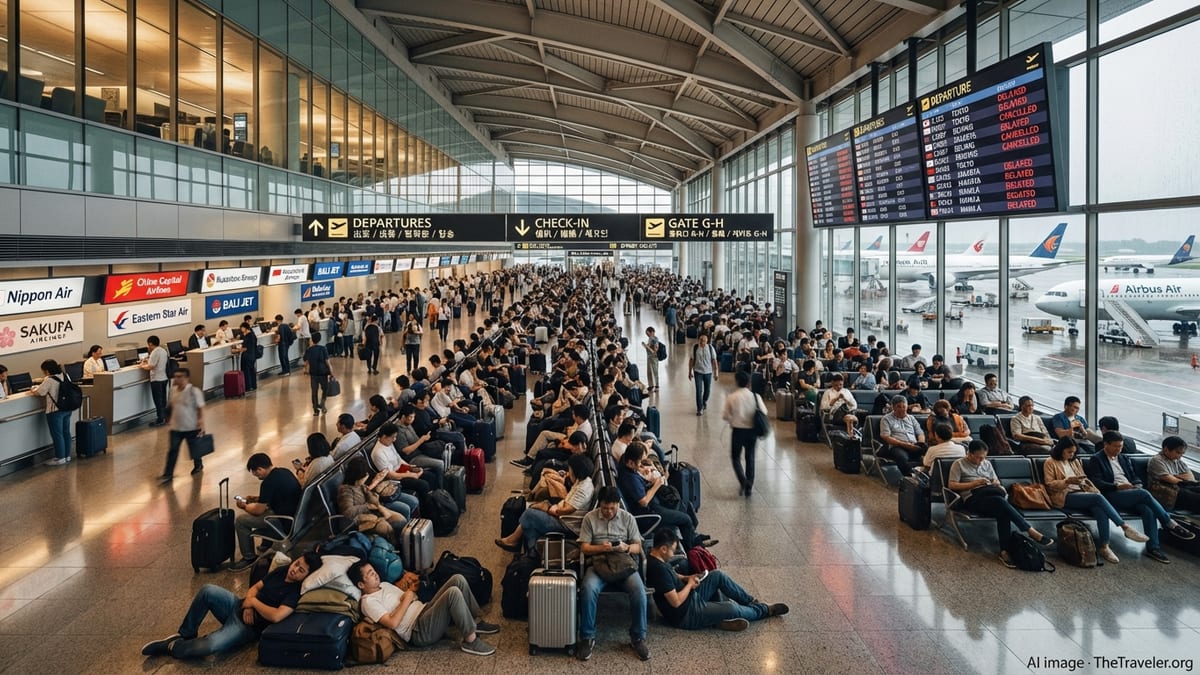
Travelers across Asia woke to widespread flight disruption as regional carriers including Batik Air, China Eastern, Hainan Airlines, ANA Wings and Chengdu Airlines canceled at least 81 services and delayed more than 300 others, snarling traffic through major hubs in Indonesia, China, Japan, Singapore and Malaysia.
Get the latest news straight to your inbox!
Major Asian Hubs Struggle With Sudden Disruptions
The latest disruption has rippled quickly through some of Asia’s busiest gateways, with Jakarta, Shanghai and Beijing among the hardest hit. Publicly available tracking data and media coverage indicate that cancellations and delays are concentrated on short and medium haul routes that knit together Southeast Asia with key Chinese and Japanese business centers.
Jakarta’s Soekarno Hatta International Airport has seen a cluster of schedule changes affecting regional flights operated by Batik Air and its partners, creating knock-on delays for travelers heading onward to Singapore and Kuala Lumpur. Similar patterns are being reported at Shanghai Pudong and Beijing Capital, where China Eastern, Hainan Airlines and Chengdu Airlines have scrubbed flights or pushed departures back, complicating connections for passengers bound for Japan and Southeast Asia.
The cumulative effect is a sharp reduction in available seats on popular corridors at short notice. Passengers flying between major cities such as Jakarta, Shanghai, Beijing, Singapore and Kuala Lumpur are facing extended layovers, missed connections and, in some cases, the need to reroute through secondary hubs to complete their journeys.
Multiple Carriers, One Converging Problem
While the disruption spans several airlines, the operational strains share common features. Regional full service and hybrid carriers like China Eastern and Hainan Airlines are adjusting schedules at the same time as smaller operators such as Batik Air, ANA Wings and Chengdu Airlines, amplifying the impact on passengers who rely on interline or codeshare itineraries.
Industry reports suggest that a combination of aircraft rotations, crew availability issues and route planning revisions is behind the current wave of cancellations. In some cases, airlines appear to be consolidating lightly booked flights or trimming frequencies on selected city pairs, which can lead to clusters of cancellations on particular days rather than a steady reduction in service.
Travel forums and flight-status platforms show that delays are often compounding throughout the day. An early morning hold at a hub like Shanghai or Beijing can force subsequent flights to depart late, particularly on aircraft that operate multiple legs in a single duty cycle. Once a threshold is crossed, airlines may cancel later services entirely rather than operate severely delayed rotations late into the night.
Passengers Stranded From Jakarta to Tokyo
The disruption is being felt well beyond the primary hubs named in initial reports. Travelers transiting through Singapore and Kuala Lumpur describe being held in terminals for hours after learning that feeder services from Indonesia or China have been canceled or rescheduled at short notice.
In Japan, regional operations operated by subsidiaries such as ANA Wings play a critical role in funneling passengers from secondary cities to international gateways. When flights from China arrive late or fail to operate, travelers can miss these onward legs, leaving them stranded at airports with limited late-night alternatives. Similar challenges are emerging for those attempting to connect from Chinese interior cities via Chengdu on services marketed or operated by Chengdu Airlines.
For many affected passengers, the timing is particularly difficult. The disruptions coincide with a period of strong demand for intra-Asian travel, including both business trips and leisure journeys that were booked months in advance. With load factors already high, same-day rebooking options can be scarce, especially on peak routes linking Jakarta, Shanghai and Beijing with Singapore, Kuala Lumpur and major Japanese cities.
Knock-On Effects Across Regional Networks
Network analysts note that even a relatively modest number of cancellations can trigger outsized consequences in Asia’s tightly interconnected aviation system. A single grounded aircraft or crew rotation problem can cascade across multiple countries when the same plane and team are scheduled to operate several legs through Indonesia, Singapore, Malaysia and China in one day.
Delays recorded at major Chinese hubs feed directly into Southeast Asian and Japanese schedules, where slot constraints and night curfews limit how far departures can be pushed back. Once those operational windows close, airlines are often left with no option but to cancel services, adding to the tally of disrupted flights and increasing the number of travelers forced to overnight in transit.
These knock-on effects are particularly visible on cross-border routes served by a mix of full service and low cost operators. As regional carriers such as Batik Air and Hainan Airlines adjust timetables, competitors may not have enough spare capacity to absorb displaced passengers at short notice, leaving travelers to piece together alternative journeys across multiple airlines and airports.
What Travelers Can Expect in the Coming Days
Publicly available advisories and recent patterns suggest that further rolling disruptions are possible as airlines work through backlogs and adjust schedules. Carriers typically prioritize restoring core trunk routes between primary hubs such as Jakarta, Shanghai and Beijing, which can leave secondary city pairs and late-evening services more vulnerable to continued cancellations.
Travelers already holding tickets on affected airlines may see additional time changes or aircraft swaps as operations stabilize. In practice, this can mean earlier departures, lengthened layovers or rerouting through alternative hubs such as Guangzhou, Shenzhen or Hong Kong to bypass the most heavily impacted airports.
For those yet to depart, industry observers recommend monitoring bookings frequently in the 24 to 48 hours before travel and building extra buffer time into itineraries that involve connections in China, Indonesia, Singapore, Malaysia or Japan. With hundreds of delays and dozens of cancellations already logged across the region, the current wave of disruption underscores how quickly conditions can change for air travelers in one of the world’s busiest aviation markets.