


More news on this day
Tokaido Shinkansen bullet train services gradually resumed on the evening of June 19 after a person was fatally struck near Hamamatsu Station, halting one of Japan’s busiest rail corridors and stranding thousands of travelers between Tokyo and Shin-Osaka.
Get the latest news straight to your inbox!
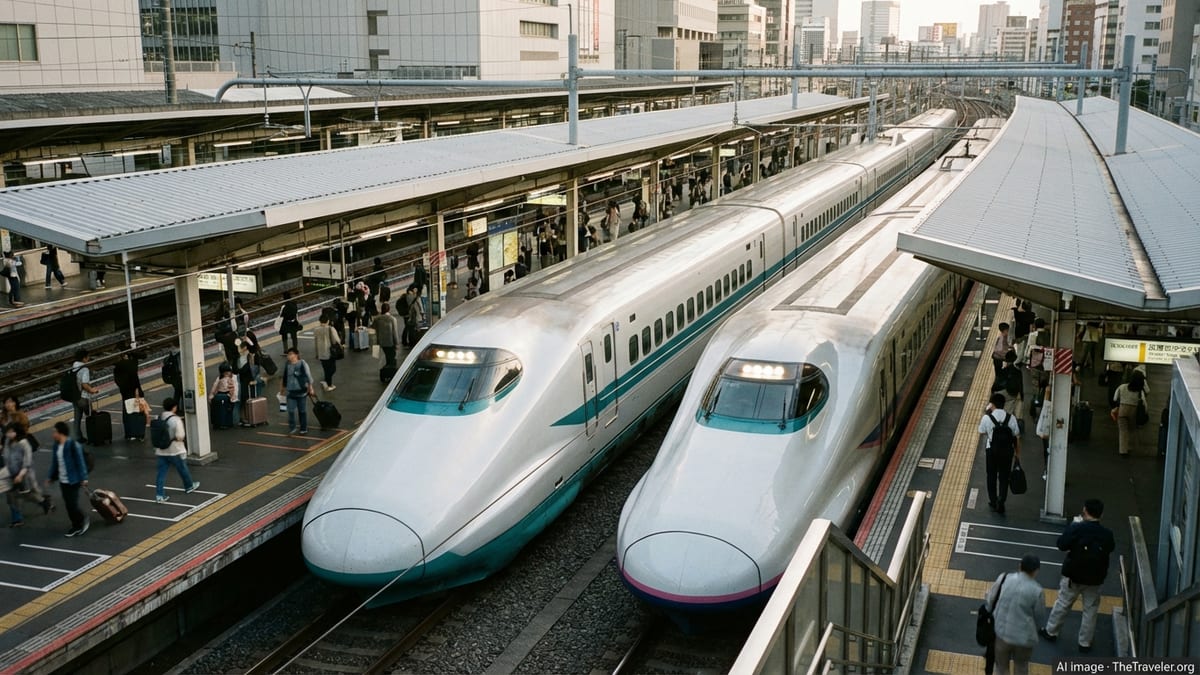
Services Halted After Person Struck by Nozomi Train
According to Japanese media reports, operations on the Tokaido Shinkansen were suspended in both directions on June 19 after a person entered the tracks near Hamamatsu Station in Shizuoka Prefecture and was hit by a Nozomi service. Coverage from domestic outlets indicates the incident involved the westbound Nozomi 49, one of the frequent high speed services linking Tokyo with Osaka in under three hours.
Reports from regional broadcasters and national newspapers describe the event as a fatal incident on the tracks, triggering an immediate shutdown of services between Tokyo and Shin-Osaka. Safety protocols on Japan’s high speed network require a full halt while emergency responders and investigators access the site, resulting in widespread delays along the line.
Passengers already on board affected trains reported lengthy delays and unscheduled stops. Some accounts shared on social media referenced trains held between stations for extended periods before being allowed to move at reduced speed, underscoring the knock-on impact of a single disruption on this high density corridor.
Publicly available information indicates that conventional rail services in the surrounding area also experienced crowding and delays as travelers attempted to reroute around the suspended Shinkansen section.
Gradual Resumption and Ongoing Delays
Information shared through rail information channels and summarized in local news coverage shows that the line’s operator began a phased restart of operations later in the evening. Notices cited in Japanese reports pointed to an estimated resumption time around 8:45 p.m. local time, once on-site work was completed and police investigations concluded.
Trains did not immediately return to normal frequency. Instead, services were progressively reintroduced, with priority given to long distance trains already in transit and to key Nozomi and Hikari departures in the late evening timetable. Travelers arriving at major hubs such as Tokyo, Nagoya, Kyoto, and Shin-Osaka were advised via station announcements and information boards to expect significant residual delays.
Media summaries of operator advisories indicate that passengers were encouraged to postpone nonessential travel on the Tokaido Shinkansen for the remainder of the night, reflecting the scale of the backlog. Some late departures were canceled outright, while others operated with substantially extended journey times.
Online journey planners and crowd-sourced updates suggested that knock-on delays continued into the late evening, with arrival times in western Japan pushed back and some travelers missing connections to regional and local services beyond Shin-Osaka and Nagoya.
Japan’s Busiest High Speed Corridor Temporarily Stopped
The Tokaido Shinkansen, linking Tokyo and Shin-Osaka, is widely described in transport literature as one of the world’s busiest and most commercially important high speed rail lines. On peak travel days, more than a dozen Nozomi trains can depart in a single hour in each direction, supplemented by Hikari and Kodama services that make additional regional stops.
Because the line is dedicated to high speed operations and runs at very short headways, an emergency stop on one train immediately affects many others. Analysis pieces on Japanese rail operations frequently highlight how tightly scheduled the corridor is, with train paths planned to the minute to accommodate business travelers, tourists, and commuters across central Honshu.
Disruptions of the kind seen on June 19 remain relatively rare on the Shinkansen, which is internationally noted for its safety record and punctuality. When they do occur, however, the impact can be far reaching, particularly in the evening period when travelers are returning from business trips or moving between major cities for onward flights and hotel check-ins.
Travel industry observers point out that such incidents also intersect with broader changes on the Tokaido Shinkansen, including recent timetable revisions that increase the number of Nozomi departures and introduce new premium seating products, further raising demand on already busy services.
What Travelers Experienced on the Ground
Posts shared on traveler forums and social media on June 19 describe scenes of crowded concourses and long lines at ticket counters as passengers sought rerouting options or refunds. Some visitors reported being advised to switch to conventional JR lines along the Tokaido corridor, though these slower services also became heavily congested as the evening progressed.
Other accounts referenced uncertainty over how long the suspension would last, with information screens and app alerts gradually updating as the expected restart time was revised. For international tourists unfamiliar with Japanese language announcements, the combination of limited English information and rapidly changing train statuses added to the stress of the disruption.
Travel bloggers and residents commenting online highlighted the importance of allowing buffer time in itineraries when using the Shinkansen, particularly when onward connections such as domestic flights or hotel check-in cutoffs are involved. While the system is renowned for on-time performance, incidents like the Hamamatsu fatality demonstrate that unplanned delays can still occur.
In several posts, travelers praised station staff for managing crowd flows and assisting with rebooking, even as ticketing counters faced long queues. Many riders reported eventually reaching their destinations late at night after taking rescheduled trains once full operations restarted.
Practical Guidance for Upcoming Trips
For readers planning journeys on the Tokaido Shinkansen in the coming days, publicly available information suggests that services have now largely returned to normal. Timetable searches for the Tokyo to Shin-Osaka route on June 20 show the usual mix of Nozomi, Hikari, and Kodama trains operating across the day.
Travel specialists often recommend that visitors monitor official train status pages and station information boards before departure, especially during peak periods or after a major disruption. Many travelers also find it useful to download rail information apps or to check updates from Japanese news outlets, which tend to report quickly on significant interruptions to the Shinkansen network.
For those connecting to or from flights at Tokyo Haneda, Tokyo Narita, or Kansai International Airport, building extra time into the schedule can help absorb unexpected delays. Having a backup route via conventional JR lines or intercity buses may also provide additional flexibility in the rare case that high speed services are halted for an extended period.
While the June 19 fatality near Hamamatsu caused serious disruption for one evening, subsequent operations on the Tokaido Shinkansen illustrate why the line remains a cornerstone of Japanese travel. Once investigations were completed and tracks were cleared, trains were able to resume high frequency operations, again linking the nation’s largest metropolitan areas at high speed for both residents and international visitors.