


More news on this day
Portugal is emerging as a new focal point in Europe’s escalating wildfire story, as a warming climate and a likely return of El Niño combine with parched Mediterranean landscapes to heighten the risk of summer blazes, transport disruption and strain on key tourist destinations from Lisbon to the Greek islands.
Get the latest news straight to your inbox!
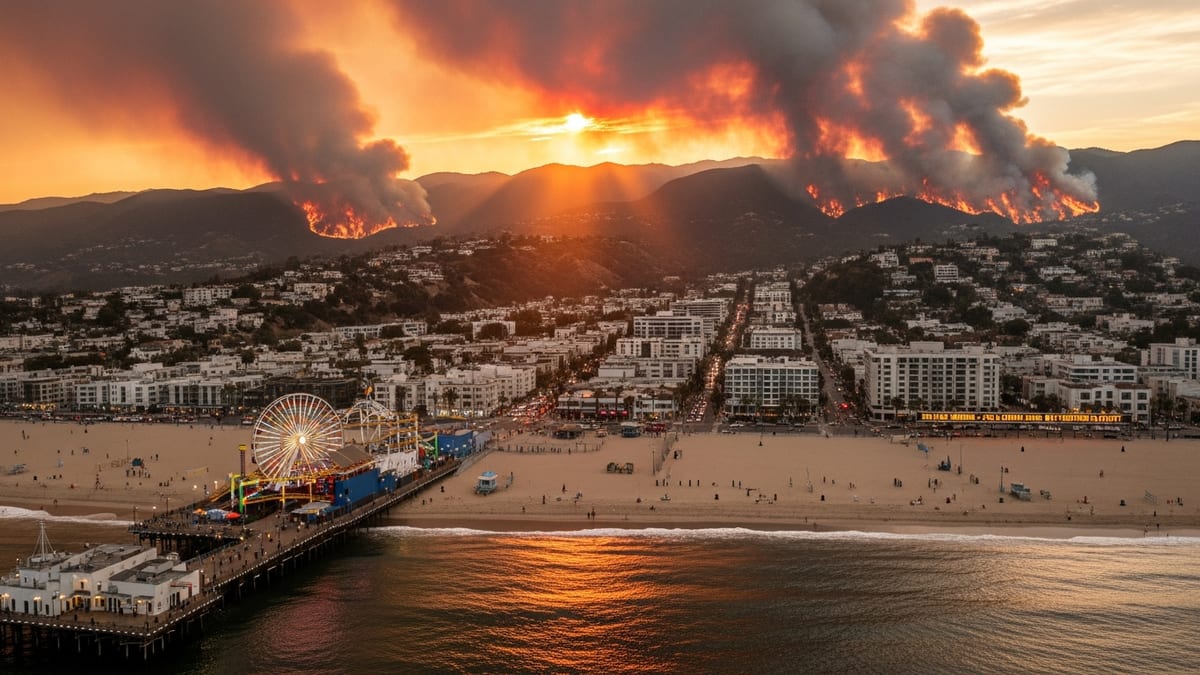
Portugal Joins a Growing Southern European Wildfire Belt
Recent seasons have marked a clear shift in Portugal’s fire profile, pushing it into the same high‑risk category as Italy, Spain, France, Greece and Cyprus. Episodes of intense heat and drought across the Iberian Peninsula in 2024 and 2025 coincided with severe fire outbreaks in Portugal and neighboring states, with hundreds of thousands of hectares burned across the wider Mediterranean region. Publicly available monitoring data from the European Forest Fire Information System show that southern Europe’s fire seasons are lengthening and starting earlier, especially in coastal and inland tourist regions.
In Portugal, a run of destructive fire seasons has exposed how vulnerable rural areas and rapidly growing tourism corridors have become. Coverage of the 2024 Portugal wildfires documented more than 1,000 individual blazes in a single week in September, burning over 135,000 hectares in central and northern districts and forcing mass evacuations and road closures, including on routes commonly used by summer visitors. The 2025 season brought further alerts and restrictions, even as national plans for fuel‑load reduction and forest clearance expanded.
Neighboring countries have faced similar pressures. Spain and Greece have repeatedly registered large, fast‑moving fires near coastal resorts and islands, while Italy, France and Cyprus have all reported seasons where burned area and emergency assistance requests spiked well above long‑term averages. European Commission situation reports describe a pattern in which the same cluster of Mediterranean destinations is hit year after year, producing compounding economic and social impacts for communities dependent on summer tourism.
Portugal’s inclusion in this belt of recurring fire emergencies is reshaping regional risk assessments. Travel and insurance analysts increasingly group the country with other southern European hotspots when modeling potential disruption to flights, cruise operations and overland itineraries during July and August.
El Niño, Record Heat and a Climate System Under Strain
The heightened concern for summer 2026 comes against a backdrop of exceptional global warmth. The Copernicus Climate Change Service and the World Meteorological Organization have confirmed that 2023 and 2024 ranked among the hottest years on record worldwide, with Europe identified as the fastest‑warming continent and 2024 described as its warmest year to date. This warmth followed the strong 2023–2024 El Niño event in the Pacific, which added heat to an already warming climate and contributed to severe heatwaves and wildfire‑friendly conditions in multiple regions.
Scientific assessments of the 2023–2024 period indicate that the El Niño signal, layered on top of long‑term human‑driven warming, pushed fire‑weather indices to unusually high levels in parts of southern Europe. Studies published in European geoscience journals highlight how higher temperatures, lower soil moisture and longer dry spells are combining to increase the number of days each year with “very high” or “extreme” fire danger ratings, especially during late spring and summer.
New outlooks for 2026 from international climate agencies and research groups point to a significant probability that El Niño conditions will redevelop by late summer, with some updates citing an 80 to 90 percent likelihood of at least a moderate event by the final quarter of the year. While there is still uncertainty about the exact timing and intensity, the guidance broadly suggests another period of elevated global temperatures, with associated increases in the likelihood of extreme heat episodes.
For southern Europe, this combination of a warming baseline climate and a fresh El Niño phase translates into an elevated probability of heatwaves, drought patches and volatile fire weather. Seasonal briefings circulated to risk managers in early June describe a pattern where even “average” rainfall may not be sufficient to offset higher evaporation and soil‑drying, leaving forests and scrublands more flammable for longer periods.
From Smoke to Schedules: How Fires Disrupt Travel
For travelers, the most immediate impacts of wildfires are often felt in airports and along key transport corridors. Past fire seasons in Greece, Spain and Portugal have seen smoke plumes drift across runways, visibility reduced to unsafe levels and operations briefly halted while fire crews tackle nearby blazes. Media coverage in 2024 and 2025 documented episodes in which flights were diverted, delayed or subject to last‑minute cancellations when fires broke out close to airports or along standard approach paths.
Wildfires can also cut off access to popular coastal resorts and inland heritage towns. In several recent summers, roads in Portugal, Spain and Greece have been closed or restricted because of advancing flames, falling trees or thick smoke, forcing tour operators to reroute coaches and, in some cases, to evacuate guests by alternative routes. Similar patterns have been reported in parts of southern France and Italy, where fires at the rural‑urban edge have temporarily severed key links between cities and nearby beach or countryside destinations.
Even when infrastructure remains intact, smoke and heat can degrade the visitor experience. Prolonged episodes of poor air quality have led to warnings advising people to limit outdoor activity, particularly for children, older travelers and those with respiratory conditions. When combined with extreme temperatures, these conditions can prompt hotels and attractions to adjust operating hours, reduce outdoor programming or close certain areas on peak‑risk days.
Insurance and aviation risk briefings prepared for the 2024 and 2025 seasons note that the interplay between climate extremes and dense summer traffic is making disruption more likely. With airports and road networks already operating near capacity in July and August, relatively small incidents, such as a localized fire near a runway or a stretch of highway, can cascade into broader delays across national and regional transport systems.
Tourism Industry Braces for Another Uncertain Summer
Across Portugal and the wider Mediterranean, tourism businesses are moving into the 2026 high season with a sharper focus on climate and fire risk. Hotel and resort operators in Portugal’s Algarve and central coastal regions are publicizing emergency procedures and evacuation routes more visibly than in previous years, while some inland rural accommodations have introduced restrictions on outdoor grilling and smoking during high‑alert periods. Similar measures are appearing in Greek islands, Spanish coastal towns and Italian and French hinterlands that have experienced repeated fire scares.
Travel companies are also revising contingency planning. Major tour operators serving Portugal, Spain, Greece and Cyprus have expanded their capacity to rebook guests to alternative properties or destinations when fires threaten a resort area. Airline briefing materials for summer crews increasingly include detailed guidance on operating near wildfire smoke and high temperatures, as well as scenario planning for diversions and temporary airspace restrictions.
At the national level, Portugal’s integrated rural fire management system is being scaled up, according to public documents describing investments in fuel management, early warning tools and inter‑agency coordination. Similar strategies are unfolding in Spain, France, Italy, Greece and Cyprus, where authorities are combining forest‑management efforts with public information campaigns aimed at reducing human‑caused ignitions during peak tourist months.
Industry analysts suggest that while such measures can reduce the likelihood and severity of fire impacts, they cannot fully remove climate‑driven risk. The expectation instead is of a more reactive and flexible tourism model, in which operators, airlines and travelers remain ready to adjust plans at short notice as weather and fire conditions evolve through the season.
What Travelers to Portugal and Southern Europe Should Expect
For visitors planning trips in summer 2026, the emerging guidance points to a season where conditions could shift quickly. Climate and fire‑risk outlooks do not imply that wildfires will be burning constantly across Portugal or the Mediterranean, but they do indicate an increased probability of short, intense episodes that can disrupt localized areas. In practice, this may mean occasional closures of hiking trails, rural roads or specific resort zones, rather than blanket shutdowns of major cities or entire coasts.
Travel risk consultancies advise that airlines and tour operators are better prepared than in past years to manage such volatility, but emphasize the importance of flexible booking terms and real‑time information for customers. Many carriers and hotel groups now highlight options for date or destination changes when civil‑protection alerts reach critical levels, reflecting lessons learned from recent wildfire and heatwave seasons in southern Europe.
Prospective travelers to Portugal, Spain, France, Italy, Greece and Cyprus are being encouraged by public information campaigns to monitor local weather and fire‑risk bulletins in the days leading up to departure, pack accordingly for extreme heat and be prepared for adjustments to outdoor plans. Guidance typically stresses simple but effective steps such as avoiding open flames in rural areas, respecting access restrictions and following instructions from local safety signage and alerts.
As another summer approaches under the combined influence of climate change and a likely new El Niño, Portugal’s shift into the core zone of Europe’s wildfire risk underscores a broader reality for Mediterranean tourism. The region remains a leading global destination, but its summer seasons are increasingly defined by how effectively visitors, businesses and public services can adapt to a more volatile climate and the fires it helps to fuel.