


More news on this day
Iran’s tourism industry is reeling as China and a widening group of source markets urge citizens to avoid the country, compounding record drops in foreign arrivals, widespread flight disruptions and deepening economic losses linked to the war in Iran and broader Middle East tensions.
Get the latest news straight to your inbox!
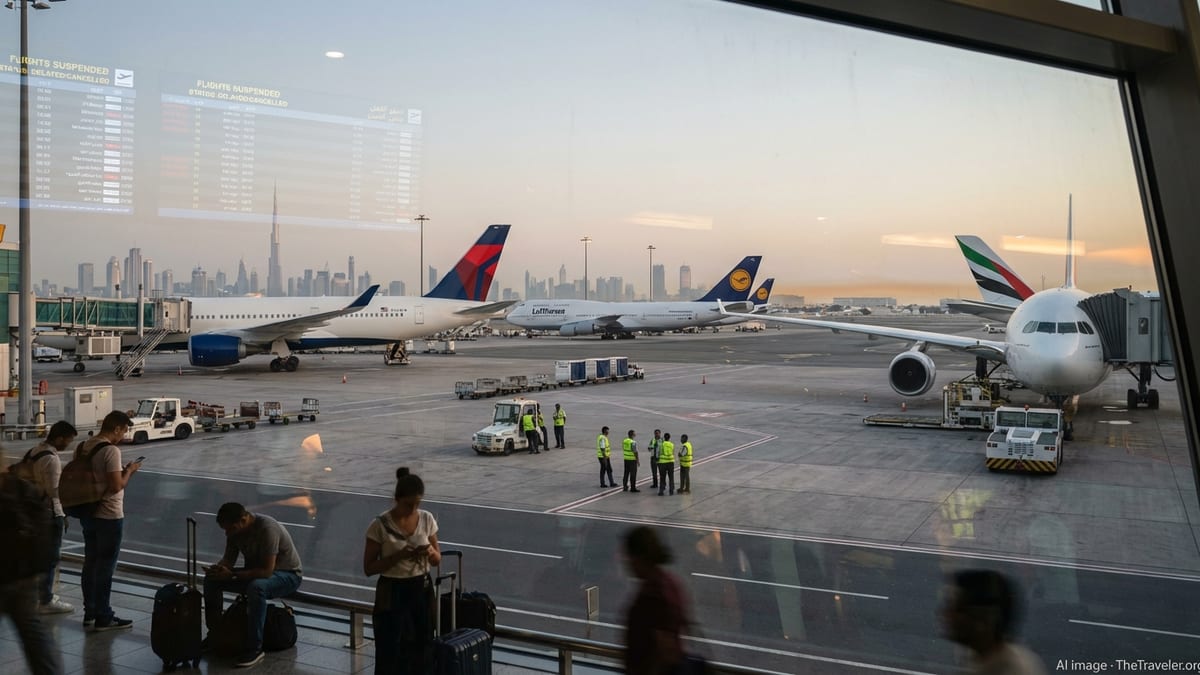
China’s Highest-Level Warning Signals a Turning Point
China has become one of the most prominent countries to publicly discourage travel to Iran in recent months, issuing its highest-level warning and urging citizens to leave the country. Public notices from China’s foreign ministry and its embassy in Tehran in late February 2026 advised Chinese nationals to avoid all travel to Iran and for those already present to depart as soon as possible, citing a sharp rise in external security risks.
Follow-up alerts from the Chinese embassy reiterated that the security situation in Iran remains volatile and dangerous, and encouraged companies and individuals to suspend non-essential travel. These moves effectively remove one of the fastest-growing Asian source markets from Iran’s inbound tourism pipeline at a moment when the sector is already under severe strain.
Before the latest escalation, Iranian officials had often highlighted China as a strategic tourism partner, supported by relaxed visa rules and promotional campaigns. The new guidance reverses that narrative, sending a strong signal to tour operators, airlines and independent travellers across Asia that Iran is now viewed as a high-risk destination.
Russia, Gulf States and Asian Markets Pull Back
China’s stance mirrors a broader shift among countries that once supplied visitors to Iran or relied on its airspace and regional connectivity. Russian media coverage in early March 2026 detailed emergency evacuation flights bringing thousands of Russian citizens home from the wider Middle East as conflict in Iran disrupted air travel and raised safety concerns for tourists and workers. The evacuations underscore how quickly leisure trips have turned into complex repatriation operations.
In the Gulf, regional players such as Saudi Arabia and Oman are reassessing exposure to Iranian airspace and ports amid periodic missile exchanges and airspace closures. Publicly available reporting on aviation schedules shows repeated episodes of suspended or rerouted services involving Gulf hubs, weakening Iran’s role as a secondary gateway for regional and religious tourism.
Further afield, countries like Thailand and South Korea are adjusting their guidance and risk assessments for citizens transiting through or visiting Iran. While these states may not have been major suppliers of tourists to Iran on the scale of neighboring Iraq or Russia, their caution contributes to a widening perception of Iran as a no-go zone, especially for package tours that combine multiple Middle Eastern or Central Asian destinations.
Record Slump in Arrivals and Severe Flight Disruptions
The security deterioration has rapidly translated into a sharp fall in inbound travel. Iran’s own tourism authorities reported in late 2025 that foreign tourist arrivals plunged by around three quarters in the months following a twelve-day war with Israel, effectively wiping out much of the recovery that had followed the pandemic and earlier unrest. The subsequent expansion of the conflict on Iranian territory in 2026, along with repeated airspace warnings, has further undermined confidence.
International aviation data and flight-tracking analyses show that bouts of fighting around Iran have triggered waves of cancellations and diversions across the region. Widespread airspace closures affecting Iran and several neighboring states in late February and early March led to thousands of delayed or cancelled flights worldwide, as carriers scrambled to reroute around contested skies and avoid risk corridors.
For Iran, these disruptions are particularly damaging because the country depends heavily on a mix of regional pilgrims, cross-border shoppers and transit passengers. When foreign airlines scale back frequencies or suspend routes, the knock-on effects reach hotels, domestic carriers, guides, transport providers and small hospitality businesses that rely on a predictable flow of visitors.
Economic Toll Mounts Amid Broader Middle East Turbulence
The tourism collapse is amplifying an already heavy economic burden from years of sanctions and military spending. Research on the economic impact of the Iran–Israel proxy conflict points to hundreds of billions of dollars in lost oil income over the past decade, while the latest war has added costly missile salvos, infrastructure damage and emergency defense outlays. Tourism, once seen as a relatively quick win for job creation and foreign currency earnings, is now another casualty of the confrontation.
Regional assessments by tourism analysts suggest that the Middle East as a whole could see international arrivals in 2026 fall by as much as a quarter compared with earlier projections, with Iran among the most exposed markets because of direct conflict on its territory and pre-existing political tensions. Estimates circulated by industry groups indicate that combined travel and tourism losses linked to the Iran war are running into the hundreds of millions of dollars per day across the wider region, driven by cancellations, shorter stays and lower discretionary spending.
Within Iran, the damage extends beyond hotels and tour agencies. Cultural heritage authorities have reported dozens of historic sites and museums damaged in the fighting, undermining one of the country’s key draws for international visitors. Repairing these sites will require significant public investment at a time when state finances are already constrained, further delaying any potential rebound in high-value cultural tourism.
Struggle to Reassure Travellers and Rebuild Confidence
Officials in Tehran have previously promoted visa facilitation, regional marketing campaigns and the expansion of low-cost air links as tools to attract more visitors from Asia, the Gulf and Europe. Those efforts delivered gains in 2022 and 2023, when official figures showed international arrivals climbing back above four million and then past six million. The current downturn has reversed much of that progress, leaving operators with empty rooms and tour buses as bookings from key markets disappear.
Public statements from tourism and aviation experts indicate that convincing risk-averse travellers to return will require more than discounted packages or streamlined visas. Potential visitors are closely watching images of missile strikes, destroyed heritage sites and disrupted airports, as well as the steady drumbeat of travel advisories from governments across Asia, Europe and North America that either warn against all travel to Iran or urge extreme caution.
Even if active hostilities ease, experience from other recent conflicts in the region suggests that it can take years for international arrivals to recover fully. Airlines typically restore capacity slowly, insurance premiums remain elevated, and tour operators are reluctant to resume marketing until they are confident that a new crisis will not strand clients. For Iran, the latest wave of advisories from China, Russia’s emergency evacuations and the caution shown by partners such as Saudi Arabia, Oman, Thailand and South Korea all point to a long, uncertain road ahead for its embattled tourism sector.