


More news on this day
A fresh spell of flight cancellations at Bangkok’s Suvarnabhumi Airport and Koh Samui’s island gateway has disrupted travel for hundreds of passengers, adding to growing concerns that mounting aviation strains are beginning to erode confidence in Thailand’s tourism recovery.
Get the latest news straight to your inbox!
Sudden Wave of Cancellations Hits Key Thai Hubs
Reports from flight-tracking dashboards and aviation-focused coverage indicate that at least 27 flights linked to Bangkok’s Suvarnabhumi Airport and Samui Airport were canceled over a short period, snarling connections on some of Thailand’s most heavily traveled domestic and regional routes. While individual cancellations are a routine feature of modern aviation, the clustering of disruptions across two of the country’s most important tourist gateways has magnified the impact on travelers and tour operators.
Publicly available airline information shows that services between Bangkok and island destinations such as Koh Samui were among the most affected, with some early-morning and late-evening departures removed from schedules at short notice. Additional cancellations on long-haul and regional services transiting Suvarnabhumi compounded the ripple effects, as missed onward connections forced passengers into overnight stays and complex rebookings.
Data from recent weeks already pointed to higher-than-normal disruption levels across Thailand’s airports, as carriers recalibrated networks in response to softer demand on certain routes and rising operating costs. The latest cluster of cancellations has therefore landed at a sensitive moment for the sector, with the tourism economy still working to regain its pre-pandemic momentum.
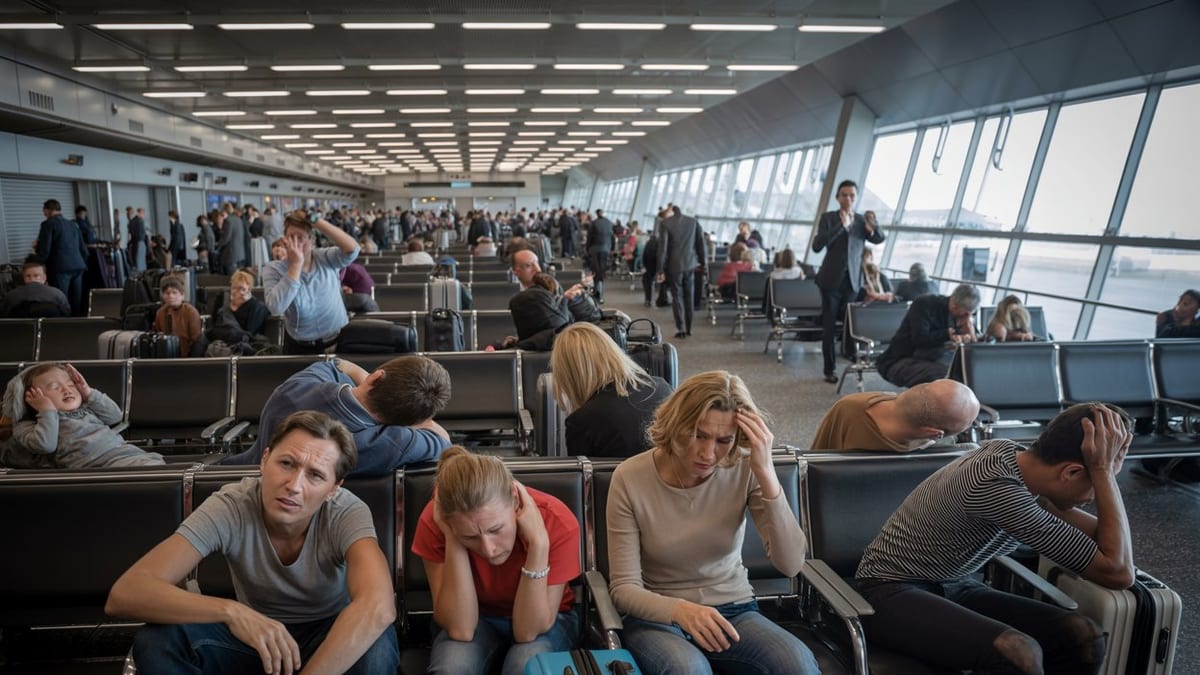
Travelers posting on aviation and tourism forums described confused scenes at departure halls, with long queues at airline counters and limited on-the-spot information about alternative options. Many reported being moved to later flights or rerouted through secondary airports, while others opted to abandon air travel altogether and switch to rail, bus, or ferry connections.
Fuel Pressures and Capacity Resets Behind the Disruptions
The cancellations come against the backdrop of a broader shake‑up in Thai aviation. In late April, national carrier Thai Airways publicly outlined a plan to trim its schedule and cut dozens of flights from May 2026, citing a combination of elevated jet fuel prices and weaker bookings on some regional routes. The airline framed the move as a short‑term adjustment designed to match capacity with actual demand while shielding finances from volatile input costs.
Analysts note that similar recalibrations are in play across the market, as full‑service and low‑cost carriers weigh the economics of maintaining lightly booked frequencies into secondary cities and island destinations. In this context, concentrated cancellations at Suvarnabhumi and Samui appear to reflect both operational constraints and a deliberate attempt by airlines to consolidate traffic onto fewer, fuller flights.
Industry commentary also points to lingering supply chain and maintenance pressures that can leave airlines with limited spare aircraft when technical issues arise. When disruptions occur during peak travel windows, as appears to have been the case for several of the affected services, even a relatively small number of grounded planes can cascade into widespread timetable upheaval.
Aviation observers stress that fuel and capacity challenges are not unique to Thailand, but the country’s strong dependence on international tourism amplifies the consequences of any perception that air access is becoming unreliable. Cancellations on key Bangkok–Samui and regional Asian routes are particularly sensitive, as these corridors serve as lifelines for island resorts and tour operators whose margins rely on high seat availability.
Knock‑On Effects for Tourists and Island Economies
For visitors, the immediate impact has been missed hotel check‑ins, curtailed island stays, and hastily reworked itineraries. Accounts shared across traveler communities describe holidaymakers sleeping in terminal seating, scrambling to secure last‑minute rooms near Suvarnabhumi, or facing multi‑segment journeys combining domestic transfers with ferry crossings after missing direct flights into Samui.
The disruption is especially painful for short‑stay tourists who planned tight, multi‑stop trips around Thailand’s beaches and cultural hubs. When a single domestic flight is canceled or significantly delayed, a three‑ or four‑day island break can shrink to a single full day on the ground, undermining the value of the entire trip.
On Koh Samui and neighboring islands, even temporary reductions in air capacity can reverberate through the local economy. Hoteliers, restaurateurs, and excursion operators rely on a steady inflow of passengers via Samui’s small but strategically vital airport. Recent tourism and aviation analysis has already highlighted how shifts in flight volumes can tilt demand between competing regional destinations, with Samui’s relative resilience contrasted against slower recoveries elsewhere in Thailand.
Local business associations have previously warned that inconsistent flight schedules and last‑minute cancellations make it harder to plan staffing, inventory, and pricing. While the latest wave of disruptions may prove short‑lived, it reinforces longer‑standing concerns about the fragility of air links that underpin island tourism.
Strain on Thailand’s Image as a Seamless Gateway
Thailand’s main gateway, Suvarnabhumi Airport, has worked in recent seasons to project an image of smooth processing and reliability, with airport operators and immigration services boosting staffing during major holidays and travel peaks. Recent public information campaigns have emphasized shorter queues and improved passenger flows as international arrivals continued to recover.
The optics of crowds forming around information desks and departure boards, in contrast, risk reviving memories of previous episodes of congestion and disruption at the hub. Travel trade groups have repeatedly underlined that for long‑haul tourists, the experience of landing, clearing formalities, and connecting onward can shape perceptions of the destination just as strongly as time spent at beaches or heritage sites.
Tourism analysts tracking booking patterns note that potential visitors now weigh reliability and schedule stability alongside price when choosing between competing Southeast Asian destinations. In this environment, recurring reports of canceled flights, missed connections, and unpredictable domestic services could gradually push some travelers toward alternative gateways with more robust reputations for punctuality.
Nevertheless, Suvarnabhumi continues to handle large volumes of traffic daily, and the majority of flights proceed as scheduled. Observers caution that while the latest cancellations are disruptive and newsworthy, they represent a portion of overall operations rather than a complete breakdown of the system.
What Travelers Can Do as Disruptions Continue
Travel guidance circulating among frequent visitors to Thailand now strongly favors building additional buffers into itineraries that rely on domestic connections through Suvarnabhumi or Samui. Recommendations include avoiding last‑flight‑of‑the‑day options where feasible, allowing at least several hours between international arrivals and onward domestic departures, and monitoring airline apps closely in the 24 to 48 hours before travel.
Consumer‑rights advocates also emphasize the importance of reviewing fare conditions and rebooking rules before purchase, as carriers adopt more flexible or more restrictive policies in response to operational uncertainty. Some airlines servicing Thailand have introduced same‑day change options or more generous reissue policies during periods of heightened disruption, which can significantly ease the strain on affected travelers.
Travel insurers, meanwhile, report rising interest in policies that specifically cover missed connections, schedule changes, and additional accommodation costs linked to cancellations. Industry specialists suggest that such coverage may become an increasingly standard part of Thailand‑bound bookings if volatility in flight schedules persists.
For now, the cluster of cancellations at Suvarnabhumi and Samui stands as a pointed reminder that Thailand’s aviation and tourism revival remains a work in progress. Visitors can still reach the country’s beaches and cities in large numbers, but doing so may require a more cautious, flexible approach to planning than in the pre‑pandemic years.