


More news on this day
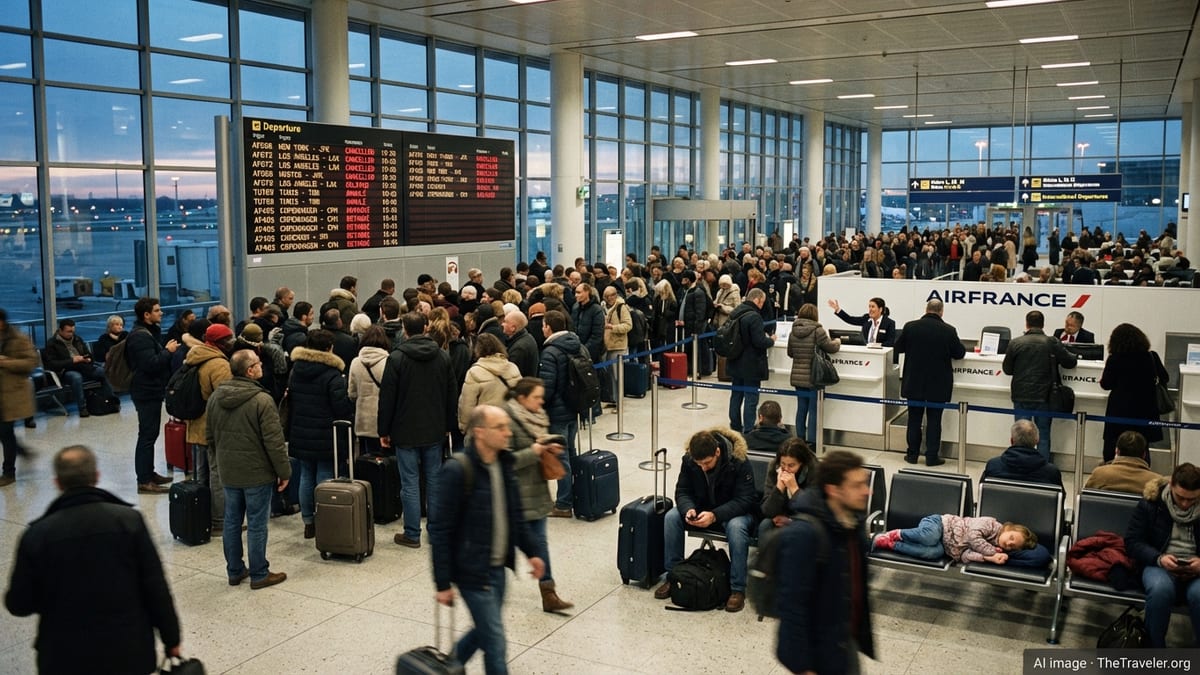
Hundreds of passengers have been left stranded or severely delayed at major French airports after a fresh wave of disruption saw 981 flights delayed and 34 cancelled in a single day, heavily affecting operations by Air France, easyJet, Lufthansa, Ryanair and KLM at hubs including Paris, Lyon, Nice, Marseille and Toulouse.
Get the latest news straight to your inbox!
Disruption Hits Key French Hubs on Busy Summer Travel Day
According to published operational data and industry tracking services, the latest disruption unfolded during an already pressured early-summer travel period in Europe, with France again emerging as one of the hardest-hit markets. The combined total of 981 delays and 34 cancellations was recorded across French airports over the course of the day, impacting domestic and international connections.
Paris Charles de Gaulle and Paris Orly saw knock-on congestion as delayed departures cascaded into missed connections, while regional hubs in Lyon, Nice, Marseille and Toulouse reported a sharp rise in late departures and arrivals. Publicly available information shows that the disruption primarily affected short and medium-haul services within Europe, where aircraft and crew rotations are tightly scheduled and highly sensitive to even modest delays.
Reports indicate that the pattern of disruption in France was part of a wider spike in flight problems across Europe, where thousands of services have recently faced delays and cancellations on peak travel days. Airlines and airports across the continent have been contending with a combination of air traffic control constraints, tight staffing and heavy seasonal demand.
Major European Carriers Bear the Brunt
Industry summaries of the day’s operations indicate that the disruption in France was concentrated among major European network and low-cost airlines. Air France and KLM, which operate an extensive joint network centered on Paris Charles de Gaulle and Amsterdam Schiphol, experienced significant schedule pressure as delays at one hub quickly fed through to the other.
Low-cost carriers easyJet and Ryanair, both with substantial bases and frequent services touching French airports, also reported elevated levels of delayed flights. Their dense turn-around schedules and reliance on rapid aircraft rotations across multiple countries meant that delays originating elsewhere in Europe quickly translated into late operations at French hubs such as Lyon, Nice and Marseille.
Lufthansa, which links German hubs with several French cities, was drawn into the disruption through shared European airspace bottlenecks and ongoing operational challenges on the continent. Tracking data and aggregated reports show that the airline, like its peers, saw an uptick in delayed arrivals and departures on routes touching France, adding to the network-wide total of affected flights.
Passengers Stranded and Re-Routed Across Paris, Lyon, Nice, Marseille and Toulouse
At ground level, the figures translated into crowded departure halls, long rebooking queues and extended waits at baggage belts. Travelers at Paris Charles de Gaulle and Paris Orly reported missed connections and unexpected overnight stays as late-running inbound flights arrived too late for passengers to catch onward services.
In Lyon and Nice, where easyJet, Air France, KLM and other carriers operate a mix of domestic and international flights, delays caused passengers to miss regional links and holiday departures, stranding some travelers far from their final destinations. Publicly accessible flight-status boards showed clusters of late departures and arrivals throughout the day, with some services pushed back by several hours.
Marseille and Toulouse, important gateways for southern and southwestern France, also experienced knock-on disruption. Travelers faced a mix of shorter delays and outright cancellations, with some passengers rerouted via alternative hubs or onto different airlines where capacity allowed. For many, this meant arriving late at night instead of during the afternoon, or facing unplanned hotel stays while waiting for the next available seat.
Regional Context: Europe-Wide Strain on Air Travel
The French disruption formed part of a broader pattern of strain on Europe’s aviation network during June. According to recently published coverage that aggregates performance across the continent, peak days this week saw more than 2,000 delays and close to 200 cancellations region-wide, with major hubs such as Amsterdam, Frankfurt, London and Barcelona also affected.
In that wider snapshot, KLM, Lufthansa, Ryanair, easyJet and Air France feature prominently among airlines with the highest numbers of delayed services, reflecting both their size and exposure to congested European airspace. While many of the delays were relatively short, the cumulative effect created significant scheduling challenges, particularly for carriers with tight turnarounds and dense point-to-point networks.
Analysts note that European aviation has been operating close to capacity on many days this summer, leaving little slack in the system to absorb weather disruptions, local technical issues or staffing shortages. When several of these factors coincide, the result can be a sudden spike in delays and cancellations, as seen in France with the 981 delayed flights and 34 cancellations recorded in a single day.
What the Disruptions Mean for Summer Travelers in France
For travelers planning journeys to, from or within France in the coming weeks, the latest disruption serves as a reminder of how quickly conditions can deteriorate during peak season. Travel experts advise that passengers build additional buffer time into itineraries, especially when booking tight connections at busy hubs like Paris Charles de Gaulle or when relying on last flights of the day to regional airports.
Publicly available guidance highlights the importance of checking flight status frequently on the day of travel, using airline apps or airport information displays, and registering for real-time alerts. When disruptions occur, passengers are often rebooked automatically, but those with flexible routing options or who can accept alternative airports may be able to secure earlier departures.
Consumer-rights organizations also point travelers toward European air passenger protection rules, which may provide entitlement to care, assistance or compensation in certain circumstances, depending on the length of delay, the route and the cause of the disruption. With France once again at the center of a period of severe operational strain, passengers are being urged to stay informed, keep documentation of delays and cancellations, and prepare for the possibility of extended travel times during the peak summer period.