


More news on this day
Passengers on American Airlines flight AAL1980, an Airbus A321 service from Los Angeles to Chicago O’Hare, experienced an unexpected detour on August 9 when the aircraft diverted to Minneapolis–Saint Paul International Airport in Minnesota, according to publicly available flight tracking information and media reports.
Get the latest news straight to your inbox!
Midcontinent Diversion Interrupts Transcontinental Route
Flight AAL1980 departed Los Angeles International Airport on August 9 on a scheduled route to Chicago O’Hare, one of American Airlines’ busiest domestic corridors. Partway through the journey, the aircraft turned north and landed at Minneapolis–Saint Paul International Airport, a major Upper Midwest hub that often serves as an alternate airfield for flights crossing the central United States.
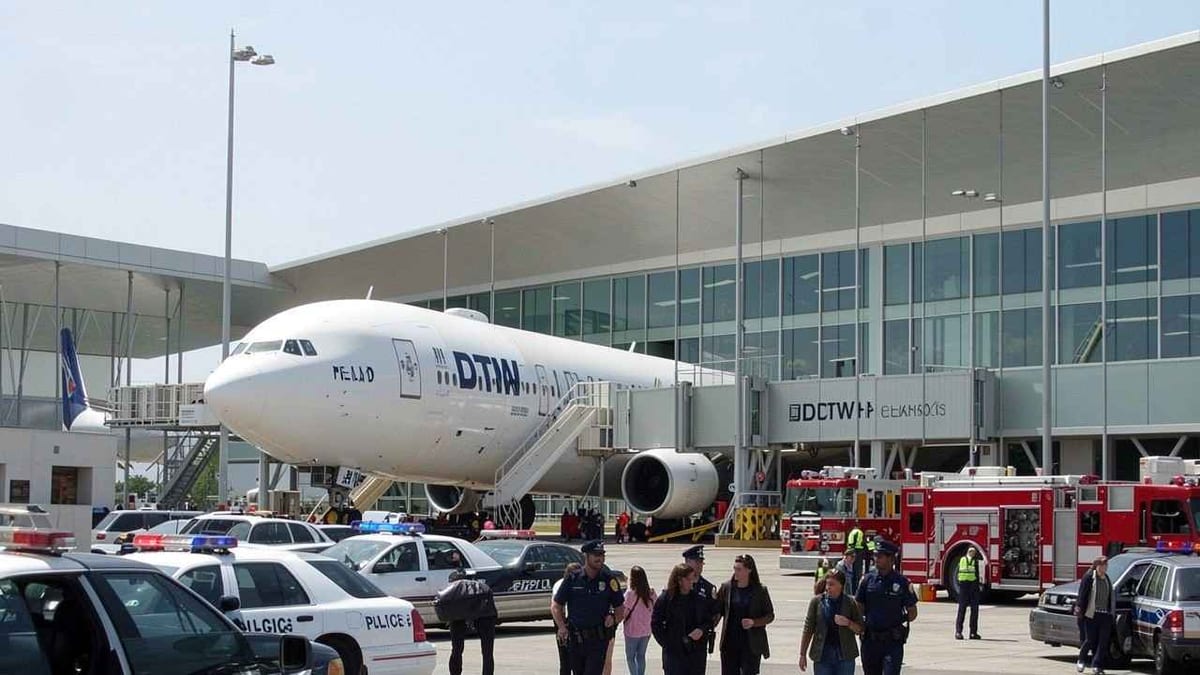
Publicly accessible flight-tracking data indicate that the Airbus A321 made a stable approach into Minneapolis–Saint Paul rather than a high-speed, emergency descent, suggesting a controlled operational diversion instead of a severe in-flight emergency. The aircraft taxied to a gate, where passengers were held while crews assessed the situation.
As of August 10, detailed cause information for the diversion had not been formally published. Similar events in recent months have involved a mix of potential triggers, including technical alerts, weather constraints along the planned route, and air traffic flow restrictions, any of which can prompt airlines to route aircraft to an alternate airport where ground support and runway capacity are available.
Operational Reasons Behind Flight Diversions
While each incident has its own specifics, industry reports and historical flight records show that diversions on U.S. domestic routes typically stem from a narrow set of safety and operational considerations. Common factors include cockpit indications of a possible mechanical issue, medical concerns involving passengers or crew, and fuel or weather constraints that make the planned destination less viable.
Guidance materials on American Airlines flight-status procedures describe a diverted flight as one that lands at an airport different from its scheduled destination for operational or safety reasons. In practice, dispatch teams weigh aircraft performance, available maintenance facilities, runway length, and current weather at potential alternates when deciding where a flight should divert.
For transcontinental and cross-country services like Los Angeles to Chicago, airports such as Minneapolis–Saint Paul serve as logical alternates because they sit near major airway intersections and have the infrastructure to handle large narrowbody aircraft such as the Airbus A321. This positioning can minimize airborne holding time and give passengers quicker access to terminal facilities during an extended disruption.
Impact on Passengers and Downline Schedules
For travelers on AAL1980, the unscheduled landing meant additional time on the ground and uncertainty about when they would reach Chicago. Airlines typically keep passengers onboard initially while ground staff evaluate whether the aircraft can continue, whether a replacement aircraft is needed, or whether passengers should be rebooked on other services.
When a diversion occurs, crew duty time limits and airport curfews can complicate onward travel. If the delay extends into crew rest requirements, an airline may be forced to keep the jet on the ground until a fresh crew is available, causing knock-on delays to later flights that were expecting to use the same aircraft or staff.
Publicly accessible travel forums and social media discussions of similar diversions on American Airlines and other carriers in recent weeks reflect a wide range of passenger experiences, from relatively smooth rebooking onto later flights to overnight stays in diversion cities when connections are no longer possible. In many cases, travelers report frustration with limited information during the disruption, even when the underlying decision is made for safety reasons.
Minneapolis–Saint Paul’s Role as an Alternate Hub
Minneapolis–Saint Paul International Airport plays an important regional role in U.S. air travel, serving as a major connecting point in the Upper Midwest and a frequent alternate for flights traversing the northern and central United States. Its dual parallel runways, extensive ground services, and established role in domestic and international networks make it a practical choice when aircraft must deviate from their original plans.
The airport’s location near key cross-country routes allows airlines to redirect flights there without dramatically lengthening total airtime, particularly for services linking the West Coast with the Great Lakes and East Coast regions. Aviation analysts often note Minneapolis–Saint Paul, Denver, Kansas City, and other centrally located airports as common diversion points that can absorb unplanned arrivals while maintaining overall traffic flow.
In the case of AAL1980, the decision to route to Minneapolis–Saint Paul rather than attempt to continue directly to Chicago aligns with established operational patterns in which flight crews and dispatchers prioritize the nearest suitable airport with appropriate facilities, especially when the nature of a potential issue is still being evaluated in the air.
Flight Safety, Communication and Traveler Expectations
Aviation safety experts frequently emphasize that diversions, while disruptive, are a sign that airline crews are exercising caution and using built-in safety margins. Modern airliners such as the Airbus A321 generate extensive data for pilots and dispatchers, who are trained to divert whenever system messages, weather developments, or airspace constraints introduce additional risk to the planned operation.
At the same time, passenger expectations for real-time information have increased as flight-tracking tools and mobile notifications become widespread. Travel industry commentary highlights an ongoing tension between maintaining calm, accurate communication and avoiding speculation, especially while crews and operations centers are still diagnosing a situation.
For American Airlines flight AAL1980, the diversion to Minneapolis–Saint Paul on August 9 fits into a broader pattern of occasional schedule disruptions that affect even well-traveled domestic routes. While most flights between Los Angeles and Chicago operate without incident, events like this underline how contingency planning, network design, and rapid decision-making remain central to maintaining safety and reliability across the U.S. air transport system.