


More news on this day
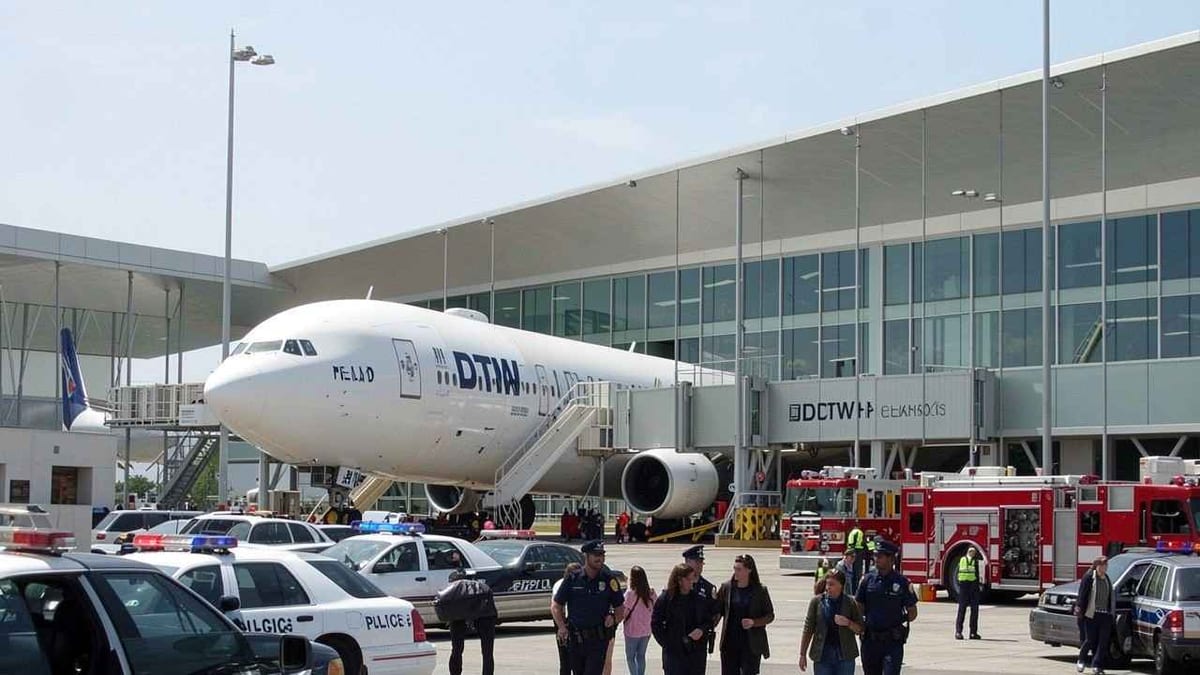
A United Airlines Airbus A321-271NX operating as Flight UAL2085 from Denver to Chicago diverted to Minneapolis–Saint Paul International Airport on August 9, prompting a precautionary landing and a new set of travel disruptions for passengers on the busy domestic route.
Get the latest news straight to your inbox!
Unexpected Turn on a Routine Hub-to-Hub Route
Flight UAL2085 departed Denver International Airport on August 9 for its scheduled service to Chicago O’Hare, a high-density corridor that typically sees multiple daily frequencies on United’s network. The aircraft assigned to the flight was an Airbus A321-271NX, part of United’s newer narrowbody fleet used to boost capacity on popular domestic routes.
Publicly available flight-tracking data shows the aircraft climbing out of Denver on a standard eastbound routing before altering course toward Minneapolis–Saint Paul rather than continuing on to Chicago. The diversion extended the total time in the air and repositioned the flight hundreds of miles north of its intended destination, leaving many travelers facing missed connections and revised arrival plans.
While such hub-to-hub flights are generally straightforward, the decision to divert indicates the crew and airline operations center identified a condition where continuing to Chicago was not considered the best option. In similar cases, carriers often weigh weather, airport congestion, fuel reserves, and technical or cabin issues before selecting an alternate airport along the route.
As of August 10, no detailed public explanation had been released specifying the exact trigger for the diversion of UAL2085. However, the flight’s track and timing suggest a controlled, precautionary change of destination rather than an emergency descent or rapid return to origin.
Minneapolis–Saint Paul Serves as Alternate Airport
Minneapolis–Saint Paul International Airport frequently functions as a diversion point for traffic bound to or from Chicago when weather or operational conditions limit arrivals at O’Hare. The airport’s dual-runway configuration, extensive ground infrastructure, and established role as a major Midwest hub allow it to absorb unplanned arrivals, even from airlines for which it is not the primary connecting point.
Operational data and general industry practices indicate that once the decision was made to divert, United Airlines would have coordinated with air traffic control and ground handlers at Minneapolis–Saint Paul to secure a gate, arrange fueling, and determine whether the flight would continue onward or terminate there. For passengers, this typically leads to a mix of options, including rebooking on later flights, overnight accommodations in severe disruption scenarios, or in some cases continuing on the same aircraft after refueling and inspections.
Given the proximity of Minneapolis–Saint Paul to Chicago, the diversion also potentially opened up alternate ground and air connections for travelers. Some passengers on similar diversions in the region have previously chosen to complete their journey by regional flight, rail, or rental car when onward air capacity is constrained or heavily delayed.
United’s broader Midwest schedule, including frequent departures between Minneapolis–Saint Paul and Chicago, offers multiple paths to re-accommodate affected travelers. The exact rebooking pattern for UAL2085’s passengers has not been detailed in public reporting, but standard airline practice favors moving disrupted customers on the next available flights that match original cabins and destinations.
Weather and Summer Congestion Across the Chicago Hub
The diversion of UAL2085 occurred amid an active summer travel period in which thunderstorms and airspace constraints frequently affect Chicago O’Hare, one of the busiest airports in the United States. Travel waivers and operational advisories in early and mid-August have repeatedly referenced convective weather and congestion around the Chicago area, factors that can quickly ripple across airline networks.
In typical operations, even modest thunderstorms near O’Hare can lead to ground stops, flow restrictions, and runway configuration changes that sharply reduce arrival capacity. When that happens, flights en route may be instructed to hold, reduce speed, or, in more constrained situations, divert to alternate airports where they can land with adequate fuel margins and avoid protracted time in holding patterns.
For airlines like United, which relies on Chicago as a central hub for domestic and international connections, these disruptions can have considerable knock-on effects, forcing rapid decisions about which flights can be safely sequenced into the arrival stream and which should divert. In such scenarios, a Denver to Chicago service like UAL2085 may be redirected to an airport such as Minneapolis–Saint Paul if the outlook for landing in Chicago deteriorates while the flight is mid-route.
Although the precise role of weather or air traffic management measures in the UAL2085 diversion has not been explicitly described in public sources, the timing within a period of heightened thunderstorm activity suggests that environmental and congestion-related factors were likely considered as part of the operational decision-making.
Impact on Passengers and Broader Operational Context
For passengers on UAL2085, the diversion meant an unplanned arrival in Minnesota, longer travel times, and increased uncertainty around making onward connections from Chicago. Travelers on disrupted flights typically report a combination of extended time on board, extended waits at alternate airports, and the need to navigate rebooking lines or airline mobile apps to secure new itineraries.
Research on irregular operations in U.S. aviation highlights how diversions compound delays and can quickly cascade into missed connections, hotel stays, and rescheduled ground transport. Passengers connecting to evening departures from Chicago to smaller regional airports or international destinations are particularly vulnerable, as late-day disruptions leave fewer backup options in airline schedules.
From an operational standpoint, diversions such as UAL2085 require airlines to balance safety, regulatory fuel requirements, crew duty limits, and network efficiency. While disruptive, diverting to an alternate airport is often the most conservative and controlled response to evolving situations in the air or on the ground, and it allows carriers to reset the flight in an environment with more predictable conditions.
The UAL2085 event on August 9 underscores how even on heavily traveled, seemingly routine routes between major hubs, unforeseen conditions can alter flight plans at short notice. For passengers planning late-summer travel through Chicago and other weather-sensitive hubs, the diversion serves as a reminder of the value of buffer time between connections and flexible arrangements on the ground.