


More news on this day
A JetBlue Airways service from New York’s John F. Kennedy International Airport to Chicago O’Hare International Airport diverted to Milwaukee Mitchell International Airport on August 9 after weather disruption near Chicago, adding further complications to a route already affected by multiple days of delays and cancellations across the carrier’s network.
Get the latest news straight to your inbox!
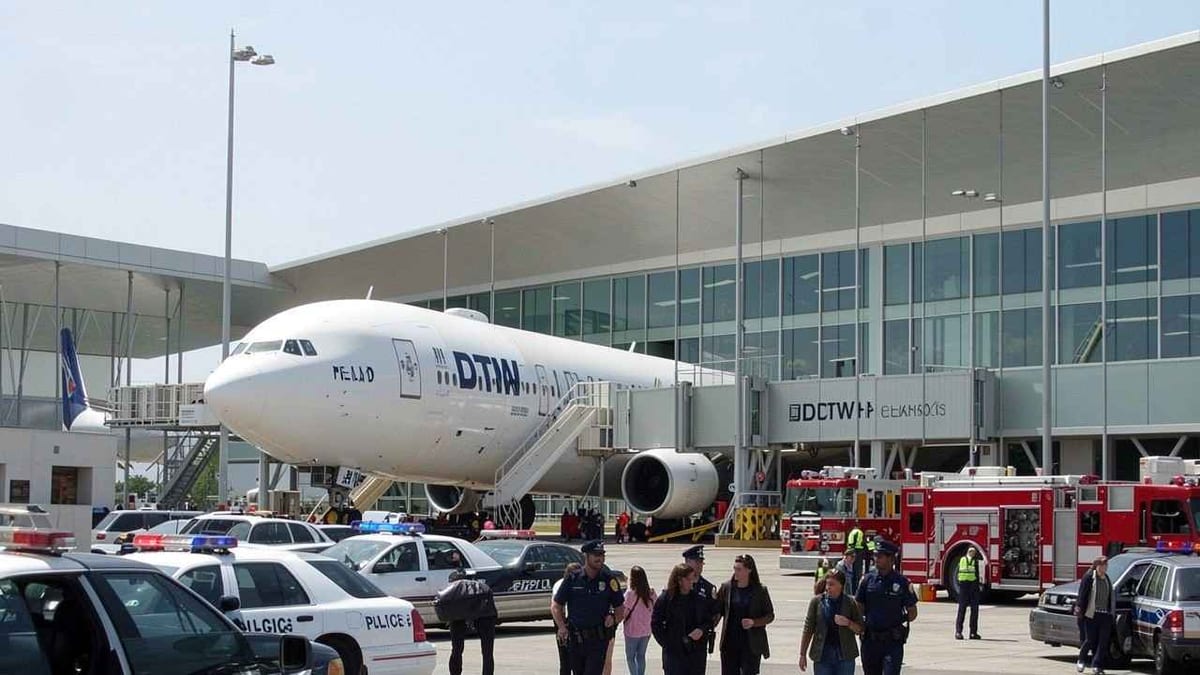
Evening Flight From New York to Chicago Ends in Wisconsin
Public flight-tracking data and passenger accounts indicate that JetBlue Airways flight JBU805, operated by an Airbus A220-300, departed New York John F. Kennedy International Airport on the evening of August 9 bound for Chicago O’Hare. The service was scheduled as a routine transcontinental hop of around two and a half hours, connecting two of the airline’s key focus cities.
As the aircraft approached the Chicago area, convective storms and associated air traffic congestion developed near O’Hare. According to available operational information, the flight entered holding patterns while air traffic control sequences were adjusted for weather, a common practice when thunderstorms temporarily reduce arrival capacity into a major hub.
After extended holding and with conditions over Chicago remaining unfavorable, the flight diverted north to Milwaukee Mitchell International Airport. The diversion added roughly an hour in the air to what is normally a relatively short evening sector between New York and Chicago.
On arrival in Milwaukee, passengers reported remaining on board for a period while a gate and ground handling resources were arranged. Diversion airports often have limited staff and infrastructure for an airline that does not operate a large schedule there, which can lengthen the time it takes to disembark or refuel and continue the journey.
Weather and Airspace Constraints Across the Midwest and Northeast
The diversion of JBU805 occurred amid a stretch of unsettled summer weather across parts of the Midwest and the northeastern United States. Thunderstorms can prompt temporary ground stops, holding patterns and reroutes that ripple through airline schedules, especially at high-traffic airports such as JFK and O’Hare.
When storms form along an arrival or departure corridor, available runway configurations may be reduced and controllers may need to increase spacing between aircraft. That cuts the number of takeoffs and landings the airport can handle in a given period, forcing airlines to delay or reroute flights. For a carrier like JetBlue, which operates a large share of its schedule in and out of congested East Coast airports, extended periods of convective activity can be particularly disruptive.
Operational data and publicly shared passenger experiences from recent days point to a pattern of rolling impacts: flights delayed at origin while awaiting improved conditions at destination, crews nearing duty-time limits as they sit through ground holds, and aircraft out of position for subsequent legs. In that context, JBU805’s diversion to Milwaukee fits into a broader weather-related strain on the regional aviation system rather than an isolated incident.
Milwaukee is a common diversion point for Chicago-bound flights when storms, low visibility or traffic saturation limit arrivals at O’Hare. The airport’s location roughly 65 nautical miles north of Chicago and its available runway capacity make it a practical alternate when carriers need to get aircraft on the ground safely while waiting for O’Hare conditions to improve.
Passenger Disruption on a Route Already Under Pressure
The August 9 diversion was especially frustrating for some travelers because it followed earlier schedule issues on the same JFK to Chicago pairing. Publicly accessible discussion threads describe multiple attempts to complete the journey over several days, including earlier cancellations and a crew timing out on a previous departure.
Those earlier disruptions reflect how quickly a single cancellation or extended delay can cascade for travelers. When one evening flight is scrubbed or heavily delayed, affected passengers are often rebooked onto the next available departure, which may itself be operating with tight margins due to weather, crew duty limits or aircraft availability.
Reports from the August 9 sector describe a late departure from JFK after gate changes and a ground delay, followed by the in-flight hold near Chicago and the eventual decision to divert. By the time the flight reached Milwaukee and awaited a gate, some passengers had spent large portions of three consecutive days attempting to complete what is normally a straightforward trip between two of the country’s busiest airports.
The experience illustrates the compounding nature of irregular operations. Weather may be the initial trigger, but information gaps, long customer service queues and limited rebooking options can amplify the impact on passengers, particularly on peak summer weekends when seats on alternative services are already scarce.
Operational and Regulatory Context for JetBlue
JetBlue has faced increasing scrutiny over schedule reliability in recent years as congestion, weather volatility and staffing challenges have collided with an ambitious route network. Federal regulators have highlighted “chronically delayed” flights on some routes, and consumer advocates have pointed to clusters of cancellations and lengthy delays concentrated around weather and air traffic control disruptions.
In response to earlier periods of disruption, JetBlue and other large U.S. carriers have publicly committed to adjusting schedules, trimming peak-hour flying at the most congested airports and investing in technology to improve crew and aircraft routing. However, the events surrounding JBU805 show how difficult it remains for airlines to maintain resilient operations when severe summer storms affect multiple key hubs at once.
Under U.S. rules, airlines are generally not required to provide compensation for delays or diversions attributed to weather or air traffic control constraints, though they are responsible for safe transport to the ticketed destination. In cases like the August 9 diversion to Milwaukee, carriers typically work to position the aircraft onward to its intended destination or arrange alternative transport once conditions and resources allow.
Milwaukee’s role in the JBU805 saga also highlights the importance of alternates in airline planning. While passengers experience diversions primarily as an inconvenience, the availability of nearby airports with suitable runways and services is a core part of risk management for flights operating into busy and storm-prone hubs.