


More news on this day
Torrential rain and severe storms are once again disrupting peak travel season, leaving passengers stranded at airports and uncertain about whether they can recover the cost of ruined trips. Rules differ sharply between regions, but in most cases travelers are entitled to a refund when a flight is cancelled or heavily delayed due to bad weather, even if additional cash compensation is limited.
Get the latest news straight to your inbox!
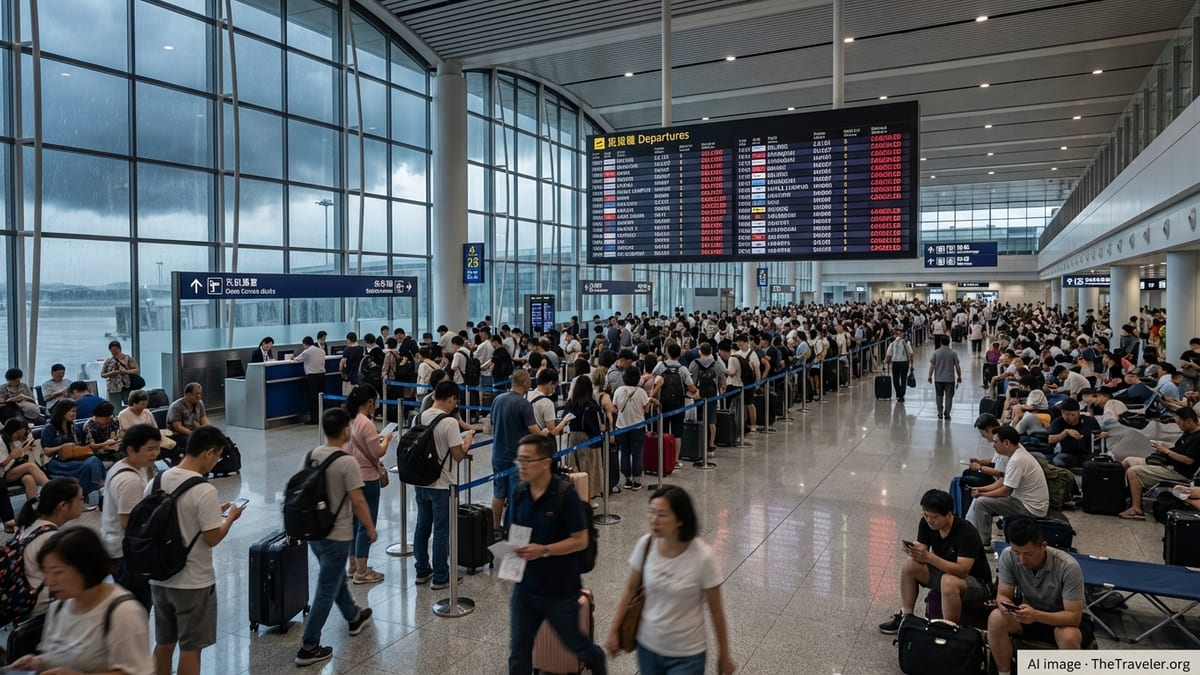
When bad weather cancels your flight, refund rules vary by region
Heavy rain, low visibility and storms are usually classed as events outside an airline’s control, so they are treated differently from staffing problems or technical faults. In Europe and the United Kingdom, air passenger rights are built around the concept of “extraordinary circumstances.” Weather that makes it unsafe to operate a flight almost always falls into this category, which removes the airline’s duty to pay fixed cash compensation for delays or cancellations. However, it does not remove your core right to a refund or rebooking.
Under European Union Regulation 261/2004 and its UK counterpart, passengers whose flights are cancelled must be offered a choice between a full refund, re-routing at the earliest opportunity, or re-routing at a later date of the passenger’s choosing, subject to seat availability. Regulators in both jurisdictions state that this applies regardless of the reason for the cancellation, including severe weather, as long as the flight falls within the scope of the rules.
In the United States, the Department of Transportation has updated its refund regulations to require airlines to provide prompt automatic refunds when a flight is cancelled or significantly changed and the passenger chooses not to travel. The rules apply to flights to, from or within the US, including many operated by foreign carriers. As with Europe, the cause of the disruption, whether storms, air traffic control restrictions or operational decisions, does not usually change the basic entitlement to a refund if you decide not to accept an alternative.
Other regions have begun to formalize similar protections, often drawing on the European model. Canada’s Air Passenger Protection Regulations and various national regimes in Latin America and Asia also distinguish between weather-related disruptions and those within an airline’s control, but generally recognize that passengers should not be left out of pocket for flights that never operated.
What you can claim when rain delays or strands you at the airport
For delays that do not result in a cancellation, your rights hinge on both geography and how long you are kept waiting. In the EU and UK, passengers departing from those regions or flying into them on qualifying airlines gain access to “right to care” once set delay thresholds are passed. This can include meals, drinks, and hotel accommodation if an overnight stay becomes necessary. The obligation to provide care applies even where the disruption is caused by extraordinary circumstances such as severe weather.
In practice, this means that if heavy rain closes a runway or causes cascading air traffic delays, an airline may have to supply meal vouchers, refreshments and hotel rooms while travelers wait for the situation to improve. If the carrier cannot directly provide these, consumer bodies recommend keeping receipts, as reasonable expenses can often be reclaimed later, subject to the airline’s policies and local law.
Cash compensation in Europe and the UK is more restricted. Although long delays and cancellations usually trigger compensation from 250 to 600 euros depending on distance, airlines do not have to pay these fixed amounts where they can show that extraordinary circumstances such as unsafe weather conditions caused the disruption and that all reasonable measures were taken to avoid it. Consumer bodies report that weather is one of the most commonly cited reasons for denying these claims.
In the United States, there is no federal requirement for airlines to offer meals or hotels during weather delays, though some carriers voluntarily commit to providing vouchers or accommodation in certain circumstances. The Transportation Department’s public “airline customer service dashboard” highlights which airlines offer these benefits for controllable disruptions, but many specifically exclude bad weather. Travelers in the US are nonetheless entitled to pursue reimbursement for demonstrable financial losses on international trips under global treaties, though success often depends on the details of each case.
How to secure your refund after a rain-related disruption
Passenger advocates emphasize that the key difference between a refund and compensation is often misunderstood. A refund returns the fare you paid for a flight that did not operate or that you chose not to take after a significant schedule change. Compensation is an additional payment meant to recognize inconvenience. Even when airlines can refuse compensation because of weather, they generally cannot keep your money if they cancel your flight and you decide not to travel.
In the European Union and United Kingdom, guidance from regulators states that refunds must be provided within seven days when a flight is cancelled and the passenger chooses not to take an alternative. The obligation covers not only the unused parts of a ticket, but in many connecting itineraries also the portions already flown if the remaining journey no longer serves its original purpose.
New US rules obligate airlines to issue prompt automatic refunds when a flight is cancelled or significantly changed and the consumer does not accept the replacement, a credit or other form of compensation. Refunds must include taxes and mandatory fees and be paid in the original form of payment. Travelers are advised to document their decision not to travel, since written records can help if a dispute later arises.
If an airline resists or offers only a voucher, consumer agencies recommend citing the relevant regulations in your region, using the airline’s official complaint channels and, if necessary, escalating to a national enforcement body or aviation consumer office. Publicly available surveys suggest that many passengers who persist eventually receive the refunds they are entitled to, particularly in jurisdictions with strong enforcement frameworks.
Steps to take at the airport when storms hit
When heavy rain begins disrupting schedules, passengers can improve their chances of a smooth resolution by acting quickly. Industry guidance points to several practical steps: confirming whether the flight is still scheduled to operate, checking official airline communications for rebooking options, and deciding early whether to accept a later flight or request a refund and make alternative plans.
At European and UK airports, airlines are expected to provide information on passenger rights during major disruption. Travelers who believe they have reached the thresholds for meals or accommodation can ask directly at service desks, and, if facilities are overwhelmed, may be advised to arrange their own hotel and claim reasonable costs afterward. Keeping receipts and noting times of announcements and boarding changes can be useful evidence in later claims.
In the United States, many airlines allow customers to self-rebook through apps or websites when bad weather is forecast, often waiving change fees and fare differences within a limited window. Regulators stress that where a flight is cancelled altogether and the passenger chooses not to fly, the right to a refund continues to apply irrespective of the cause, so travelers who no longer wish to travel can request their money back rather than accept a voucher.
Across all regions, consumer organizations advise against abandoning a trip without formally cancelling with the airline, as failing to check in or board can be treated as a “no show” under many contracts, making it harder to claim anything later. Filing a clear refund request and keeping written confirmation can prevent disputes months after the storm has passed.
Why knowing the difference between weather and airline fault matters
As extreme rainfall events become more common in many parts of the world, the line between unavoidable weather disruption and preventable operational problems is drawing increasing attention from regulators. European courts have narrowed the scope of what counts as extraordinary circumstances in several rulings, holding that issues such as routine technical faults or foreseeable staffing constraints generally fall within airline responsibility, while truly unsafe or unexpected weather remains outside it.
This distinction is central because it determines whether passengers can pursue fixed cash compensation in addition to refunds and care. Where an airline cites “adverse weather” but delays stem largely from scheduling choices or earlier non-weather issues in the network, some consumer decisions have found that carriers remain liable for compensation. Travelers who suspect this may apply to their case are increasingly encouraged by consumer groups to request a detailed explanation from the airline and, if unsatisfied, to escalate claims through dispute resolution bodies or courts where available.
In the US, advocates have pressed for clearer definitions around “significant changes” and for stronger minimum service standards during mass disruptions, leading to the 2024 refund rule and ongoing debates over additional protections. For now, bad weather typically removes any expectation of compensation, but not the fundamental right to recover the cost of a flight that did not operate or that you reasonably declined to take.
For travelers caught in the next downpour-triggered shutdown, understanding these distinctions can make the difference between absorbing the entire financial hit and securing at least a full refund, along with meals or a hotel when local rules require it.