


More news on this day
China’s already stretched aviation network faced a fresh wave of disruption today as monitoring of flight boards and operational data showed 1,164 delays and 155 cancellations affecting China Eastern, Air China, Hainan Airlines, XiamenAir and other carriers across key hubs including Shanghai, Beijing, Shenzhen, Changsha and Changchun.
Get the latest news straight to your inbox!
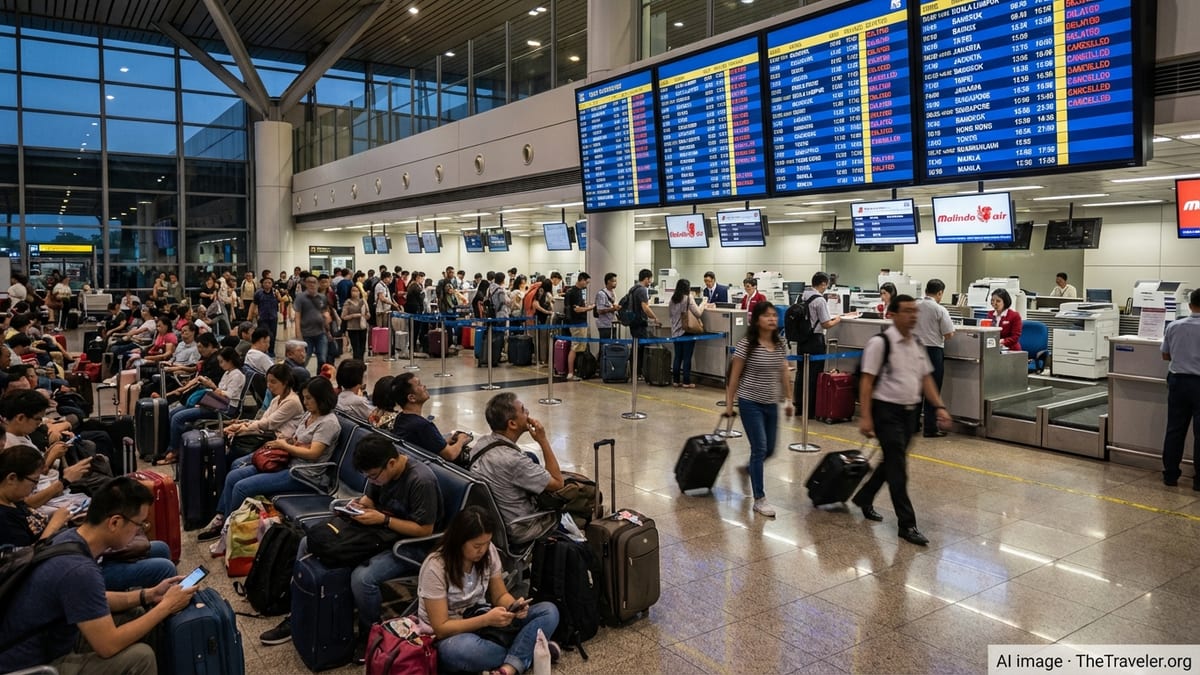
Heavy Disruptions Across Shanghai, Beijing and Southern Gateways
Publicly available tracking boards for May 26 indicate that Shanghai’s dual airports, Beijing Capital, Shenzhen Bao’an and a string of regional bases experienced clustered delays running well beyond scheduled departure times. The disruption was not confined to a single corridor, instead rippling across north–south and east–west routes that underpin China’s domestic air network.
Shanghai, home base for China Eastern and a major station for several partner airlines, appeared at the center of the latest episode. Dense banks of departures linking the city with Guangzhou, Shenzhen, Changsha and other inland centers showed extended taxi and holding times, contributing to the overall tally of more than one thousand delayed flights nationwide. Beijing and Shenzhen, both historically prone to congestion, recorded elevated levels of late-running services, compounding knock-on impacts for connecting passengers.
Operational summaries viewed this evening place the 1,164 delays and 155 cancellations among the more severe one-day disruption events in China’s 2026 travel calendar so far. While not yet comparable with the most extreme weather or airspace restriction days of recent months, the figures underline how quickly the system can tip into gridlock when multiple hubs come under pressure at the same time.
Regional airports such as Changsha and Changchun, which rely heavily on trunk connections to Shanghai, Beijing and Shenzhen, also felt the pressure. Passengers on these spokes often have fewer alternative departure options, meaning a single cancellation or long delay can wipe out same-day onward travel plans.
Big Carriers Under Strain as Delays Cascade Through Networks
China Eastern, Air China, Hainan Airlines and XiamenAir all feature prominently in today’s disruption data, reflecting their role in operating dense schedules through the affected hubs. China Eastern’s Shanghai-based network, Air China’s extensive presence in Beijing and Hainan Airlines’ bases in Shenzhen and other cities meant that even localized bottlenecks quickly cascaded into wider timetable disorder.
Schedule and fleet information published earlier this season already pointed to relatively tight operating patterns at the country’s largest airline groups, with high aircraft utilization and limited spare capacity during peak periods. When a critical mass of flights begins running late, those slim buffers leave airlines with fewer options to recover, especially on multi-leg aircraft rotations that cross several of the affected airports in a single day.
Reports from previous disruption days this month show a similar pattern in which carriers consolidate services or make short-notice schedule changes to protect core trunk routes. Today’s cancellation figures suggest that some airlines again chose to merge or remove marginal flights, particularly on secondary city pairs, in order to free aircraft and crews for heavily demanded corridors between the largest hubs.
Travel commentary and passenger accounts in recent weeks have highlighted how these operational choices are being felt on the ground. While many trunk services eventually depart late rather than vanish entirely from the board, travelers booked on thinner routes often face outright cancellations and limited rebooking options, lengthening total journey times or forcing overnight stops.
Weather, Airspace Measures and Structural Congestion Behind the Numbers
China’s airlines operate in one of the world’s most complex airspace environments, and recent weeks have seen a mix of weather alerts and temporary route constraints add to the structural congestion at major hubs. Earlier in May, national meteorological bulletins flagged dense coastal fog affecting parts of the Yellow Sea and East China Sea, conditions that have historically triggered capacity reductions and instrument-approach procedures at Shanghai and neighboring airports.
Separate advisories about short-term airspace management measures around Beijing and Shanghai during the spring travel period have also contributed to longer routings and airborne holding patterns. Even after formal restriction windows close, residual congestion can linger as airlines work through accumulated delays and reposition aircraft, leaving the system more vulnerable to subsequent shocks.
Industry analysis published this month notes that Chinese carriers are still running with constrained operational buffers in the wake of aggressive capacity rebuilds since pandemic-era lows. Aircraft utilization remains elevated and crew rosters are often finely tuned, which can amplify the impact of any disruption. A delay in one city can prevent an aircraft or crew from operating its next departure on time, creating a chain reaction that eventually shows up as late-night arrivals, missed connections or last-minute cancellations.
Airports such as Shanghai Pudong, Shanghai Hongqiao and Beijing Capital repeatedly rank among the most delay-prone hubs in the country, particularly during busy shoulder seasons when demand is strong but weather can be changeable. Today’s figures suggest that these structural challenges remain firmly in place, despite gradual investments in runway, taxiway and terminal capacity.
Passengers Turn to High-Speed Rail and Flexible Itineraries
As delays and cancellations mounted across China’s skies through late May, travelers have increasingly been turning to the country’s vast high-speed rail network as a hedge against aviation disruption. On well-served routes such as Beijing to Shanghai or Shenzhen to Changsha, publicly available booking data and traveler discussions point to robust rail demand from passengers seeking more predictable door-to-door journey times.
Recent travel forum discussions describe rail as a compelling alternative on days when airport operations appear unstable, particularly for journeys under six hours by train. With frequent departures, straightforward rebooking processes and fewer security bottlenecks, high-speed services can offer a level of reliability that many flyers value when airline cancellation rates spike.
Within the aviation system, experienced travelers are also adjusting their strategies. Some are opting for earlier departures to build in extra time for missed connections, while others are favoring airlines or routings that provide more than one daily frequency on their chosen city pairs. The aim is to secure backup options if an evening flight is heavily delayed or scrubbed altogether.
Travel specialists note that flexible tickets, generous connection buffers and awareness of alternative routes are becoming essential planning tools for those moving through China’s busiest hubs. The events of May, including today’s widespread disruption, have reinforced perceptions that passengers may need to budget more time and contingency into itineraries than headline flight times alone would suggest.
What Today’s Turmoil Signals for China’s Summer Travel Peak
Today’s tally of 1,164 delays and 155 cancellations serves as a warning signal ahead of the core summer peak, when passenger volumes on domestic and regional routes typically climb further. Operational data and recent coverage suggest that unless airlines can add more slack into schedules or secure additional crew and aircraft reserves, similar episodes of concentrated disruption are likely when weather, airspace or traffic surges collide.
Market observers point out that carriers face a delicate balancing act between maintaining high utilization of expensive aircraft and protecting on-time performance. In an intensely competitive domestic market, there is commercial pressure to keep as many seats in the air as feasible, even if that leaves little margin for recovery when conditions deteriorate.
At the same time, regulators and airport operators continue to promote safety-first decision-making around adverse weather, runway operations and airspace management. That emphasis can translate into preemptive cuts to departure rates or mandated spacing between flights, steps that improve safety metrics but increase the likelihood of delays and cancellations when schedules are already dense.
For now, today’s disruption underscores that passengers traveling through Shanghai, Beijing, Shenzhen, Changsha, Changchun and other key hubs in the coming weeks may face an environment where punctuality is far from guaranteed. Careful itinerary planning, real-time monitoring of flight status and a willingness to switch to rail or alternative routings are likely to remain important tools for anyone navigating China’s crowded skies this season.