


More news on this day
A United Airlines Airbus A320 operating Flight UA2424 from Denver to Atlanta diverted to Birmingham, Alabama, where it made an unscheduled emergency landing that turned a routine domestic hop into a midair scare and tense diversion drama for passengers on board.
Get the latest news straight to your inbox!
Unexpected Turn on a Busy Domestic Route
United Airlines Flight UA2424 is a regularly scheduled service linking Denver International Airport and Hartsfield Jackson Atlanta International Airport, one of the carrier’s high demand domestic routes. Publicly available schedule data shows the flight normally operates as a midmorning departure from Denver, with an early to midafternoon arrival into Atlanta.
On the day of the diversion, the Airbus A320 departed Denver broadly in line with its typical late morning schedule. Tracking platforms list the aircraft type as an Airbus A320, a narrowbody workhorse widely used on medium haul routes across the United States. The flight was expected to cover the roughly three hour sector to Atlanta without incident.
Instead, partway through the journey, the flight path shifted toward central Alabama. Flight tracking information indicates the aircraft diverted from its direct east southeast routing and descended toward Birmingham Shuttlesworth International Airport, where it conducted an emergency landing and brought the unscheduled segment to an abrupt end.
Emergency Landing in Birmingham
Data from live flight tracking services and schedule records indicate that the diverted United A320 landed safely at Birmingham, a regional hub that frequently receives diversions from larger southeastern airports during irregular operations. The flight’s routing on this occasion transformed Birmingham into an ad hoc stopover for passengers who had originally been bound nonstop for Atlanta.
Available information has not specified the exact nature of the issue that prompted the diversion, but the change in course and emergency arrival suggest a situation serious enough to warrant immediate landing at the nearest suitable airport. Diversions of this type can be triggered by a range of scenarios, including potential technical concerns, medical situations in the cabin, or weatherrelated complications along the original route.
Once on the ground at Birmingham, the Airbus A320 terminated its airborne segment and entered an irregular operations phase. Standard airline procedures in such circumstances typically focus on ensuring passengers receive medical attention if needed, conducting any required safety inspections of the aircraft, and coordinating onward travel so customers can still reach their planned destinations.
Passenger Experience and Onward Travel Disruption
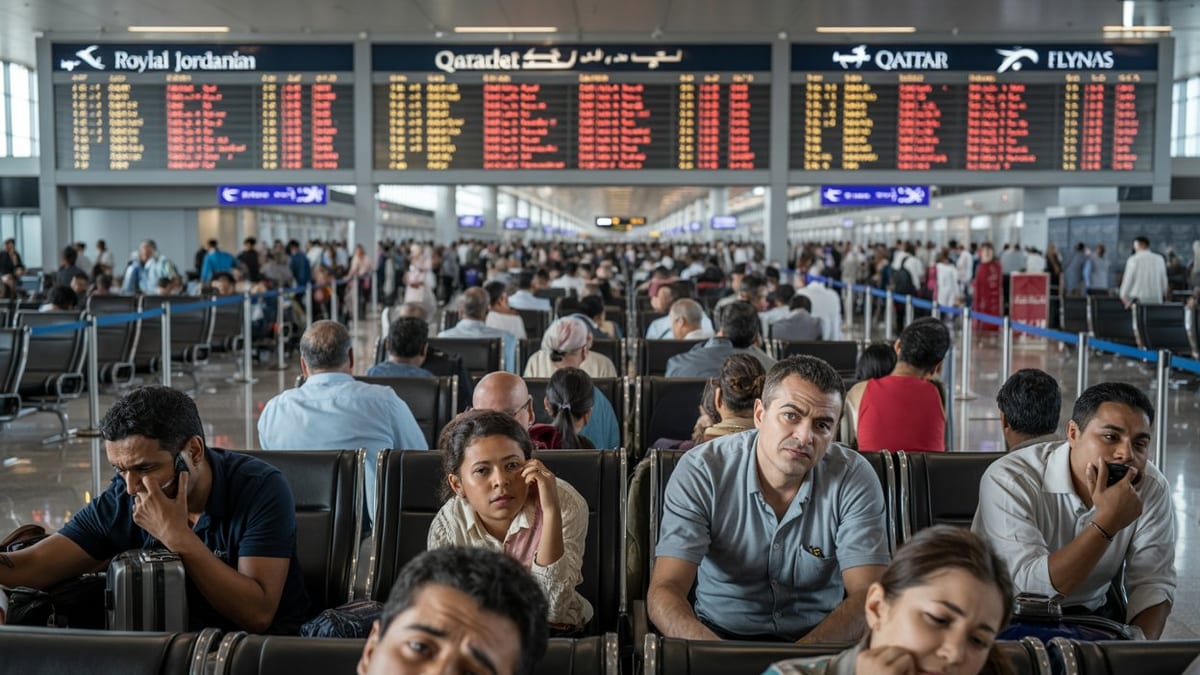
For travelers on UA2424, what began as a routine hop between two major hubs quickly turned into an anxious rerouting. Diversion events often involve extended time in the cabin during holding patterns, descent into an unfamiliar airport, and subsequent waiting on the ground as airline teams assess the situation and organize alternative arrangements.
Reports from publicly accessible aviation forums and travel tracking services frequently describe such diversions as stressful but orderly, with crew members trained to manage passenger communication and maintain calm. In similar cases, customers are commonly rebooked onto later flights, sometimes continuing on the same aircraft once it is cleared, or transferring to a different aircraft or even another airport if that offers a more efficient path onward.
In Birmingham, passengers from the Denver to Atlanta service would likely have been faced with a mix of options, ranging from reprotected seats on later flights into Atlanta to potential overland connections, depending on seat availability and the timing of the diversion. For some, the incident may have meant missed connections at Atlanta’s large domestic and international network, amplifying the ripple effect across their travel plans.
Context: Diversions as a Safety Measure
Although dramatic for those on board, diversions are a well established feature of commercial aviation safety. Industry data compiled from recent operational statistics at Denver and other major hubs shows that a small percentage of flights are diverted each year, often as a precaution designed to keep risk to passengers and crew as low as possible.
Operational databases and airline performance summaries point out that factors such as severe weather, air traffic congestion, and technical checks can all push flight crews to divert. In the southeastern United States, convective storms and rapidly changing weather patterns around Atlanta can sometimes force aircraft to route into nearby airports such as Birmingham to avoid significant turbulence, lightning, or unsustainable holding times.
A320 family aircraft, like the one operating UA2424, are equipped with redundant systems and are flown under procedures that emphasize rapid response to any sign of irregularity. When flight crews opt to divert, the decision is generally made in coordination with air traffic control and airline operations, with the shared objective of getting the aircraft safely on the ground at the nearest suitable airfield.
Implications for United and Birmingham’s Role
The diversion of a Denver to Atlanta United service into Birmingham underscores the way regional airports can play a pivotal role during irregular operations across the national air network. Birmingham Shuttlesworth International regularly handles traffic from multiple major carriers and is strategically positioned along several eastbound and southeastbound corridors from Denver.
Passenger traffic data published by the airport and discussed in aviation analyses indicates that Birmingham has seen steady volumes from mainline and regional operators, with occasional surges when weather or congestion affects larger hubs. Each diversion brings an unplanned influx of travelers who may require ground services, rebooking assistance, and in some cases overnight accommodation.
For United, episodes such as the UA2424 diversion feed into broader assessments of operational resilience, on time performance metrics, and customer care policies. Publicly available airline guidance on diversions outlines assistance ranging from meal vouchers during prolonged delays to hotel stays when overnight disruption is unavoidable, although individual cases vary based on the cause and timing of the incident.
As the summer travel period builds, the midair scare involving United’s Airbus A320 between Denver and Atlanta highlights both the complexity of managing a dense domestic network and the central importance of diversion protocols that prioritize safety, even when they turn a straightforward flight into an unexpected detour through a different city.