


More news on this day
China’s aviation network experienced a sharp spike in disruption on June 5, 2026, with 1,572 delayed flights and 116 cancellations reported across major airports, straining carriers and stranding passengers at the start of the summer peak.
Get the latest news straight to your inbox!
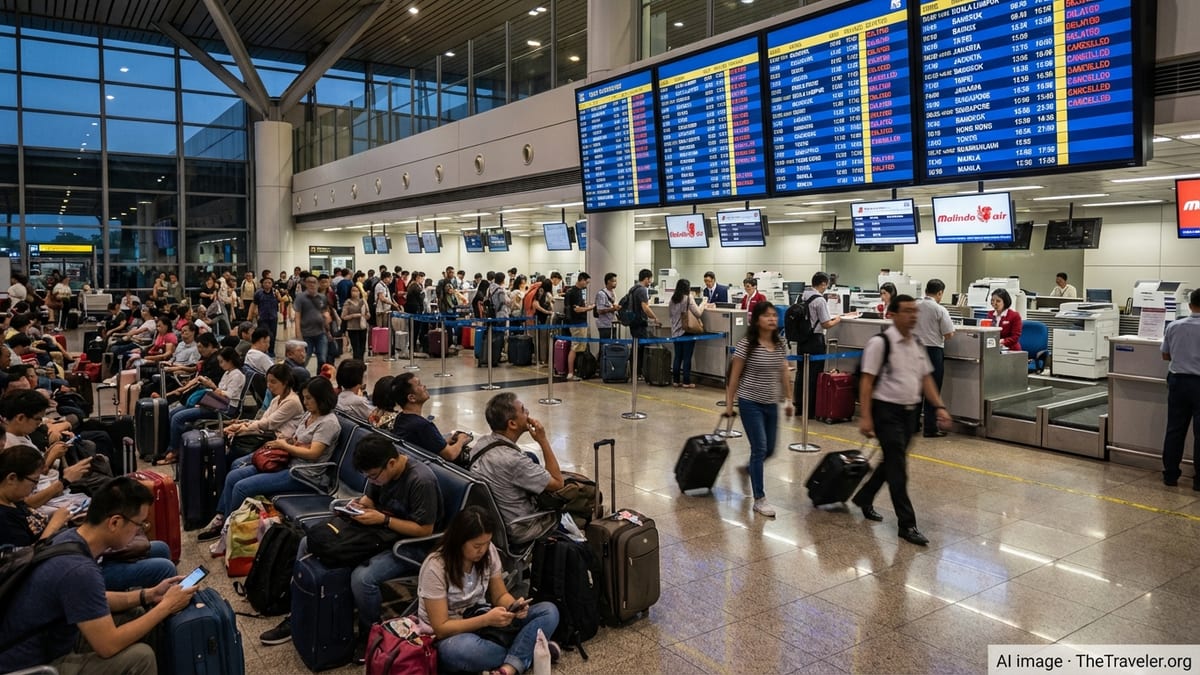
Severe Disruptions Across Major Chinese Hubs
Data compiled from aviation monitoring platforms and published coverage indicates that the disruptions were concentrated in a cluster of key Chinese hubs, including Beijing, Shanghai, Guangzhou, Shenzhen and several regional gateways. Across these airports, operations slowed markedly through the afternoon and evening of June 5 as departure banks backed up, arrival flows were throttled and connecting banks unraveled under the volume of delayed aircraft.
At Guangzhou Baiyun International Airport, reports highlight one of the heaviest single-airport impacts, with hundreds of delayed operations and more than a dozen cancellations cascading through China Southern and its partners. Similar patterns were noted in Shanghai and Beijing, where busy domestic and international banks were forced into rolling delays as aircraft and crews failed to return to position on schedule.
The 1,572 delayed flights represent a significant proportion of the daily schedule in a market that has returned close to, and in some segments surpassed, pre-pandemic traffic levels. The 116 cancellations, while smaller in number, had an outsized effect on passengers whose itineraries depended on limited-frequency routes or late-night departures.
Publicly available tracking data showed that many services operated, but with substantial schedule slippage. Some flights departed hours behind schedule, turning what are normally short domestic hops into day-long journeys once airport queues, ground handling constraints and missed connections were taken into account.
Weather, Congestion and Crew Limits Fuel the Breakdown
Meteorological bulletins issued on June 5 pointed to a complex weather picture over large parts of China. Heavy rain, thunderstorms and localized severe weather cells were forecast over portions of North China, the Yellow-Huai region and parts of the south, including sections of Guangxi and Fujian, with intense downpours in some coastal and island areas. These conditions typically force air traffic controllers to increase separation between aircraft, reduce arrival and departure rates, and temporarily halt ramp operations when lightning is detected near the airfield.
Publicly available information on Asian air traffic patterns for June 5 describes a wider regional squeeze, with tight airspace capacity and seasonal convective storms affecting routes over East and Southeast Asia. When storms sit over departure or arrival corridors, individual delays can quickly multiply as flights are rerouted, stacked in holding patterns, or held on the ground waiting for slots to open.
Operational analyses of recent Chinese disruption events also emphasize how weather interacts with structural constraints. Tight aircraft utilization, short ground turnaround windows and duty-time limits for pilots and cabin crew leave little slack in the system. When early flights are delayed, crews can quickly reach regulatory duty limits, forcing airlines to cancel subsequent legs even after the worst of the weather has passed.
Industry guidance documents circulated in 2026 further note the role of air traffic control flow programs and regional airspace restrictions. When capacity reductions are imposed to maintain safety in congested sectors, airlines may be instructed to delay or cancel departures, contributing to the kind of cross-network paralysis seen on June 5.
Impact on Passengers and Domestic Connectivity
The disruptions hit at a sensitive moment for China’s domestic travel market. Official statistics released in early May showed robust passenger volumes during the recent holiday period, with more than ten million travelers carried over the first five days of that month and a high rate of on-time performance. The June 5 disruptions mark a sharp contrast with those holiday metrics and underline the volatility that can arise when weather, congestion and capacity limits converge.
For travelers, the immediate effects ranged from moderate delays to missed events and lost days of vacation. Reports from traveler advocacy outlets describe long queues at service counters, crowded departure halls and difficulty securing alternative routings, particularly on popular trunk routes where most same-day options were already heavily booked.
The scale of the delays also disrupted China’s dense web of domestic connections. A late arrival into a hub such as Guangzhou or Shanghai can mean the last onward flight of the day has already departed, leaving passengers facing overnight stays and rebooking onto early-morning services. This effect was compounded on June 5 by the number of aircraft and crews that finished the day out of position for their first-wave departures on June 6.
Travel forums and consumer guidance sites have increasingly advised passengers flying within China to build in longer connection buffers and to monitor weather forecasts closely during the summer storm season. The June 5 episode is likely to reinforce that message, particularly for travelers relying on tight self-made connections between separate tickets or different carriers.
Regulatory Context and Passenger Rights
The wave of delays and cancellations has also refocused attention on passenger rights in China’s aviation system. Consumer information published by legal and travel advisory groups in 2026 explains that Chinese regulations provide for varying levels of care and assistance when flights are disrupted, though eligibility often depends on whether the cause is considered within the airline’s control.
In cases where disruptions are attributed to severe weather or air traffic control restrictions, compensation obligations may be more limited, even if airlines still provide meals, hotel accommodation or rebooking support as a matter of policy or customer service. When delays stem from factors such as crew scheduling, maintenance problems or other internal issues, advisory materials indicate that stronger claims for compensation or refunds may be possible.
Guides addressing China-related flight disruption in 2026 urge passengers to retain boarding passes, delay notices and any written documentation issued by airlines on the day of travel. Such records can be important when seeking reimbursement for additional expenses or when filing formal complaints with carriers or consumer protection agencies after major disruption events.
The June 5 disruptions are expected to generate a new round of inquiries and claims as affected travelers review their options. While many passengers will focus on simply reaching their destinations, others may pursue redress for missed connections, unusable hotel bookings or other consequential losses linked to the flight irregularities.
Network Resilience Under Scrutiny Ahead of Peak Season
The June 5 episode adds to a series of recent tests for China’s rapidly rebounded aviation system. While traffic levels have largely recovered, airlines and airports are still fine-tuning post-pandemic schedules, rebuilding workforces and absorbing new operational and regulatory requirements introduced in recent years.
Industry commentary circulating in early 2026 suggests that Chinese carriers are pushing high utilization of aircraft to meet demand, particularly on popular domestic corridors. This strategy can maximize capacity but leaves limited margin when weather or airspace restrictions reduce throughput at major hubs. Even a short period of intense storms over a key region can create a backlog that takes many hours, or in some cases days, to fully clear.
Observers also point to the importance of coordination between airlines, airports and air navigation service providers during such events. Clear, timely information on expected delays and cancellations can help passengers and travel agents adjust plans earlier, potentially easing pressure on terminal facilities and call centers as disruption unfolds.
With the main summer travel season about to intensify, the June 5 disruption is likely to be studied as a stress test of current contingency planning. Whether carriers adjust their schedules, increase strategic reserve capacity or revise customer-handling policies in response will be closely watched by analysts and frequent travelers alike.