


More news on this day
Republic Airlines flight RPA3423 made a precautionary return to Cincinnati on its scheduled route toward New York, with publicly available tracking data and early reports indicating that the aircraft landed safely and passengers later continued their journeys on alternative arrangements.
Get the latest news straight to your inbox!
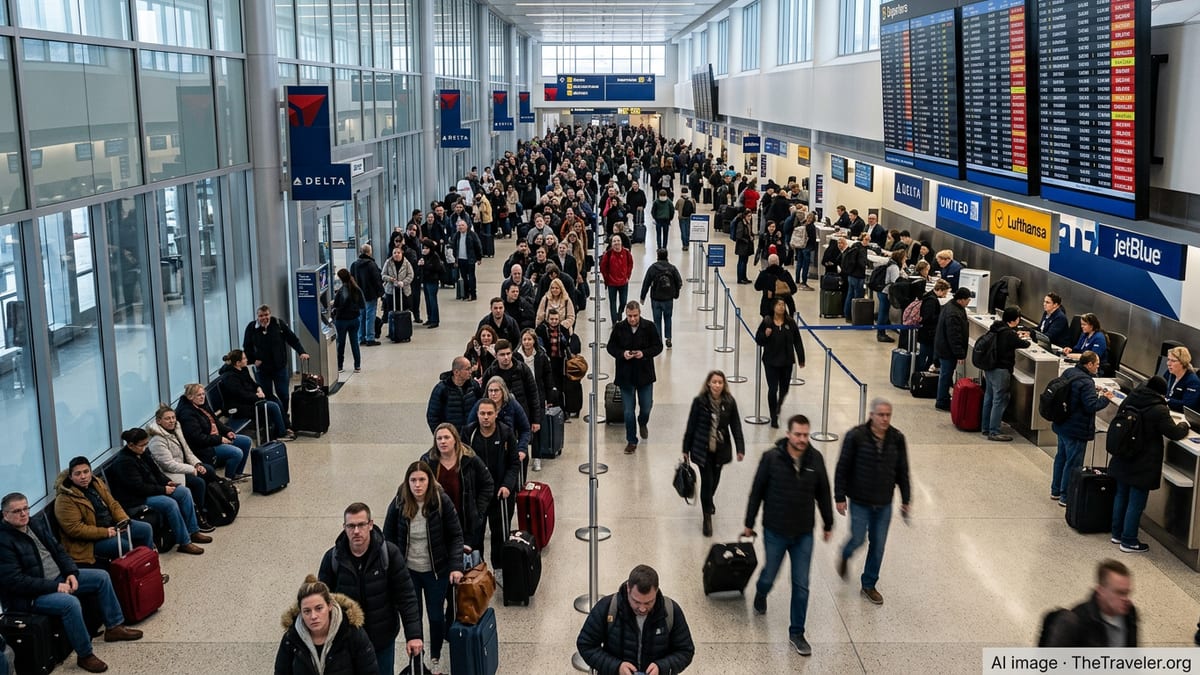
Regional Service Flight Turns Back Shortly After Departure
Reports based on live flight tracking information indicate that RPA3423, operated by Republic Airways under a regional service banner, departed Cincinnati/Northern Kentucky International Airport on a regularly scheduled morning service toward the New York area before turning back to its origin. Data from public flight status platforms show the aircraft climbing out of Cincinnati and leveling off for only a short portion of the planned cruise before reversing course toward the departure airport.
Industry observers note that such air returns typically occur within the first part of a flight, a phase in which crews and dispatchers closely monitor aircraft systems, weather conditions, and operational parameters. Once the decision is made to discontinue the leg, the flight plan is adjusted so that the aircraft can re-enter terminal airspace, burn or offload fuel if required, and position itself for landing at either the departure or another suitable airport.
In this instance, available information indicates that the crew opted to return directly to Cincinnati rather than continue to the New York area or divert to an intermediate airport en route. The route between Cincinnati and New York is one of the busier short-haul corridors in the eastern United States, leaving multiple options for diversion if necessary, but operational factors often make the home base the most practical choice when the aircraft is still relatively close to its origin.
As of the latest publicly accessible data, there were no indications of injuries connected to the event, and there were no immediate reports of an emergency evacuation or extended runway closure at Cincinnati/Northern Kentucky International Airport.
Precautionary Air Returns Common in Regional Jet Operations
Aviation analysts emphasize that precautionary air returns like the one involving RPA3423 are a recognized part of modern airline safety practices. Regional jets on dense business routes typically operate multiple short segments per day, meaning that crews are trained to act quickly when cockpit indications or external conditions deviate from normal parameters, even when the underlying issue later proves to be minor.
Publicly available Federal Aviation Administration guidance and industry safety materials note that flight crews are expected to err on the side of caution and may decide to discontinue a leg for a range of reasons, including system alerts, unusual odors, pressurization concerns, or even conservative responses to weather or airspace congestion. In many cases, post-flight inspections find that the triggering factor did not represent a serious hazard, but the conservative decision-making process is considered a cornerstone of commercial aviation safety.
Regional carriers such as Republic Airways operate under the same federal regulations as major airlines and often fly under the branding of larger network partners. These operations rely on uniform procedures for handling in-flight anomalies, with standardized checklists, real-time communication with operations centers, and established coordination with air traffic control to manage traffic flows during an unexpected return.
Available Department of Transportation performance reports show that while diversions and returns remain a small fraction of total flights in the United States, regional jets are prominently represented in the statistics simply because they perform a high number of short sectors where crews have frequent opportunities to make conservative operational decisions.
Impact on Passengers and Schedule at Cincinnati
While detailed passenger counts for RPA3423 were not immediately published, regional Embraer aircraft commonly used on Cincinnati to New York routes typically seat between 70 and 80 travelers. When a flight returns to its departure airport, airline staff generally work to rebook passengers onto later departures to the same destination, either on the same carrier or through interline or codeshare partners where agreements exist.
Cincinnati/Northern Kentucky International Airport functions as a significant regional hub, with a robust schedule of daily services to New York City area airports including John F. Kennedy, LaGuardia, and Newark. This network generally allows affected travelers to be placed on subsequent flights, reducing the risk of overnight disruption compared with diversions to smaller outstations where onward options may be limited.
Operationally, a precautionary return can cause short-term scheduling challenges as aircraft and crews fall out of sequence. Airlines typically mitigate this through spare aircraft, crew reserves, and schedule swaps with other flights. On heavily trafficked business routes, carriers often prioritize maintaining frequency to minimize knock-on delays for subsequent departures throughout the day.
Airport operations teams in Cincinnati are experienced in handling unscheduled returns and diversions, and publicly available information following the RPA3423 event did not indicate major knock-on delays or significant ground holds across the broader departure board.
Safety Context on Diversions and Air Returns in the United States
According to regularly published data from federal transportation authorities, the rate of diversions and returns relative to total flight operations in the United States remains low, even as overall traffic has increased. The majority of such events result in uneventful landings and are resolved after standard maintenance inspections, with aircraft and crews often returning to service within hours.
In recent months, multiple regional and mainline carriers have been noted in public aviation databases as having diverted or turned back flights along the busy northeastern corridor, commonly in response to weather patterns, air traffic management issues, or precautionary maintenance checks. Industry commentary frequently underscores that heightened public awareness, driven in part by real-time tracking apps, can give the impression that diversions are becoming more common, even though the underlying statistics remain relatively stable.
Analysts highlight that the availability of near real-time tracking services has changed how such events are perceived. Enthusiasts and passengers can watch an aircraft’s track loop back toward its origin airport, often before airlines release any formal explanation. This transparency has led to greater public interest in the operational details of what used to be largely invisible safety decisions.
The RPA3423 return to Cincinnati fits within this wider pattern of conservative decision-making in regional operations, where crews, dispatchers, and maintenance teams are trained to prioritize safety and regulatory compliance over on-time performance or schedule convenience.
What Travelers on Regional Routes Can Expect
For passengers booked on regional jets between Cincinnati and New York, events like the RPA3423 air return serve as a reminder of what to expect if a flight is unexpectedly discontinued after departure. Airlines generally communicate updates through gate agents, mobile applications, email, and in some cases text alerts, once a new itinerary or rebooking option has been confirmed.
Travel experts recommend that passengers traveling on time-sensitive itineraries monitor their flights through airline apps and third-party tracking tools, which can provide early indications of route changes, holding patterns, or returns. Keeping contact details updated within airline profiles can help ensure that rebooking offers and notifications are delivered promptly in the event of an irregular operation.
When a flight returns to its origin for precautionary reasons, travelers may be eligible for meal vouchers, hotel accommodations, or rebooked connections depending on the length of the delay, the cause of the disruption, and the carrier’s specific policies. Publicly available consumer guidance from transportation authorities encourages passengers to review airline contracts of carriage and customer service plans in advance to understand what support may be available in the event of a disruption.
As regional aviation continues to play a central role in linking mid-sized cities like Cincinnati with major metropolitan hubs such as New York, episodes like the RPA3423 turnback illustrate both the resilience and the complexity of the system that keeps high-frequency routes operating safely day after day.