


More news on this day
UK air travelers faced another day of disruption on Monday after a technical issue at the country’s main air traffic services provider led to fresh flight delays and cancellations, compounding pressure on airports and airlines still recovering from an earlier nationwide incident this month.
Get the latest news straight to your inbox!
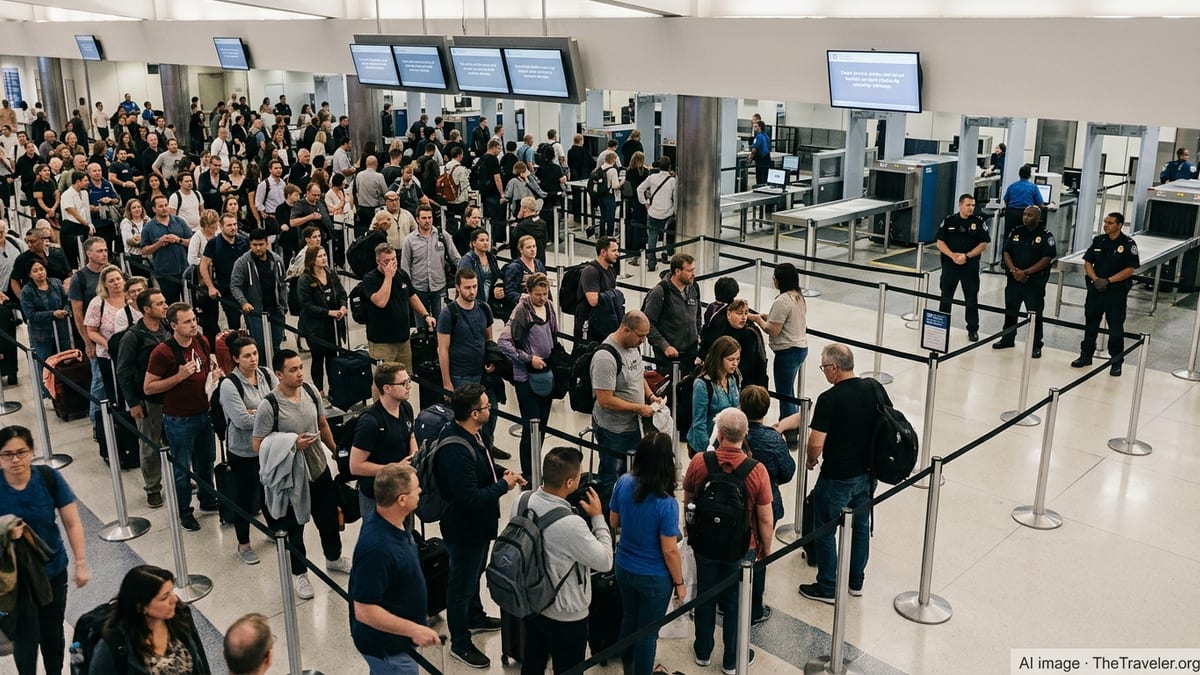
New disruption centered on Scotland, Northern Ireland, and the North
Published coverage indicates the latest problems were linked to NATS operations at its Prestwick centre in Scotland, prompting temporary air traffic restrictions that rippled through schedules at airports handling flights to and from Scotland, Northern Ireland, and northern England.
NATS posted that the issue had been fixed and that work was underway to safely remove remaining restrictions as quickly as possible, while advising passengers to check directly with their airlines for the latest flight information.
Airline and airport operations data cited in published reporting showed cancellations and knock-on delays accumulating through the day, with disruption concentrated at several major regional gateways, including Manchester as well as airports in Edinburgh and Belfast.
Cancellations mount as schedules struggle to stabilize
The immediate impact of air traffic restrictions typically extends beyond the moment a technical problem is resolved, because aircraft and crews are often out of position and airport departure slots become constrained. As a result, even a short outage can lead to rolling delays that take the rest of the day to unwind.
According to published coverage referencing flight analytics, hundreds of flights were affected on Monday, including a significant number of cancellations, with the heaviest disruption reported at airports serving the north of the UK and nearby routes.
Some carriers publicly attributed delays to the NATS issue, warning that aircraft rotations could not operate as planned. With peak-day demand and limited spare capacity in airline schedules, disruptions can also trigger rebooking pressure across multiple UK and European airports, especially on high-frequency routes.
Why this feels like “once again”: earlier September breakdown still fresh
The renewed disruption comes just days after NATS issued a preliminary report into a separate technical incident on September 8, when a failure in a flight processing system led to widespread UK airspace restrictions and extensive delays and cancellations.
NATS’s preliminary account described how the earlier issue required restrictions across the UK so the national system could be restarted and flight data reloaded, even though the software problem itself affected flights handled through the London Area Control centre.
Published reporting on the September 8 disruption described days of aftereffects for passengers, with schedules taking time to normalize. That context has heightened sensitivity across the travel sector, since repeated operational shocks can quickly cascade into missed connections, overnight stays, and uneven aircraft availability across airline networks.
Passenger rights: what compensation may apply, and what may not
For travelers seeking refunds or compensation, the key question is often whether a disruption is classified as within an airline’s control. In the UK and EU framework used by UK carriers, air traffic control restrictions and many systemwide network disruptions are commonly treated as extraordinary circumstances, which can limit eligibility for standard cash compensation even when delays are severe.
However, published guidance from the UK Civil Aviation Authority (CAA) around the September 8 NATS disruption emphasized the distinction between compensation and duty of care. Even where compensation is not owed, airlines may still have obligations to provide assistance, such as meals and refreshments, hotel accommodation when an overnight stay becomes necessary, and transport between airport and hotel, depending on delay length and circumstances.
Passengers whose flights are canceled generally have choices that can include rerouting at the earliest opportunity or a refund, and travelers are often advised to retain receipts if they incur costs after being told to arrange their own meals or lodging, since claims processes typically require documentation.
What travelers can do right now as disruption continues
With knock-on effects likely even after technical issues are resolved, travelers departing from or connecting through affected airports may benefit from monitoring airline apps and airport departure boards for gate changes, revised boarding times, and rerouting options. On days when inbound aircraft are delayed, departure times can slip multiple times in succession.
Rebooking flexibility can vary by airline and ticket type, but during major network events carriers often publish temporary disruption policies allowing date changes or route adjustments without standard fees. Travelers with time-sensitive itineraries may also consider earlier departures where available, since later flights can inherit accumulated delays.
For passengers still deciding whether to go to the airport, the most practical approach is to confirm flight status directly with the operating airline before traveling, since airport-level advisories and third-party trackers may lag behind last-minute operational changes as air traffic restrictions are lifted and schedules are rebuilt.