


More news on this day
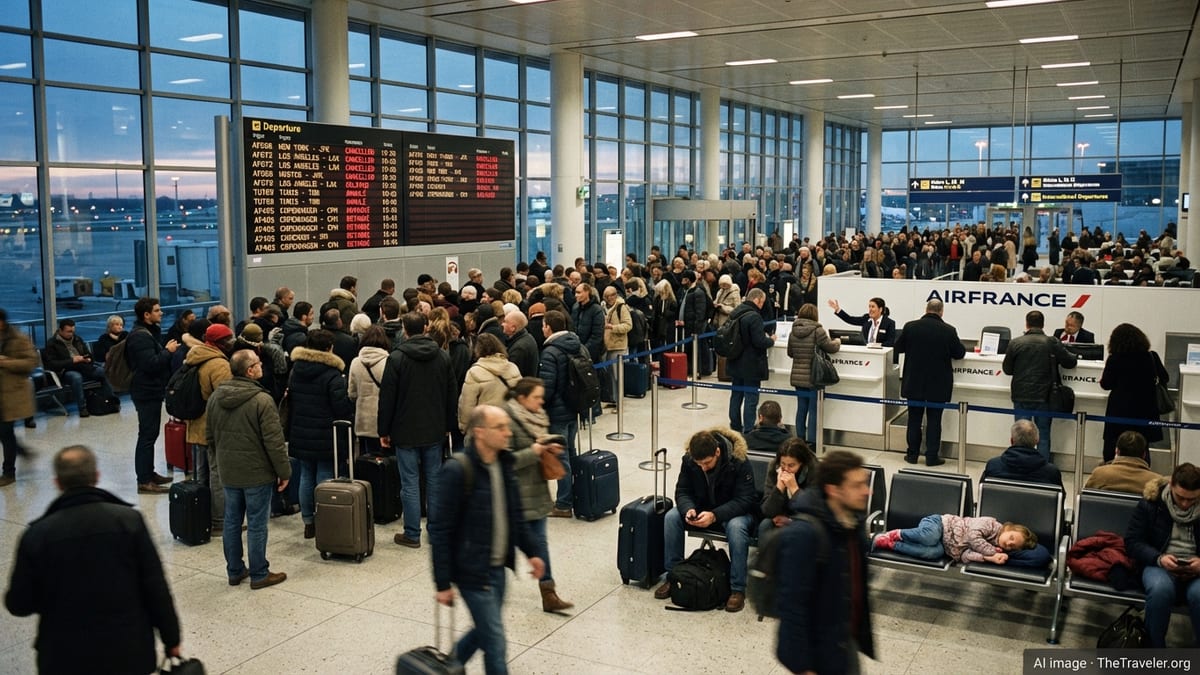
Hundreds of passengers at Paris Charles de Gaulle Airport faced long waits, missed connections and overnight stays on Saturday as a fresh wave of flight delays rippled through one of Europe’s busiest hubs at the height of the summer travel season.
Get the latest news straight to your inbox!
Weather, Staffing and Congestion Create a Perfect Storm
Operational data and live tracking platforms show a significant number of departures from Paris Charles de Gaulle on June 27 operating behind schedule, with some intra-European flights to cities such as Dublin, Bucharest and Mediterranean holiday destinations reporting late departures. The disruption follows a pattern of recent volatility at major European hubs as summer traffic builds and the network absorbs earlier shocks.
Industry reporting points to a combination of factors behind the latest disruption. Thunderstorms across parts of Western Europe, air-traffic flow restrictions and residual staffing pressures in ground handling and air traffic control have all contributed to delays. When aircraft and crews are held up elsewhere in the network, knock-on effects often reach Paris, one of the continent’s primary connection points.
Network analysis from European aviation bodies for May and early June highlights Paris Charles de Gaulle among the region’s busiest airports, with traffic still climbing as airlines ramp up peak-season schedules. High volumes mean that relatively small interruptions, such as temporary weather holds or flow restrictions over busy airspace, can quickly snowball into extended queues on departure boards.
Capacity management measures introduced at French airports during earlier episodes of industrial action and bad weather have also left limited flexibility in the system. When schedules are already tightly packed, airlines have less room to recover from late-arriving aircraft or unscheduled maintenance, increasing the risk that passengers will miss onward flights.
Stranded Travelers Face Long Queues and Uncertain Plans
The result for many travelers at Charles de Gaulle on Saturday has been hours spent in departure halls and transfer zones. Social media posts and traveler forums describe long lines at check-in and customer-service desks as passengers seek rebooking options, hotel vouchers or information on luggage that failed to make missed connections.
With some transcontinental services delayed and short-haul sectors pushed back into the evening, published timetables indicate that tight connection windows are particularly vulnerable. Passengers traveling through Paris to smaller European or African destinations are among those most at risk of being stranded overnight when the final flights of the day cannot be re-protected.
Travel assistance companies and passenger-rights platforms report rising inquiries from those stuck at the airport, including families starting holidays and business travelers trying to reach events. Many are turning to airline apps, third-party trackers and airport information boards to piece together what is happening to their itineraries as gate assignments and estimated departure times continue to shift.
The strain is magnified by the layout and size of Charles de Gaulle itself, with multiple terminals and satellite concourses. When disruption hits, moving between terminals to reach new gates or rebooking counters can add further stress and delay for passengers already racing the clock to make their next flight.
Recent Strikes and Earlier Disruptions Still Casting a Shadow
The latest delays come less than two weeks after a 24-hour strike by ground staff affected Charles de Gaulle, Paris Orly and Paris Le Bourget on June 18. Publicly available advisories ahead of that action warned of widespread delays and same-day cancellations across the Paris airport system, and some airlines reduced schedules in anticipation.
While Saturday’s disruption is driven largely by operational and weather-related issues, aviation analysts note that repeated episodes of congestion and industrial action can leave airlines and airports with little slack. Aircraft and crew rosters remain out of position for days after significant disruption, and any subsequent weather system or technical issue can have an amplified effect.
Traffic figures published this month by the airport operator show that Paris Charles de Gaulle handled tens of millions of passengers in the first part of 2026, underlining how quickly even a small percentage of delayed flights can translate into hundreds of stranded travelers. With carriers adding extra frequencies for the busy summer holiday period, the system is running closer to its limits.
European network reports for May also highlight pressures across the wider region, with high average delays at several major hubs. As Paris competes for airspace capacity with other busy airports, any restrictions imposed to maintain safety and spacing in crowded skies can translate into longer departure queues and holding patterns.
Passenger Rights and Practical Advice Amid the Delays
Passenger-rights organizations are using the latest disruption at Charles de Gaulle to remind travelers of their entitlements under European air passenger regulations. Depending on the cause and length of a delay, and whether a flight is departing from or arriving in the European Union, many passengers may be eligible for care such as meals and accommodation, or in some cases financial compensation.
However, consumer advocates also emphasize that rights on paper do not always translate into swift assistance on the ground. When hundreds of passengers are affected at the same time, hotel rooms near the airport can quickly sell out and customer-service channels become saturated. Travelers are being encouraged to keep receipts for any out-of-pocket expenses and to document the cause and length of delays for later claims.
Airline and airport guidance generally advises passengers to arrive early for flights during known periods of disruption, to check in online whenever possible and to monitor their flight status frequently through official channels. For those with tight connections in Paris, travel experts suggest considering longer layovers where possible to provide a buffer against unexpected delays in security, border control or arrival of inbound aircraft.
For now, the situation at Charles de Gaulle illustrates how vulnerable the peak summer travel season remains to adverse weather, staffing gaps and the ripple effects of earlier strikes and outages. With traffic still building into July, operational data and industry commentary suggest that passengers using Paris as a gateway should be prepared for potential schedule changes and extended time at the airport.