

More news on this day
Commercial flights between Tehran and Dubai are set to resume on Monday after weeks of war-related disruption, marking a significant step in restoring air links between Iran and the United Arab Emirates.
Get the latest news straight to your inbox!
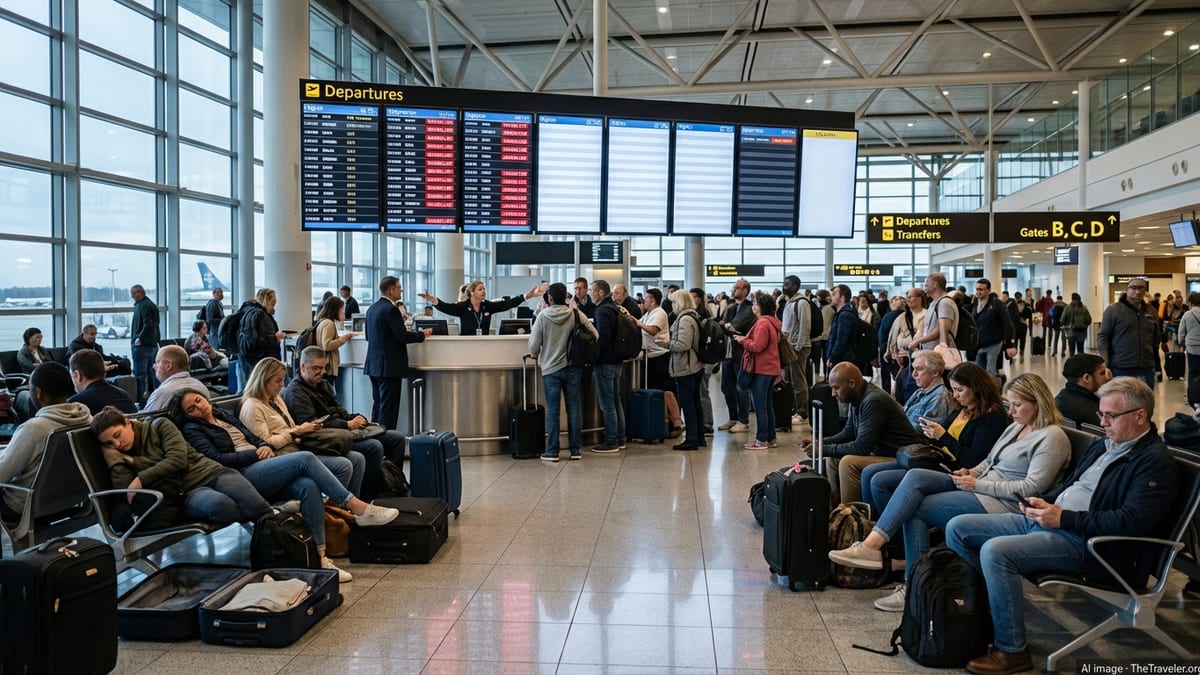
Key Iran–UAE route returns to the skies
Publicly available information indicates that the first scheduled commercial service from Tehran to Dubai is expected to depart on Monday morning, operated by Iranian carrier Sepehran. Tickets have been offered for a mid-morning departure from Tehran with arrival in Dubai late morning local time, according to Iranian media reports and airline booking data.
The restart comes after direct links between the two cities were suspended during the recent conflict involving Iran, Israel and the United States, which triggered widespread airspace closures and restrictions across the Gulf. Services on the Tehran–Dubai corridor, normally one of the busiest international routes for Iranian travelers, had been halted as the United Arab Emirates tightened operations at its airports in response to security concerns.
Before the war, Dubai International Airport was widely regarded as the world’s busiest hub for international passengers, handling hundreds of flights daily, including multiple frequencies from Iranian carriers and UAE-based airlines. Industry assessments suggest that traffic through Dubai dropped sharply during the peak of the conflict as airlines diverted or canceled services and travelers avoided transiting key Gulf hubs.
The resumption of at least one direct Tehran–Dubai rotation is being viewed by aviation analysts as an early indicator that regional operators see conditions as stable enough to slowly rebuild connectivity, even though the underlying political and security situation remains fragile.
From airspace shutdown to gradual reopening
The Tehran–Dubai route restart is the latest step in a broader, phased reopening of Middle East airspace that began after an April ceasefire reduced large-scale hostilities. In late April, Iranian authorities reopened Tehran’s Imam Khomeini International Airport to a limited number of international destinations, including regional cities such as Istanbul, Muscat and Doha, following nearly two months of suspension.
In parallel, the United Arab Emirates has progressively lifted operational constraints at its own airports. Reports from early May indicated that UAE airspace returned to near-normal usage, allowing Dubai and Abu Dhabi to rebuild schedules that had been sharply curtailed when Iranian missile and drone strikes prompted temporary closures and restrictions.
Despite the ceasefire, incidents and military activity have continued in and around the Gulf, leading to short-notice adjustments for airlines and air navigation authorities. Industry briefings describe a patchwork of rerouted corridors, tighter separation of civilian and military traffic, and revised altitude bands designed to keep commercial aircraft away from potential flashpoints.
Against that backdrop, the decision to restart a high-profile city pair such as Tehran–Dubai suggests that both aviation regulators and airport operators judge the immediate risk to be manageable, at least for carefully scheduled flights that comply with updated routing and security guidelines.
Impact on travelers and regional connectivity
For passengers in both Iran and the UAE, the return of direct flights promises shorter journeys and simpler itineraries after weeks of complex detours. During the height of the conflict, many travelers were forced to connect through alternative hubs, often adding hours to their trips and increasing costs as capacity tightened across the region.
Tourism and business communities on both sides of the Gulf are expected to benefit from the renewed link. Dubai has long served as a key gateway for Iranian leisure travelers, medical tourists and shoppers, as well as a major transit hub for passengers heading to Europe, North America and East Asia. Iranian businesses also rely on Dubai for trade, logistics and financial services, making reliable air connectivity an important economic lifeline.
Travel industry trackers note that forward bookings remain highly sensitive to news from the conflict zone. Any renewed escalation or additional strikes near major hubs could prompt another round of cancellations or restrictions, undermining consumer confidence just as demand begins to recover.
For now, however, the reopening of the Tehran–Dubai corridor is likely to be welcomed by travelers who have faced repeated disruptions since late February, when the war first shuttered large swathes of regional airspace and left thousands of passengers stranded across multiple continents.
Airlines move cautiously amid lingering security risks
Airlines operating on routes touching Iran and the Gulf are adopting a cautious approach to capacity planning, according to industry analyses. Rather than restoring full pre-war schedules immediately, carriers are adding flights gradually, monitoring booking trends and adjusting frequencies as conditions evolve.
The initial Tehran–Dubai flight is expected to be operated with a narrow-body aircraft, aligning with a strategy of starting with smaller gauge planes to test demand and manage risk. If security conditions hold and load factors prove strong, additional weekly frequencies or larger aircraft could follow, but no widespread expansion has been formally announced.
Insurance and overflight costs remain elevated for routes that cross or border high-risk areas, contributing to higher operating expenses. Some carriers are also factoring in longer flight times and additional fuel burn caused by circuitous routings that avoid sensitive airspace, particularly over parts of the Gulf and western Iran.
Aviation consultancies monitoring the situation suggest that airlines will continue to coordinate closely with regional air navigation providers and airport operators, updating flight plans at short notice when needed. Contingency planning, including pre-arranged diversions and rapid schedule changes, is expected to remain a feature of operations for months to come.
Outlook for Gulf hubs and Iran’s aviation recovery
The restoration of Tehran–Dubai flights adds incremental momentum to the broader recovery of Gulf aviation, which has been hit hard by the 2026 conflict on top of existing competitive and economic pressures. Dubai and Abu Dhabi are working to reassert their status as global super-hubs, emphasizing resilience and operational reliability in communications with airlines and travelers.
For Iran, renewed access to a major regional hub such as Dubai is a significant milestone in reconnecting its air network to the wider world. Prior to the war, Iranian airlines relied heavily on Gulf and Turkish hubs to feed long-haul services and to provide passengers with one-stop connectivity to key markets.
Analysts tracking regional capacity say the pace of recovery will depend heavily on whether the current ceasefire framework holds and whether diplomatic efforts can stabilize the security environment around key shipping lanes and air corridors. A sustained de-escalation would likely encourage more foreign carriers to consider returning to Tehran and other Iranian cities, while also supporting higher frequencies between Iran and the UAE.
If tensions flare again, the fragile gains represented by Monday’s scheduled service could quickly be reversed. For now, the planned resumption of Tehran–Dubai flights stands as a cautiously optimistic signal that, despite ongoing uncertainty, regional air travel is beginning to edge back toward a more predictable pattern.