


More news on this day
Thousands of air travelers across the United States faced extensive disruptions on June 17 as more than 3,700 flights were delayed and close to 100 were canceled, with major airports in Chicago, Atlanta, Boston, Charlotte, San Diego, Tampa and other cities reporting cascading operational setbacks affecting Delta, United, Endeavor, JetBlue and several regional partners.
Get the latest news straight to your inbox!
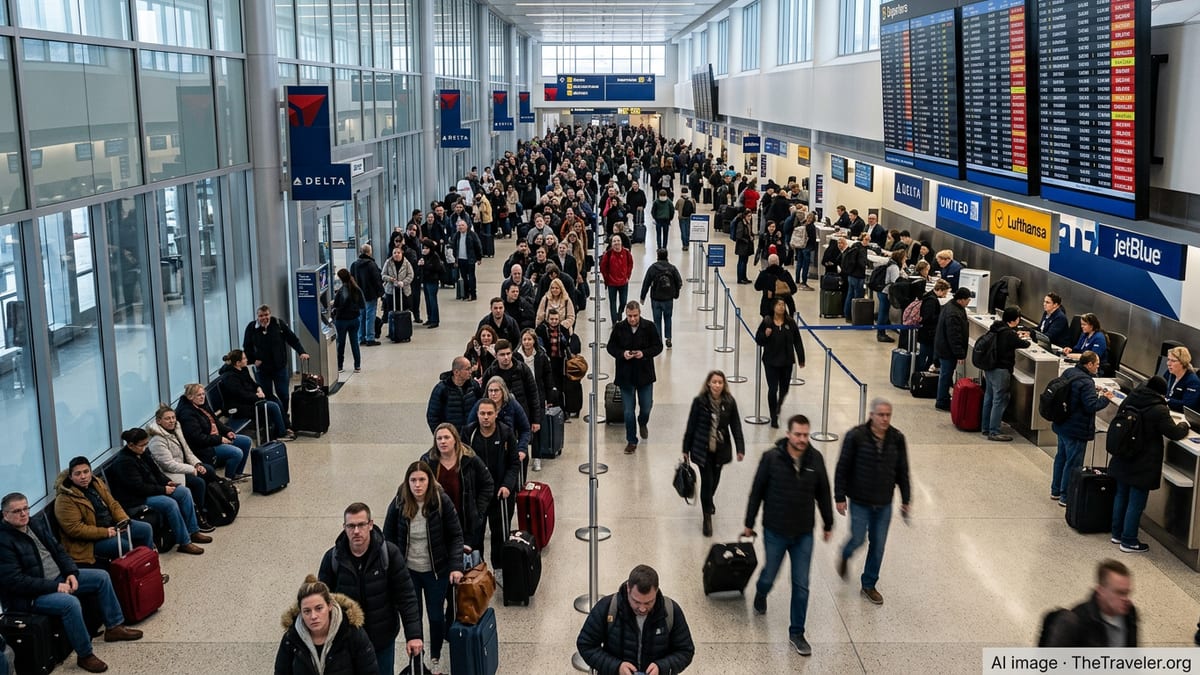
Widespread Delays Hit Major U.S. Gateways
Publicly available flight-tracking data on June 17 indicated roughly 3,720 delays and 96 cancellations nationwide, a level of disruption that rippled through some of the country’s busiest hubs. Large concentrations of affected flights were reported at Chicago O’Hare, Hartsfield–Jackson Atlanta, Boston Logan, Charlotte Douglas, San Diego International and Tampa International, with knock-on impacts spreading to smaller airports across multiple regions.
These airports serve as critical nodes in domestic and transcontinental networks, so operational problems in one location quickly translated into missed connections and aircraft out of position in others. Travelers reported extended tarmac waits, last-minute gate changes and rolling departure estimates as airlines attempted to recover schedules through the afternoon and evening peaks.
The disruption occurred at the start of the busy summer travel period in the United States, when daily passenger volumes are rising and margins for recovery are narrower. With aircraft and crews already running near full utilization, even moderate schedule shocks can produce outsized effects for passengers.
Delta, United, Endeavor, JetBlue and Partners Under Pressure
Major network carriers, including Delta Air Lines and United Airlines, bore a significant share of the delays and cancellations, reflecting their large footprints at several of the impacted hubs. Regional affiliates such as Endeavor Air, which operates many feeder routes under the Delta brand, also experienced scheduling challenges on short-haul connections into and out of Chicago, Atlanta, Charlotte and other key cities.
JetBlue’s operations were affected in Boston and select East Coast markets, compounding recent reliability pressures reported for the carrier during the late spring and early summer travel period. The combination of mainline and regional disruptions meant that both long-haul trunk routes and short connecting flights were vulnerable, leaving travelers stranded not only in major hubs but also at secondary airports dependent on these feeder services.
Historical on-time performance reports from the U.S. Department of Transportation show that carriers such as Delta, United, Endeavor and JetBlue typically maintain relatively high completion rates but can face sharp, short-term spikes in delays when weather, airspace congestion or internal logistical issues converge. The June 17 pattern fit that profile, with airlines attempting to preserve as much of the schedule as possible while juggling crew duty limits and aircraft rotations.
Operational Strains Following Earlier Charlotte Turmoil
The nationwide disruption came on the heels of a significant operational breakdown at Charlotte Douglas International Airport on June 16, where published coverage described at least a dozen cancellations and nearly 200 delays in the space of a single day. That event created a backlog of displaced passengers and aircraft, particularly on routes linking Charlotte with Atlanta, Chicago, New York and Florida destinations.
By June 17, the residual effects from Charlotte were still filtering through carrier networks, particularly for airlines with large connecting flows through the airport. Aircraft and crews that ended the previous day out of position were scheduled back into rotation, but any additional delays in Chicago, Atlanta or Boston made it harder to restore normal patterns quickly.
Industry analysts note that modern hub-and-spoke systems are highly efficient under normal conditions but vulnerable to compounding disruptions when multiple hubs are strained over consecutive days. The sequence of events in Charlotte followed by elevated delays across other major airports illustrates how even a localized meltdown can contribute to broader national congestion.
Weather, Congested Skies and Tight Schedules Combine
While detailed causation data for June 17 will not be available until future federal reports are compiled, historical metrics suggest a mix of factors typically underpin days with similar levels of disruption. Past Department of Transportation data attribute delays to a combination of carrier-controlled issues such as maintenance and crew availability, national airspace system constraints, and weather-related slowdowns that force traffic management programs at busy hubs.
Seasonal storm patterns around Chicago, Atlanta and the Eastern Seaboard frequently result in temporary ground stops or flow restrictions, reducing the rate at which arrivals and departures can be handled. When that happens during afternoon and evening peaks, flights that do operate often depart late, creating rolling delays that extend into the night and into other regions as aircraft move through the system.
Airlines in recent years have also scheduled more flying with tighter turn times and higher aircraft utilization, which can improve efficiency but reduces buffer space when operations are stressed. On days like June 17, any combination of thunderstorms, air traffic control initiatives or minor technical issues can therefore trigger larger-than-usual disruption counts.
Passengers Face Long Lines, Rebookings and Limited Options
As delays mounted, travelers across affected airports encountered long lines at customer service counters and rebooking desks, with limited same-day alternatives on already full flights. Many passengers turned to mobile apps to search for open seats, only to find that options were scarce to and from popular destinations including Chicago, Atlanta, Boston, Charlotte, San Diego and Tampa.
Some airlines offered waivers allowing customers to change travel dates or routes without standard fees, particularly on itineraries touching the hardest-hit hubs. However, the combination of peak-season demand and a tight supply of aircraft meant that rebooking often involved overnight stays or multi-leg routings through less congested airports.
Consumer advocates regularly advise passengers to monitor flight status closely on high-disruption days, keep essential items in carry-on bags in case of missed connections, and know their rights under U.S. transportation regulations and individual airline policies. The events of June 17 served as another reminder that even in a period of strong demand and generally robust reliability, large-scale disruptions can still materialize with little warning for travelers.