


More news on this day
Flight operations across several major global hubs have been hit by a mix of severe weather, labor action and unexpected infrastructure problems in recent days, causing fresh schedule upheaval for leisure and business travelers as the busy late May travel period gathers pace.
Get the latest news straight to your inbox!
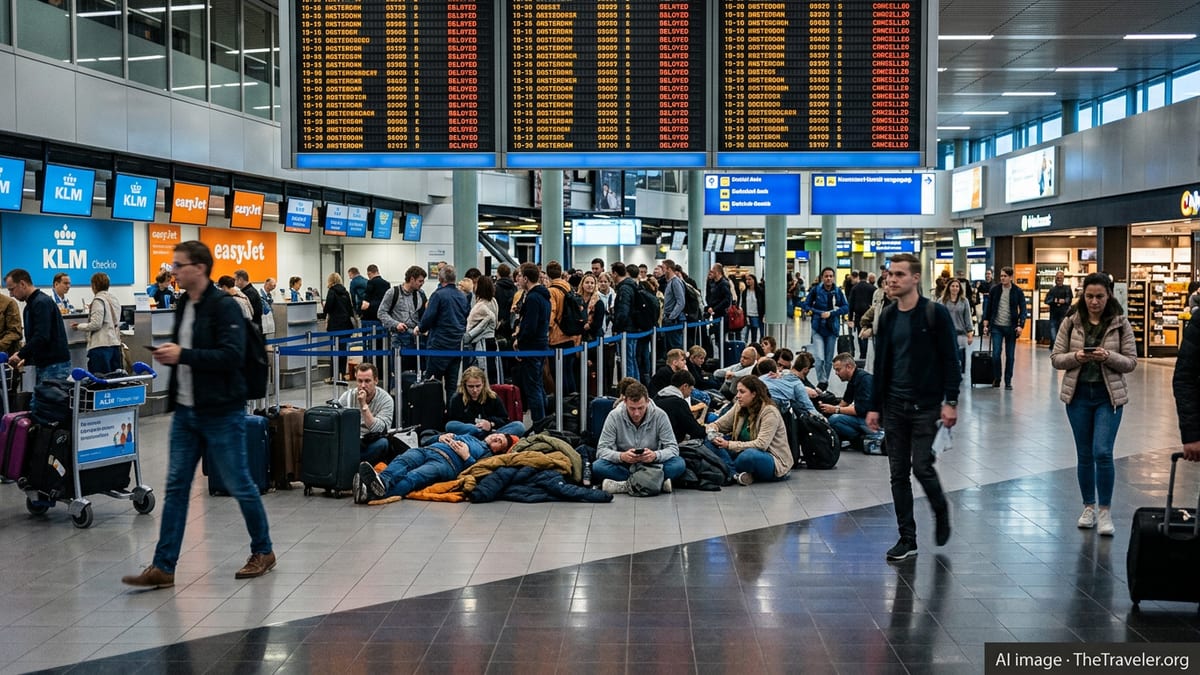
Severe weather triggers cascading delays in the United States
Thunderstorms across key U.S. hub airports in recent days have led to extensive delays, cancellations and knock-on disruption, particularly for travelers connecting through Houston and Chicago. Publicly available tracking data and airline advisories indicate that a ground stop related to heavy rain and flood risks at Houston’s George Bush Intercontinental on May 23 created a bottleneck for one of the country’s largest networks, with delays rippling outward as aircraft and crews fell out of position.
Additional thunderstorms over the Memorial Day period added pressure on already stretched schedules. Data collated by passenger-rights services and aviation analytics firms show that large U.S. carriers recorded hundreds of delays per day over the long weekend, with some operators also issuing travel waivers that allowed rebooking for affected itineraries without change fees. These measures reduced immediate passenger costs but did not eliminate crowding at rebooking desks or the challenge of finding spare seats at short notice.
Analysts note that the pattern follows a familiar cascade: once storms force ground stops or extended spacing between arrivals and departures, hub operations quickly become congested. Even after weather conditions improve, it can take many hours for departure banks to reset, leaving some passengers stranded overnight or misconnecting to onward flights. The current disruptions highlight how dependent summer schedules remain on a narrow margin of weather stability at key hubs.
Travel advisers recommend that passengers connecting through storm-prone airports build in longer layovers during late spring and early summer, particularly on itineraries that combine multiple hubs in one direction. They also suggest monitoring airline apps and flight trackers closely on the day of departure, as same-day rebooking options can disappear quickly once a storm system settles over a major airport.
Runway and infrastructure issues add to airport bottlenecks
While weather has been the main driver of recent U.S. disruption, infrastructure problems have also played a role at certain airports. In New York, reports from specialist aviation outlets describe how a sinkhole discovered near a runway at LaGuardia in mid-May forced temporary closures, resulting in a wave of cancellations and diversions while crews assessed and repaired the affected area.
Similar local disruptions have emerged elsewhere. At Glasgow Airport in the United Kingdom, coverage from national media on May 26 described widespread delays after the main runway was briefly closed, affecting both arrivals and departures. Although operations resumed after safety checks, aircraft and crew were left out of sequence, prolonging delays into subsequent rotations and affecting passengers well beyond the immediate closure window.
These incidents underline how even short-lived infrastructure issues can act as a choke point for tightly timed schedules. Modern hub airports operate near capacity for much of the day, so a temporary runway closure can quickly force airlines to cancel selected flights to protect the broader schedule and prioritize long-haul or high-load routes.
For travelers, the practical impact is similar to weather disruption, but the recovery profile can differ. Infrastructure-related closures sometimes lead to longer ground delays while safety inspections or engineering assessments take place. Travel experts advise that passengers facing these situations keep boarding passes, receipts and documentation of delay times, as eligibility for care or compensation may be different when the root cause is not weather-related.
Strikes and staffing tensions reshape European travel plans
Across Europe, industrial action and staffing disputes have been another major source of disruption in recent weeks. A nationwide aviation strike in Italy in mid-May prompted national carrier ITA Airways and other airlines to cancel a significant share of their schedules, affecting domestic and international routes. Published coverage from travel and passenger-rights organizations indicates that many flights were reshaped or consolidated, with some passengers rebooked via alternative airports or onto rail services.
The Italian disruption followed earlier strike-related problems involving carriers such as Lufthansa and ITA, which together affected hundreds of flights across the country in April. Each event has reinforced concerns among travel planners that labor disputes could flare again during the peak summer period, particularly where negotiations over pay, working hours and staffing levels remain unsettled.
Beyond Italy, air traffic control and ground handling staffing levels at major European hubs continue to attract scrutiny. Recent weekend data compiled by flight-compensation platforms shows more than 1,600 flights delayed or canceled on a single day across airports including London Heathrow, Amsterdam Schiphol and Athens. The causes ranged from localized storms to staffing constraints and congested airspace, illustrating how different stress factors can combine to produce a concentrated disruption event.
Travel-management firms are advising corporate clients to build more flexibility into itineraries involving these hubs, including overnight stays before critical meetings and the use of secondary airports where service reliability appears stronger. Leisure travelers are being encouraged to check for strike notices or reduced staffing alerts before locking in nonrefundable accommodation or tour bookings.
Asia and Middle East networks still feeling earlier shocks
In Asia, major Chinese airports recently experienced a broad operational slowdown that resulted in dozens of cancellations and several hundred delays in a single day. Publicly available flight statistics for early May indicate that Shanghai Pudong, Beijing Capital, Chengdu Tianfu and other large facilities saw departure banks slip behind schedule, with analysts pointing to general congestion rather than storms or strikes as the main cause.
Industry observers note that these gridlocks often relate to complex interactions between airline scheduling, air traffic flow management and airport capacity constraints. When several busy airports struggle at the same time, knock-on effects can extend to connecting points across Asia and beyond, particularly on long-haul services to Europe and North America that rely on tight overnight connections.
Meanwhile, Middle Eastern air networks are still recalibrating after earlier geopolitical tensions and temporary airspace closures in parts of the region. According to recent aviation briefings and regional news coverage, restrictions on overflights across portions of Iranian and Iraqi airspace forced airlines to reroute long-haul services, increasing flight times and complicating crew rotations. With some Gulf and Levant hubs also facing intermittent operational constraints, global carriers have had to make frequent timetable adjustments.
Although many routes have since stabilized, flight-planning experts caution that long-haul itineraries across the region remain more vulnerable to sudden airspace changes than before, which can translate into last-minute flight time extensions or diversions. Travelers connecting through Gulf and Middle Eastern hubs are advised to allow for schedule variability, especially when same-day onward connections involve separate tickets.
What travelers can expect in the weeks ahead
Recent patterns suggest that disruption risks will remain elevated as the northern summer season approaches. Seasonal thunderstorms in North America, lingering staffing challenges in parts of Europe and the potential for further industrial action all point to a travel landscape where on-time performance may be volatile, even when underlying demand is strong.
Airline schedule data for the coming weeks indicates that many carriers are still operating close to pre-pandemic capacity on transatlantic and intra-European routes, leaving limited slack to absorb irregular operations. Analysts say that while airlines have invested in better disruption-management tools and communication systems, practical constraints such as crew duty-time limits, aircraft availability and congested airspace continue to limit how quickly operations can recover after a major event.
Travel planners recommend that passengers build resilience into their own plans, prioritizing longer connections, early departures on days with critical commitments and flexible booking options where budgets allow. They also point to the importance of understanding basic passenger rights in the regions being visited, as entitlement to refunds, rerouting or care can vary sharply between jurisdictions and between weather-related and controllable disruptions.
For now, travelers preparing for late May and early June journeys are being urged by industry observers to monitor forecasts, airport status pages and airline notifications closely in the 48 hours before departure. With multiple factors converging to strain global aviation systems, early awareness and flexibility remain the most effective tools for reducing the impact of sudden flight changes.