


More news on this day
Air travel across Asia faced another day of severe disruption as operational data on Wednesday indicated 98 flight cancellations and 249 delays involving China Eastern, Shenzhen Airlines, Batik Air, Garuda Indonesia, Dalian Airlines and Air Inuit, with knock-on effects reported at airports in Malaysia, Thailand, Vietnam, the Philippines and several other regional hubs.
Get the latest news straight to your inbox!
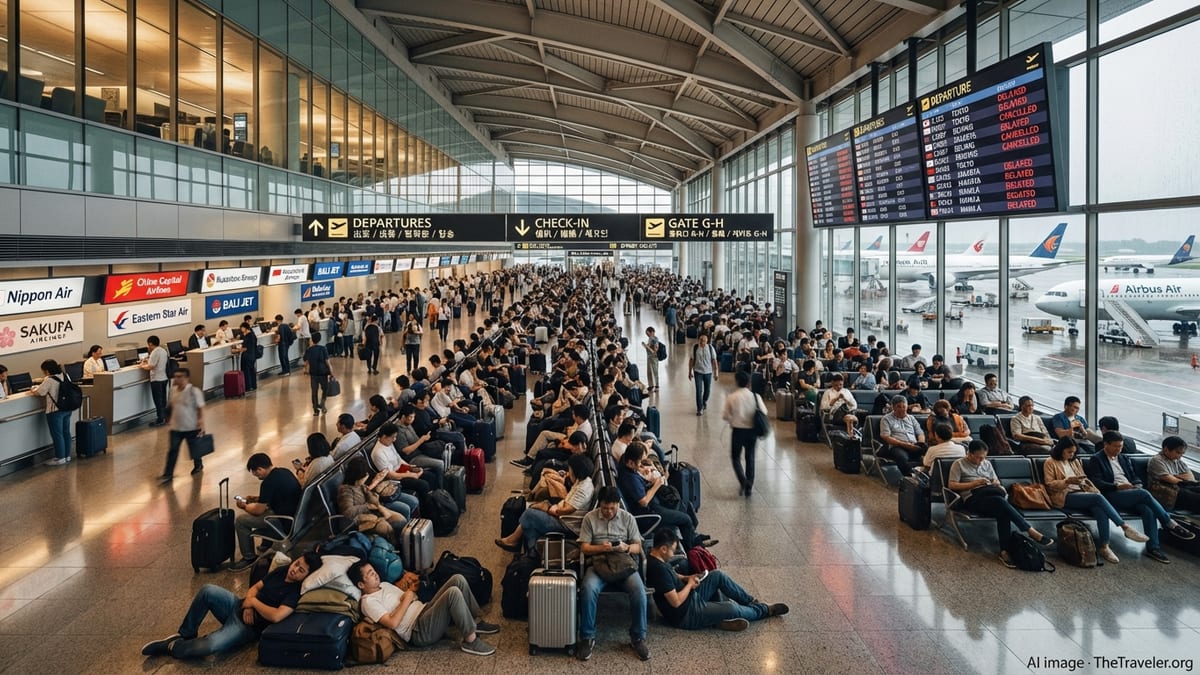
Widespread Disruptions From Southeast Asia to North Asia
Regional flight-tracking dashboards and aviation analytics for late May 2026 indicate that cancellations and delays are no longer confined to a single hotspot, but are instead rippling across multiple Asian markets. Services operated by China Eastern and Shenzhen Airlines have been affected alongside those of Indonesia’s Garuda Indonesia and Batik Air, China-based Dalian Airlines and Canada’s Air Inuit on selected Asian sectors, contributing to a combined tally of 98 cancellations and 249 delays over a single reporting cycle.
Publicly available disruption logs show that Malaysia, Thailand, Vietnam and the Philippines have been among the most affected, with Kuala Lumpur, Bangkok, Ho Chi Minh City and Manila featuring repeatedly in delay and cancellation tables. Smaller secondary airports in these countries have also seen services thinned or retimed as carriers attempt to reset aircraft rotations and reposition crews.
The latest figures build on a series of recent disruption waves across the wider Asia Pacific region, where weather systems, air traffic control bottlenecks and crew availability issues have periodically converged. Data compiled in recent weeks has highlighted how even modest schedule shocks can cascade quickly when large carriers such as China Eastern or Garuda Indonesia are already operating near capacity at major hubs.
Operational Pressures Behind the Latest Wave
Aviation analytics reports for spring 2026 describe a network operating under sustained pressure. Recent compilations of Asia Pacific traffic have pointed to weather-related slowdowns at Chinese and Southeast Asian hubs, temporary airspace constraints on long-haul corridors, and lingering staffing gaps that make it harder for airlines to recover once irregular operations begin.
China Eastern and Shenzhen Airlines have featured prominently in several recent disruption tallies, reflecting both their scale and their exposure to congested Chinese airspace. Published statistics for China Eastern over the past month show a measurable cancellation and delay rate, while reporting on broader regional crises earlier in the season detailed dozens of cancellations and hundreds of delays attributed to Chinese and Southeast Asian carriers during single multi-day episodes.
In Southeast Asia, carriers such as Garuda Indonesia and Batik Air have also been operating through a series of rolling challenges. Coverage of earlier disruption periods in Indonesia and Malaysia described how thunderstorms, air traffic control restrictions and crew rostering issues combined to strand passengers at Jakarta, Bali and Kuala Lumpur, with knock-on delays subsequently spreading to neighboring markets including Vietnam and the Philippines.
Airports in Malaysia, Thailand, Vietnam and the Philippines Under Strain
The latest disruption figures have put particular strain on airports across Malaysia, Thailand, Vietnam and the Philippines, where terminals were already busy with a mix of business travel, migrant worker flows and resurgent tourism. Reports indicate that Kuala Lumpur International, Bangkok Suvarnabhumi, Ho Chi Minh City’s Tan Son Nhat and Manila’s Ninoy Aquino International have all seen clusters of cancellations and extended delays during the current episode.
At these hubs, disruption related to China Eastern and Shenzhen Airlines often appears in the form of delayed feeder flights from Chinese cities, which then affect onward departures on Garuda Indonesia, Batik Air and other regional operators. Analysts note that when inbound flights from China and other North Asian markets arrive late, airlines at Southeast Asian hubs face a choice between holding connecting services or cancelling and consolidating departures, both of which can push delay statistics higher.
Secondary airports have not been immune. Public data from recent weeks shows repeated instances of schedule thinning at regional gateways in Malaysia and Indonesia, as well as select provincial airports in Thailand and Vietnam. These cuts and retimings may not always appear prominently in headline disruption counts, but they reduce options for travelers attempting to reroute around the most congested hubs.
Knock-on Effects for International Connections
The 98 cancellations and 249 delays recorded in the latest cycle are part of a broader pattern that continues to affect long-haul connections beyond Asia. Previous analyses of similar events this year documented how missed connections at Asian hubs triggered additional delays and cancellations on services to Europe, the Middle East and North America, as aircraft and crews ended up out of position.
Industry observers point out that Chinese and Southeast Asian hubs now function as crucial waypoints for a wide range of itineraries. Any disruption on short-haul segments within China, Indonesia, Malaysia or neighboring states can quickly propagate to long-haul departures when passengers and baggage miss their planned connections. Published accounts of earlier multi-country disruption waves described airlines holding departures for late-arriving passengers on some routes while cancelling or consolidating others, which in turn pushed delays further into subsequent schedules.
The presence of Air Inuit and Dalian Airlines in the current tally underlines the increasingly interconnected nature of global networks. Even when these carriers operate relatively small numbers of flights in or through Asia, irregular operations on niche or seasonal routes can complicate aircraft rotations and gate planning, adding to the general congestion visible in recent operational dashboards.
Passengers Scramble for Rebooking and Compensation
For travelers caught up in the latest wave of disruption, the immediate priority has been securing alternative flights. Passenger accounts shared across public forums and prior analyses of similar events show long lines at ticket counters and transfer desks whenever clusters of cancellations occur, particularly at hub airports where multiple affected carriers operate side by side.
Consumer-rights organizations and travel advisory platforms consistently recommend that affected passengers use airline mobile apps and official websites to confirm the status of their flights and rebooking options, rather than relying solely on departure boards at the airport. Guidance issued in connection with earlier Asian disruption episodes also emphasizes the importance of keeping boarding passes and receipts for meals, hotels and ground transport, as these may be required when seeking refunds or goodwill compensation.
Regulatory protection varies widely across the region. While some routes touching the European Union may fall under EU261 rules, many purely intra-Asian flights are governed instead by airline policies and local regulations. Specialist claims firms and legal information platforms note that passengers are more likely to secure compensation when disruptions are linked to factors within an airline’s control, such as crew or technical issues, than when weather or airspace closures are to blame.