


More news on this day
A freight train derailment near Stringtown in southeastern Oklahoma has prompted significant road closures around a major highway and local streets, disrupting road and rail traffic through the small community and forcing travelers onto lengthy detours.
Get the latest news straight to your inbox!
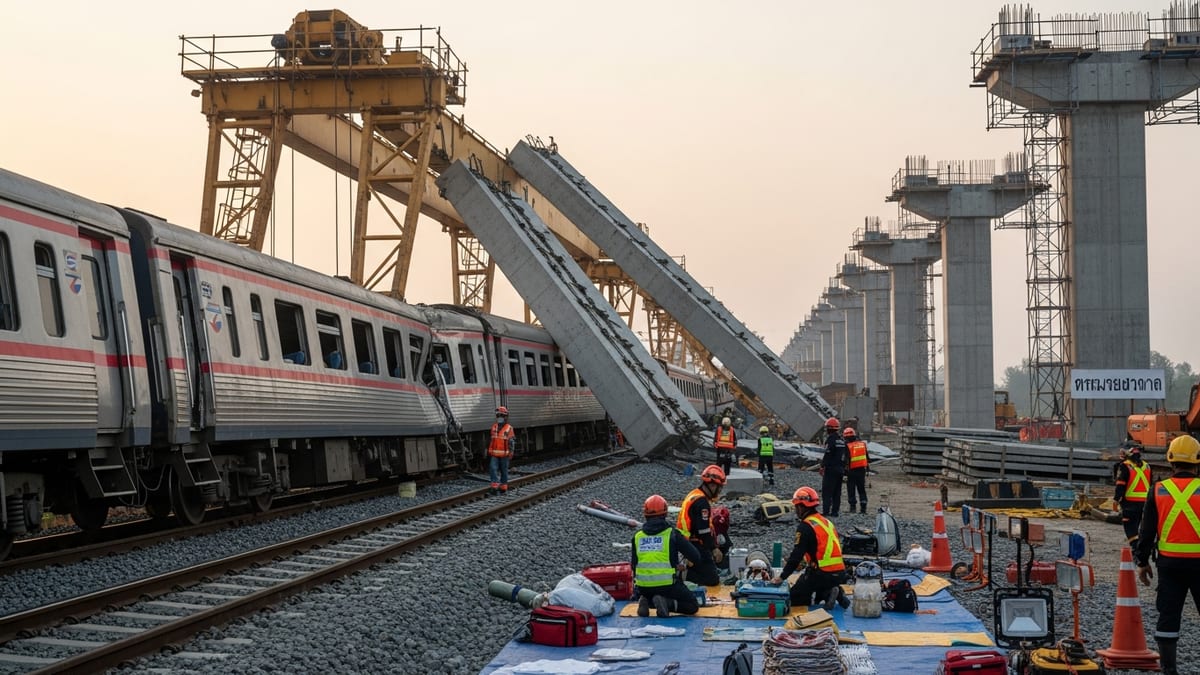
Derailment near highway corridor disrupts regional travel
Early reports indicate that a freight consist traveling through the Stringtown area left the tracks close to the junction of U.S. 69 and State Highway 43, a corridor that carries a steady flow of long-distance traffic between Texas and northeastern Oklahoma. The derailment occurred near the town limits, where the rail line runs roughly parallel to U.S. 69 and passes close to local access roads.
Publicly available information from regional outlets and transportation channels describes multiple railcars off the tracks, with some leaning or resting on their sides. As of the latest updates, there were no widely reported serious injuries. However, the incident has created a complex scene involving damaged track, debris and heavy equipment positioned around the rail right of way.
The derailment adds to a national pattern of freight incidents that periodically disrupt local communities and key road corridors. While Stringtown is a small town, its location along U.S. 69 means that any rail or roadway disruption can quickly affect commercial trucks, local commuters and long-distance travelers moving between Dallas, Durant, Atoka and points north.
Road closures and evolving detour routes
Transportation updates from the area describe significant closures affecting both local roads and highway approaches around the derailment site. Sections of U.S. 69 near Stringtown have been periodically closed or restricted, with traffic in some stretches reduced to a single lane or rerouted to frontage roads and alternate state highways. Drivers traveling between Atoka and Stringtown, and onward toward McAlester, have reported delays and extended travel times.
Local streets adjacent to the tracks have also been blocked to give rail personnel and heavy machinery room to work. Barriers and law-enforcement vehicles are reported at key intersections, limiting access not only for through traffic but also for residents who rely on short connectors to reach the highway. In some cases, vehicles have been turned around at improvised checkpoints well before the actual derailment scene.
Travelers passing through this part of Atoka County are being advised, through regional traffic reporting and word-of-mouth updates, to expect unpredictable slowdowns. Detours commonly mentioned in public reports involve routing north–south traffic onto alternate state routes before rejoining U.S. 69 beyond the affected segment, adding distance and time for both private motorists and freight haulers.
Impact on local community and visitor travel
For Stringtown residents, the derailment has quickly become a disruptive event layered on top of everyday small-town routines. The U.S. 69 and SH 43 corridor serves not only as a through route but also as an essential link for school runs, medical appointments and shopping trips in larger nearby hubs such as Atoka and McAlester. With road closures and detours in place, those routine journeys now require extra planning and flexible timing.
Visitors heading toward Lake Atoka and nearby outdoor areas are also feeling the effects. Travel blogs, social media posts and informal online reports mention confusion over exactly where closures begin and end, prompting some travelers to reconsider their routes or adjust departure times. For those unfamiliar with southeastern Oklahoma’s secondary roads, sudden diversions from the main highway can be disorienting.
Business activity along the corridor is likely to see short-term impacts as well. Fuel stations, roadside diners and small motels in and around Stringtown depend heavily on through traffic. A prolonged period of closures or stop-and-go congestion may reduce the number of spontaneous stops by travelers who typically pull off U.S. 69 for fuel, food or an overnight stay.
Rail operations, cleanup efforts and safety focus
Railroad personnel and contracted crews are reported to be working around the clock to stabilize derailed cars, clear debris and inspect the track structure. Images and descriptions circulating online show cranes and heavy lifting equipment positioned alongside the right of way, a common sight after recent derailments in other U.S. communities where similar cleanup operations have taken place.
Before normal service can resume, crews must re-rail or remove damaged cars, repair or replace sections of track and verify that the underlying roadbed is stable. In other freight derailments documented across the region, this process has taken anywhere from a day to more than a week, depending on the number of cars involved, the extent of track damage and the type of cargo on board.
Publicly available commentary from transportation analysts and rail watchers points to ongoing national conversations about rail safety, infrastructure upkeep and train length. Although the specific cause of the Stringtown derailment has not yet been publicly detailed in depth, similar incidents have been linked to factors such as track defects, mechanical failures and operational issues. Investigations typically unfold over weeks or months, while communities contend with immediate disruption on the ground.
What travelers through Stringtown should know now
For those planning to drive through southeastern Oklahoma in the coming days, particularly along U.S. 69, current guidance from traffic reporting services and local coverage is to check road conditions as close to departure as possible and be prepared to follow posted detours near Stringtown. Travel times between Durant, Atoka and points north may be longer than usual, especially during peak hours or when cleanup work requires intermittent full closures.
Motorists hauling trailers or driving recreational vehicles should anticipate narrowed lanes, sudden stops and shifting traffic patterns around the work zone. In similar derailment responses elsewhere, oversize and overweight loads have occasionally faced additional restrictions or been advised to seek alternate corridors altogether while repair work continues.
For travelers willing to adjust their plans, routing through alternate state highways away from the immediate Stringtown corridor may provide a more predictable journey, even if it adds distance. As rail and road crews continue work at the derailment site, conditions on the ground are likely to evolve from day to day, with lane reopenings and closure adjustments reflecting progress on cleanup and repairs.