


More news on this day
Europe’s new digital border checks are already stretching airport capacity as the peak holiday season begins, with the head of Berlin’s main airport warning that current delays for non-EU passengers will not be bearable over the summer.
Get the latest news straight to your inbox!
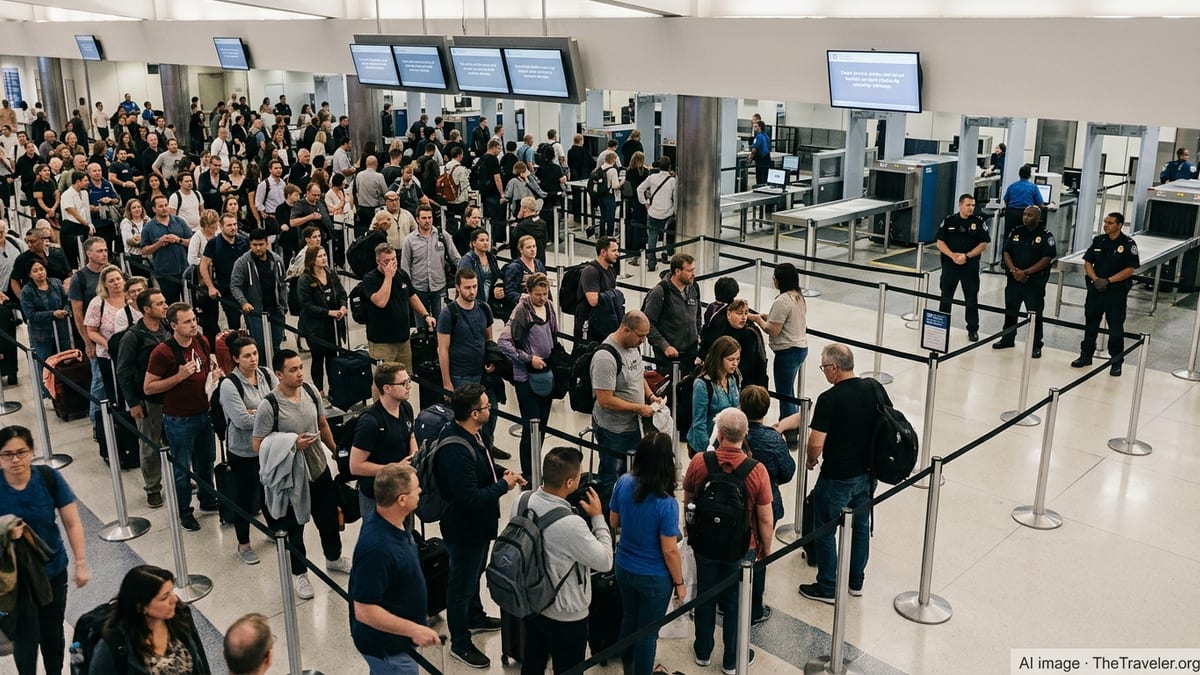
Berlin queues highlight pressure from new border system
At Berlin Brandenburg Airport, reports indicate that non-EU travellers have been queuing for up to two hours at passport control since the European Union’s new Entry/Exit System became fully operational. The airport’s chief executive, Aletta von Massenbach, described the current situation as unsustainable for the high-demand months ahead, warning that today’s wait times could grow significantly as July and August traffic builds.
The delays stem from new biometric checks for third-country nationals entering the Schengen area. Travellers must submit fingerprints and facial images on first use, a process that is taking far longer than the manual passport stamping it replaces. Industry coverage notes that, in busy arrival banks, entire flights are facing extended waits, straining terminal capacity and staff resources.
For Berlin, which has rapidly expanded its international route network in recent years, the timing is especially sensitive. The airport is entering its first full peak season with the Entry/Exit System in force, and passenger numbers are expected to reach or surpass pre-pandemic levels, raising concerns that bottlenecks at border control could ripple through wider airport operations.
Industry groups warn of ‘critical point’ for summer travel
Berlin’s warning reflects growing alarm across Europe’s aviation sector. Airports and airlines have jointly urged the European Commission to allow broader flexibility in applying the Entry/Exit System during the busiest weeks of the year. An open letter from major industry bodies, including Airports Council International Europe and leading airline associations, describes the rollout as having reached a critical point, with some border crossings reporting waits of several hours.
Published coverage of the letter highlights calls for member states to be permitted to suspend or scale back the biometric checks temporarily when passenger flows exceed the capacity of border control facilities. The signatories argue that, without such measures, congestion at passport control risks becoming systemic, affecting major hubs and regional airports that serve popular holiday destinations alike.
The World Travel & Tourism Council has publicly backed the industry appeal, citing analysis that prolonged border queues could deter tens of millions of would-be visitors and put tens of billions of dollars in travel spending at risk. For tourism-dependent economies around the Mediterranean and in key city-break markets, disruption at the border is seen as a direct threat to recovery momentum.
How the Entry/Exit System works – and why it is slowing queues
The Entry/Exit System is designed to strengthen security at the external borders of the Schengen area by replacing passport stamps with a shared digital record for most non-EU travellers. Each time an eligible passenger crosses the border, the system logs their entry or exit, alongside biometric data such as fingerprints and a facial image. The technology aims to help identify over-stayers and combat identity fraud while giving border authorities more reliable data.
However, the first registration of a traveller’s biometrics is proving far more time-consuming than anticipated. Studies and early operational feedback gathered across European airports indicate that processing times can be several times longer than traditional checks, particularly when passengers are unfamiliar with the procedure or equipment experiences technical issues.
Reports from various hubs this spring and early summer describe queues stretching through terminal corridors, with some flights forced to depart while passengers are still waiting at border control. In certain locations, a lack of fully equipped e-gates has increased reliance on manually staffed booths, limiting throughput just as summer schedules increase flight volumes.
EU stance and options for easing congestion
The European Commission has maintained that the Entry/Exit System is a necessary long-term modernization of border management and has pointed to cases where implementation has been smoother. Official communications emphasise that member states were informed about the technical and staffing requirements ahead of the rollout and retain the ability to deploy additional resources or reconfigure border control layouts.
Under the existing framework, countries can temporarily adjust or partially suspend digital checks at specific border points in exceptional circumstances, although blanket waivers for particular nationalities or extended periods are not foreseen. Industry and tourism representatives argue that the current summer demand, combined with higher-than-expected processing times, meets the threshold for more active use of these flexibilities.
Specialist publications report that Brussels has recently convened high-level meetings with airport and airline leaders to review performance data and contingency plans. While no comprehensive policy change has been announced, the dialogue reflects growing recognition that operational realities at front-line border posts may require short-term adaptations to preserve passenger flow.
What travellers can expect at EU airports this summer
For passengers planning trips from the United States, the United Kingdom and other non-Schengen countries, the immediate implication is the likelihood of longer waits at passport control, especially on first arrival since the Entry/Exit System went live. Travel media and consumer groups advise allowing significantly more time to clear border formalities, particularly when making onward connections within Europe.
Many airports and airlines have begun issuing their own guidance, recommending that travellers check in earlier than usual, avoid tight layovers, and have passports ready and unobstructed for biometric capture. Some hubs are trialling separate lanes for passengers who have already registered in the system, although the effectiveness of these measures depends on how consistently data is recognised across different border posts.
Despite the short-term disruption, European institutions continue to frame the Entry/Exit System as a foundational tool for future travel. If the current difficulties can be managed through targeted suspensions, staffing increases and technical refinements, border authorities argue that subsequent trips for registered travellers should eventually become faster and more predictable. For now, however, Berlin’s warning about queues that are not bearable over the summer encapsulates the gap between the system’s long-term ambitions and the immediate experience facing many visitors.