


More news on this day
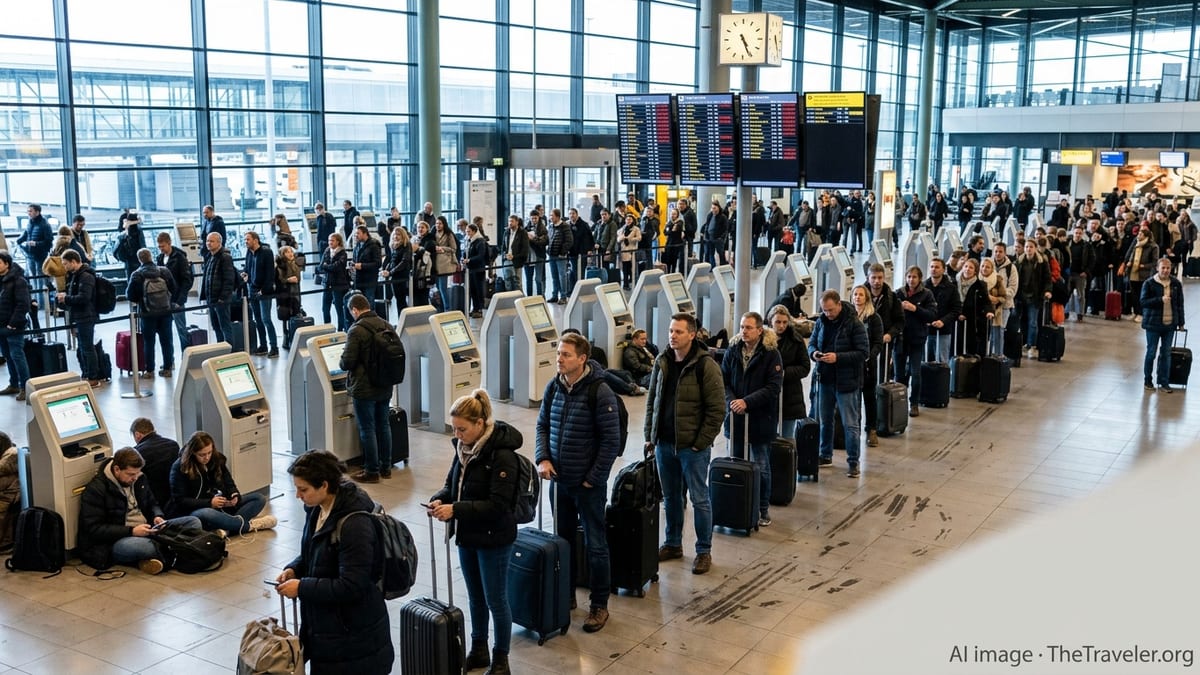
Travelers at Copenhagen Airport faced a difficult start to the week as a cluster of six flights operated for Scandinavian Airlines, Air France and partner carriers were suspended, with additional services suffering extended delays and missed connections on key routes linking the United Kingdom, United Arab Emirates, Spain, the Czech Republic, the United States and other destinations.
Get the latest news straight to your inbox!
Cluster of Cancellations Adds Strain to Busy Hub
Publicly available operational data for 25 May shows several flights serving Copenhagen Airport being withdrawn from the schedule or failing to depart, affecting services marketed by Scandinavian Airlines and Air France and operated by regional partners including Braathens Regional Airways and Cityjet. While the number of cancellations remains limited compared with the total daily traffic volume at the Nordic hub, the targeted nature of the suspensions on morning and midday departures has created bottlenecks for passengers relying on onward connections.
The six cancelled departures are spread across short haul and medium haul routes, concentrating disruption into specific banks of flights that normally feed long haul services to North America and the Middle East. This pattern has left some travelers stranded in Copenhagen while others have been forced into extended reroutings through alternative European hubs.
Airport punctuality reports indicate that overall on time performance at Copenhagen remains relatively robust, but the cluster of cancellations on a single day has had a disproportionate impact on travelers booked on the affected flights. With many services sold under multiple flight numbers by different airlines, passengers have in some cases only discovered the disruption when attempting to check in.
Major European Links to UK, Spain and Czech Republic Disrupted
Among the hardest hit are key European routes that serve as feeders into the wider network. Published schedules and tracking data show services between Copenhagen and major cities in the United Kingdom, Spain and the Czech Republic experiencing cancellations or extended delays on 25 May, interrupting what are normally high frequency links.
Flights between Copenhagen and London are central to connecting traffic bound for the United States and the Middle East, and suspensions on selected departures have forced passengers onto later services with reduced chances of making same day long haul connections. Similar issues are reported on links to Spanish destinations, where delayed departures from Copenhagen have led to missed inbound connections for travelers aiming to continue to the Canary Islands and other leisure markets.
On the eastern side of the network, departures from Copenhagen to Prague and other Central European cities have also faced schedule disruption. For business travelers commuting between Scandinavia and the Czech Republic, even a single cancelled rotation can eliminate the possibility of a same day round trip, prompting last minute changes to itineraries and meeting plans.
Knock on Effects for Long Haul Routes to UAE and US
While the primary cancellations have been concentrated on regional and European sectors, their effects have spread into long haul operations, particularly on routes linking Copenhagen with the United Arab Emirates and the United States. Connections from the UK, Spain and Central Europe typically feed into widebody departures to Dubai and major US gateways, and delays on these feeder flights have left some passengers misconnecting in Copenhagen.
Data from flight tracking platforms for 25 May shows several transatlantic departures operating with notable delays or reduced loads following disrupted inbound connections. Travelers booked on itineraries from smaller European airports via Copenhagen to US cities have reported being rebooked onto alternative routings through other European hubs when their initial regional leg was cancelled or significantly delayed.
Services to Gulf hubs are experiencing similar pressures. When a key morning or midday feeder into Copenhagen fails to operate, passengers bound for the UAE find themselves arriving too late to board their planned onward flight, triggering overnight stays or extensive rerouting. For leisure travelers on tightly timed holidays, such changes can remove an entire day from a trip.
Regional Partners Braathens and Cityjet in the Spotlight
The disruption has drawn attention to the role of regional partner airlines operating flights under the banners of larger network carriers. Braathens Regional Airways and Cityjet both provide aircraft and crews on a wet lease basis for services marketed by Scandinavian Airlines and, on some sectors, by codeshare partners such as Air France. When these regional operators suspend or delay flights, the impact is felt across multiple ticketing airlines.
Operational listings for 25 May show several services between Danish domestic points and Copenhagen, as well as selected international routes, being flown or scheduled to be flown by Braathens Regional Airways on behalf of Scandinavian Airlines and its partners. The cancelled flights sit within this group, underscoring how dependent the larger carriers have become on contracted regional capacity for maintaining frequencies across their networks.
Cityjet operated flights are also prominent on routes into and out of Copenhagen, particularly on shorter sectors within Northern Europe. When an aircraft or crew issue arises at one of these regional operators, the resulting cancellation can remove the only conveniently timed option for travelers in smaller markets, leaving limited alternatives on the same day.
Passengers Face Rebooking Challenges and Tight Connections
For travelers caught up in the disruption at Copenhagen Airport, the most immediate challenge has been rebooking. Publicly available accounts from recent weeks already highlight concerns among passengers about tight connection times at the hub, and the latest wave of cancellations has heightened anxiety for those relying on minimum layovers to make onward flights.
Some travelers have reported being offered reroutings that involve additional stops and late night arrivals, while others have opted to request refunds and rebook themselves on competing airlines through other European gateways. Under European passenger rights rules, those departing from or connecting through an EU airport may be entitled to assistance and, in some circumstances, financial compensation if delays or cancellations meet certain criteria.
Travel forums and social media posts suggest that passengers are increasingly building in longer buffers when connecting through Copenhagen, adding extra hours to allow for potential delays on regional legs operated by partner carriers. While the airport is generally regarded as efficient for transfers, the combination of high summer traffic, tight scheduling and dependence on regional operators has made some itineraries more vulnerable to disruption.