


More news on this day
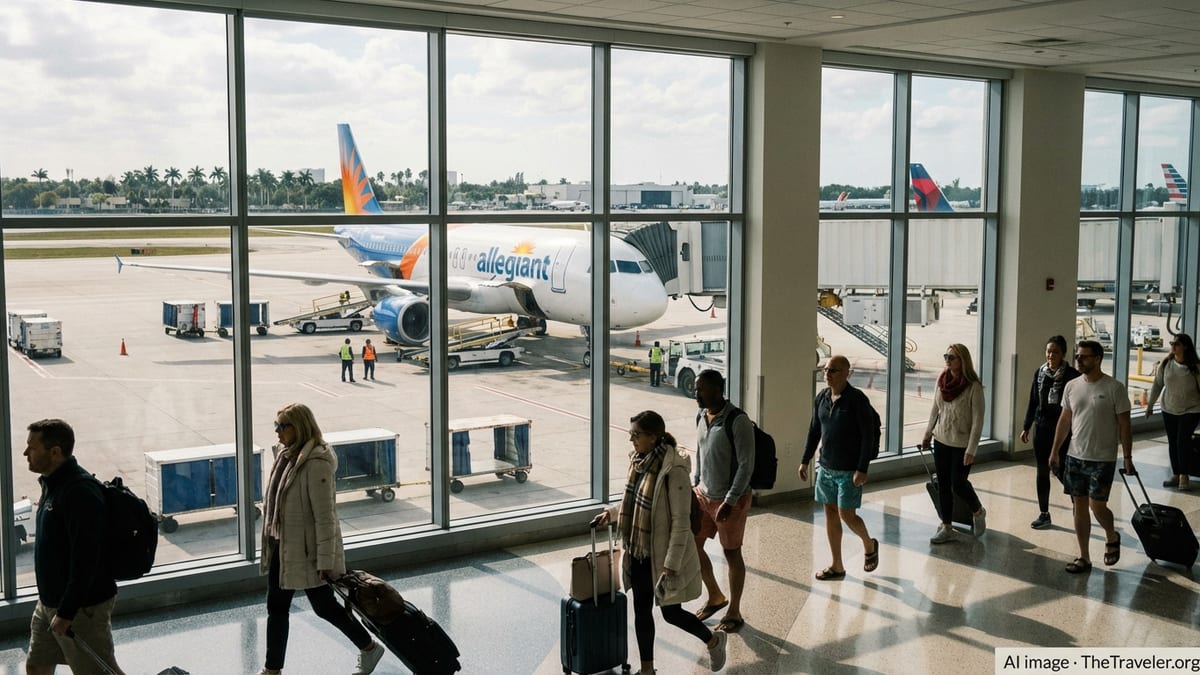
Travelers at Fort Lauderdale Hollywood International Airport faced a difficult start to the week on Monday, June 15, as at least 12 flights on Delta Air Lines, Frontier Airlines, JetBlue, and American Airlines were suspended and several others delayed, disrupting major routes across the United States, the Caribbean, and Latin America.
Get the latest news straight to your inbox!
Multiple Carriers Pull Flights as Summer Demand Builds
According to live schedule boards and third party flight tracking data for Monday, June 15, a cluster of cancellations and rolling delays emerged across several terminals at Fort Lauderdale Hollywood International Airport. The disruptions included both domestic and international services, with flights touching key hubs and leisure destinations in the United States, the Dominican Republic, Mexico, Brazil, and Colombia.
Publicly available information shows that at least 12 flights operated by Delta, Frontier, JetBlue, and American were scrubbed from the day’s schedule, with further services held at the gate or departing significantly behind timetable. The pattern added pressure to an airport already handling elevated volumes following the collapse of Spirit Airlines earlier this spring and rapid growth by other carriers stepping in to fill the gap.
Operational data from aviation analytics platforms and airport statistics indicate that JetBlue, Frontier, Delta, and American have all increased their presence at Fort Lauderdale in recent months, positioning the airport as a more prominent connecting point for both domestic and international itineraries. That expansion left many of Monday’s affected passengers with limited alternative options, particularly on short notice.
While the exact mix of causes behind the disruptions varied by flight, delay codes and public reporting pointed to a combination of aircraft and crew availability issues, tight aircraft rotations, and knock on effects from broader network challenges across the United States.
Key Routes Affected Across the United States
Domestically, travelers experienced problems on several high demand routes into and out of Fort Lauderdale. Flight status feeds showed cancellations and long delays on services linking the airport with major hubs such as Atlanta and Dallas, as well as with large origin markets including Tampa and other cities in the Southeast.
Delta and Frontier flights connecting Fort Lauderdale with Atlanta, one of the busiest corridors in the Southeast, featured among the affected services. For some travelers, this meant missed onward connections to Midwest and West Coast cities, while others were left seeking same day alternatives that were already heavily booked because of peak season load factors.
JetBlue and American, both of which rely on Fort Lauderdale to funnel traffic from secondary U.S. cities into Florida and onward to the Caribbean, also removed or delayed flights between the airport and cities such as Tampa and Dallas. Passengers who built itineraries around tight connection windows at Fort Lauderdale found themselves queuing at service desks or using airline mobile apps to secure rebooking options further into the week.
With many domestic flights already running close to capacity heading into the heart of the summer travel season, same day reaccommodation often required rerouting via alternative hubs such as Miami, Orlando, or Atlanta. That created longer travel times and, in some cases, required passengers to accept overnight stays and partial refunds instead of straightforward rebooking.
International Links to the Caribbean and Latin America Disrupted
The impact was not confined to domestic flyers. Fort Lauderdale serves as a significant low cost and hybrid carrier gateway to the Caribbean and Latin America, and Monday’s wave of suspensions and delays disrupted travel plans to several international destinations.
Schedule data and airline route information indicate that routes between Fort Lauderdale and key leisure markets such as the Dominican Republic and Mexico saw selective cancellations and late running aircraft. Services to Punta Cana, Santo Domingo, Cancún, and other sun destinations are heavily booked in June, and even a small number of lost flights can create large bottlenecks for travelers relying on pre arranged hotel stays and package tours.
Further south, connections used by travelers heading to or from Brazil and Colombia were also hit. Fort Lauderdale has increasingly been marketed as a cost efficient alternative gateway to Latin America, with JetBlue, Frontier, and other carriers promoting competitive fares to cities in Colombia and beyond. Disruptions on these routes reverberated across multi leg itineraries that combined U.S. domestic segments with long haul flights into South America.
Travel industry analysts note that when an airport functions as a transfer point for price sensitive international travel, even moderate schedule disruptions can leave passengers with few affordable replacement options, particularly if flights operate only once daily or a few times per week.
Spirit Exit Leaves Airport Network More Exposed
The latest operational problems unfolded against the backdrop of significant structural change at Fort Lauderdale. Earlier this year, Spirit Airlines, long the dominant carrier at the airport, began an orderly wind down of operations. That exit removed a large block of low cost capacity across domestic and near international markets and triggered rapid adjustments by competing airlines.
Airport statistics published by Broward County show that in early 2026 JetBlue, Frontier, Delta, and American each expanded their traffic through Fort Lauderdale, collectively absorbing some of the demand previously served by Spirit. JetBlue and Frontier in particular have posted strong year on year increases in passenger numbers, driven by new routes and additional frequencies to U.S. and Latin American destinations.
Reports in aviation and local business media indicate that this swift reshaping of the airport’s airline mix has heightened operational complexity. Carriers are attempting to balance aggressive growth plans with fleet constraints, crew availability, and an air traffic system across the United States that has already struggled with bouts of severe weather and airspace congestion this year.
In that environment, a cluster of cancellations and delays such as those seen on Monday can expose the fragility of the schedule, with limited slack available for quickly repositioning aircraft or crews when something goes wrong.
Passengers Face Rebooking Challenges and Higher Fares
For travelers caught up in the disruptions, the immediate concern was finding a way to reach their destinations. Publicly available booking tools showed fewer low cost seats remaining on many alternative flights from South Florida airports on Monday and Tuesday, particularly on competitive leisure routes to the Caribbean and Latin America.
Travel search data and anecdotal accounts shared through social media and traveler forums suggested that some passengers attempting to rebook flights from Fort Lauderdale to destinations such as Mexico and the Dominican Republic were met with significantly higher last minute fares. While some airlines have introduced temporary fare caps or flexible change policies during recent episodes of disruption, these measures often apply only to a limited set of routes and dates.
Consumer advocates routinely advise passengers in such situations to check options from nearby airports, including Miami and Orlando, and to monitor both full service and low cost carriers for cancellations that might free up seats. In Monday’s case, the close proximity of Miami International Airport offered some travelers additional choices, but often at the cost of longer ground transfers and more complex itineraries.
With the summer peak period just beginning, the episode underscores how quickly operations can become strained at a fast growing airport such as Fort Lauderdale when several major airlines reduce capacity on the same day. Travelers planning trips through the airport in the coming weeks are being encouraged by travel advisors and industry reports to build in extra connection time, keep a close eye on flight status, and consider flexible booking options where possible.