


More news on this day
Travelers across Canada faced a fresh wave of disruption as multiple airlines, including Porter, Jazz, Air Canada, Inuit carriers and WestJet Encore, reported clusters of cancellations and delays affecting key hubs in Montreal, Toronto, Vancouver and Ottawa.
Get the latest news straight to your inbox!
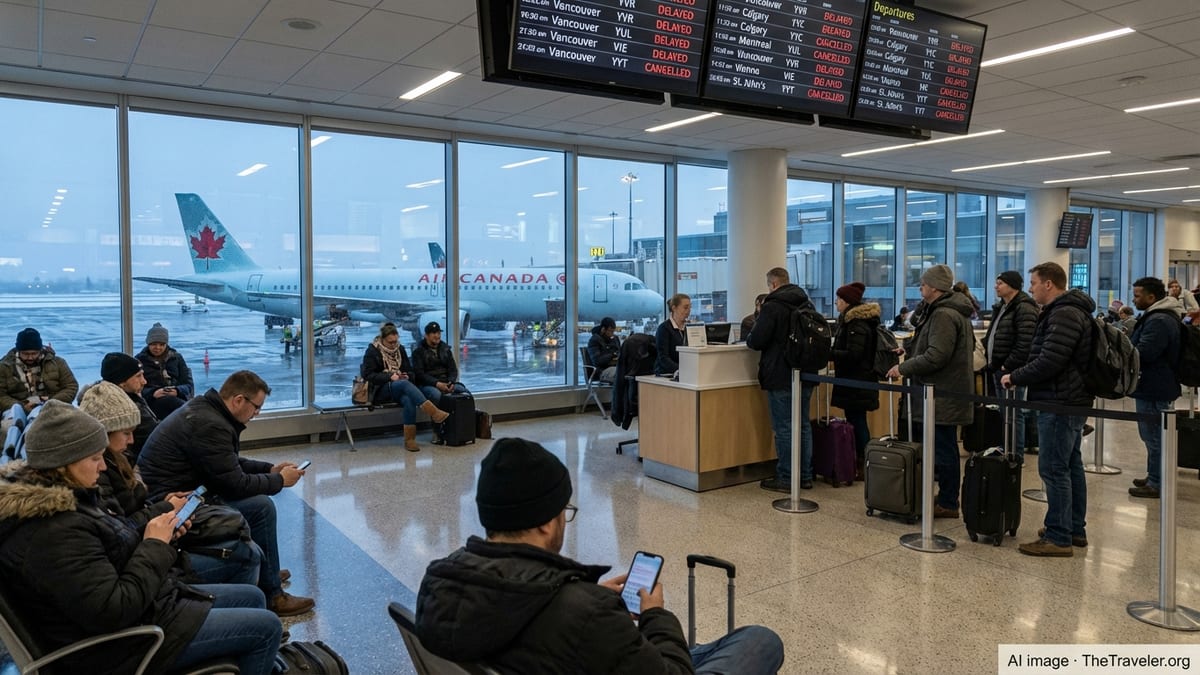
Multiple Carriers Report Clusters of Cancellations
Publicly available flight data and disruption trackers indicate that a mix of mainline and regional airlines scrubbed at least 65 departures and delayed around 185 more across Canada over a recent 24 hour period. The impact was most visible at major hubs in Montreal, Toronto and Vancouver, but schedule changes also rippled into Ottawa and several northern and regional airports.
Air Canada and its regional partner Jazz accounted for a significant share of the affected schedule, particularly on high frequency routes linking Toronto, Montreal, Ottawa and Vancouver. Porter Airlines reported knock on delays on busy eastern routes as aircraft and crews were repositioned to recover from earlier disruptions.
Regional and northern operators also featured in the disruption picture. Inuit and other northern carriers serving remote communities in Quebec and Nunavut saw cancellations and long delays where aircraft, crews and weather sensitive infrastructure create limited redundancy. WestJet’s regional brand, WestJet Encore, experienced interruptions on select connections feeding into Calgary, Vancouver and Toronto.
The combined effect left passengers dealing with missed connections, last minute rebookings and overnight stays, underscoring the tight margins within which Canadian carriers are operating at the height of the summer travel period.
Toronto, Montreal and Vancouver Bear the Brunt
Toronto Pearson, Montreal Trudeau and Vancouver International once again emerged as focal points for disruption, reflecting their role as national hubs and connection points for both domestic and transborder routes. Data compiled by air passenger advocacy services and airport status boards show that these three airports accounted for the majority of the 65 cancellations and 185 delays.
Toronto Pearson recorded some of the heaviest pressure, with a mix of short haul shuttles, longer cross country services and international connections affected. Montreal experienced notable delays on services to Toronto, Ottawa and western Canada, while Vancouver saw a combination of cross country disruptions and regional cancellations along the Pacific corridor.
The knock on impact extended beyond the big three hubs. Ottawa’s schedule showed interruptions on flights feeding Toronto and Vancouver, while several regional gateways recorded delayed arrivals as aircraft were held up upstream. In the North, cancellations from hubs such as Montreal and regional centers translated into extended waits for communities that often rely on a limited number of flights per week.
For travelers, the practical consequence was a wave of missed connections, tightened transfer windows and uncertain arrival times, with some forced to seek alternate routings through secondary hubs.
Weather, Congestion and Operational Strain Cited
Available reporting points to a mix of contributing factors behind the latest wave of disruptions. Periodic thunderstorms and low visibility around Toronto and Montreal have triggered flow control measures, slowing the rate at which aircraft can land and depart. Even modest weather systems can quickly cascade into widespread delays when airports are operating close to capacity.
Operational constraints at airlines are adding another layer of strain. Industry coverage has highlighted ongoing pilot and crew shortages, tight aircraft utilization schedules and maintenance backlogs at several Canadian carriers. When a single rotation is delayed or cancelled, subsequent flights can be pushed back or scrubbed if crews reach duty time limits or aircraft miss their allotted slots.
Congestion within the broader air traffic system also plays a role. As peak season demand fills aircraft on trunk routes, carriers have less flexibility to reroute passengers, and recovering from one disruption can require multiple schedule adjustments. This can be particularly challenging for regional affiliates such as Jazz and WestJet Encore, which are tightly integrated into mainline networks.
Analysts note that while individual weather events or technical issues may trigger specific cancellations, the underlying fragility of schedules often determines how widely the disruption spreads.
Travelers Navigate Rights, Rebooking and Compensation
The latest disruption wave has renewed attention on passenger rights and rebooking options under Canadian air passenger protection rules. Consumer advocacy platforms tracking the cancellations highlight that eligibility for compensation depends on the cause of the disruption and whether it was within the airline’s control.
Where delays and cancellations are linked to factors classified as within carrier control, such as crew or scheduling issues, passengers may be entitled to meal vouchers, hotel accommodation or monetary compensation under national regulations. By contrast, events attributed to weather or air traffic control restrictions generally fall outside compensation requirements, even if they result in lengthy delays.
Public guidance from airlines and airports advises travelers to monitor flight status before leaving for the airport, use mobile apps to rebook when possible and keep documentation of expenses incurred during extended delays. For those with connecting itineraries through hubs like Toronto, Montreal and Vancouver, leaving extra time between flights can help reduce the risk of missed onward connections when schedules tighten.
Travel insurers and credit card protections are also being tested, as passengers seek reimbursement for additional nights of accommodation, alternative transport and non refundable bookings missed due to flight changes.
Broader Questions About Reliability of Domestic Air Travel
The interruptions involving Air Canada, Jazz, Porter, Inuit carriers, WestJet Encore and others feed into a wider public debate about the reliability and resilience of Canada’s domestic air network. Over the past several seasons, repeated episodes of large scale disruption have raised questions about staffing, investment in infrastructure and the balance between tight schedules and operational flexibility.
Observers point out that travelers on core business routes such as Toronto to Montreal, or long haul domestic sectors like Toronto to Vancouver, increasingly factor perceived reliability into their choice of carrier. At the same time, passengers in smaller markets and remote northern communities often have limited alternatives when a single cancellation can cancel an entire day’s connectivity.
Industry coverage suggests airlines are attempting to fine tune schedules, adjust fleet deployment and expand customer service capacity, but demand remains high and the system’s margin for error appears thin. As Canada moves deeper into a busy travel period, advocacy groups expect continued scrutiny of how carriers handle cancellations, delays and passenger support.
For now, passengers planning trips through Montreal, Toronto, Vancouver, Ottawa and regional hubs are being encouraged by travel advisers to build flexibility into itineraries, anticipate potential schedule changes and stay alert to updates as airlines work to stabilize operations.