


If you only have time for one big hike in Great Smoky Mountains National Park, the choice between Andrews Bald and Charlies Bunion can feel surprisingly high stakes. Both deliver sweeping Southern Appalachian views, both start from high-elevation trailheads, and both are among the park’s most talked-about day hikes. Yet the experience on each trail is very different. Here is how to decide which one truly fits you, your group, and the kind of day in the Smokies you want to remember.
Get the latest updates straight to your inbox!
At a Glance: Two Classic Smokies Viewpoints, Two Very Different Days
Andrews Bald and Charlies Bunion both sit on or near the high central spine of the Smokies, but they cater to different kinds of hikers. Andrews Bald is a shorter, family-friendly outing, typically 3.5 to just over 4 miles round trip depending on which guide you consult, with roughly 800 to 900 feet of elevation change. The trail rolls downhill from Clingmans Dome and then climbs back up on the return, making it a moderate but manageable challenge for most reasonably active visitors.
Charlies Bunion, on the other hand, is a full-value mountain hike. From Newfound Gap, expect about 8 miles round trip on the Appalachian Trail with approximately 1,600 feet of cumulative elevation gain. It is consistently rated as strenuous or at least upper-moderate, with long climbs, rocky footing, and narrow, exposed sections near the namesake rock outcrop.
In practice, this difference in distance and effort creates two very different days. A family staying in Gatlinburg who heads to Andrews Bald can leave town after a late breakfast, be on the trail by late morning, and still be back in town for mid-afternoon ice cream on the Parkway. A pair of fit friends tackling Charlies Bunion will usually set alarms for an early start from their Gatlinburg or Cherokee rental cabin, pack full day-hike gear and packed lunches, and not roll back into town until late afternoon.
For most travelers, the first question is simple: Do you want a half-day adventure woven into a broader Smokies sightseeing itinerary, or do you want your hike to be the main event?
Trailhead Logistics: Clingmans Dome vs Newfound Gap
Practical details can quickly tilt the choice. Andrews Bald begins from the Forney Ridge Trail at the Clingmans Dome parking area, reached via Clingmans Dome Road off Newfound Gap Road. In summer, when the road is open, this drive typically takes about 45 minutes from downtown Gatlinburg in light traffic. The payoff is huge: you start around 6,300 feet, one of the highest drivable points in the eastern United States, with the option to walk the short paved path up to the Clingmans Dome observation tower either before or after your hike.
Charlies Bunion starts from Newfound Gap itself, the large parking and viewpoint right on the state line between Tennessee and North Carolina. From Gatlinburg, it is roughly a 30-minute drive in normal conditions; from Cherokee, about the same. Newfound Gap’s large lot has constant turnover because many people simply step out for photos and leave, but on busy Saturdays in October it is not unusual to circle for 10 or 15 minutes before finding a space. In peak foliage season, arriving before 9 a.m. makes parking much easier.
One concrete example: A couple visiting in June who wants to hike Charlies Bunion and also avoid afternoon thunderstorms might leave Gatlinburg at 7:30 a.m., pull into Newfound Gap around 8, and be on the Appalachian Trail by 8:15. By contrast, a family staying in Pigeon Forge that plans Andrews Bald as a post-lunch outing could drive up Clingmans Dome Road midafternoon, when day-hike parking has started to open up as morning visitors clear out, and still comfortably complete the shorter hike before dinner reservations back in town.
Seasonality matters too. Clingmans Dome Road is typically closed in winter, usually from December through late March, which means Andrews Bald is effectively a three-season hike for most visitors. Newfound Gap Road, a major through-route, stays open more often, though it can close temporarily for snow and ice. Winter hikers who are properly equipped with traction devices and layers are more likely to have realistic access to Charlies Bunion than to Andrews Bald.
Difficulty, Terrain, and Safety: Honest Assessments for Real Hikers
For many travelers, the decisive factor is how the trail will actually feel underfoot. Andrews Bald is often described as “moderate,” but that label hides important details. The Forney Ridge Trail initially descends over a mix of rock steps and roots, including sections rebuilt in recent years to improve erosion control. Families with school-age kids usually manage it fine, but adults with knee issues will feel that downhill on the way out and again as an uphill grind on the way back. After heavy rain, puddles and slick rocks are common, so trail shoes or light hiking boots are much more comfortable than casual sneakers.
Charlies Bunion is another level of commitment. From Newfound Gap, the Appalachian Trail climbs steadily for the first couple of miles, then continues with a series of ups and downs along a high ridge. You will encounter rocky, uneven tread, narrow sidehill sections with steep drop-offs, and, near the Bunion itself, some spots where hikers pause to navigate exposed rock carefully. For a reasonably fit hiker used to 6 to 8 mile days, this is rewarding and manageable. For someone whose longest walk at home is a flat three-mile loop, eight mountain miles at 5,000 to 6,000 feet can feel surprisingly taxing.
Safety considerations differ too. At Andrews Bald, the greatest risks are typical mountain-weather issues: fog, sudden showers, or getting chilled by wind at the open bald. The grassy summit is broad, and while you should still watch your footing on rocks and roots, there are no cliff-edge sections where a misstep would have serious consequences. Parents often feel comfortable letting older kids explore within eyesight, especially during summer wildflower season when the bald is dotted with flame azaleas and other blooms.
At Charlies Bunion, exposure is real. The final rocks that create the dramatic overlook drop steeply on several sides. On clear, calm days, many hikers sit for lunch on the flat ledges, carefully keeping packs and trekking poles away from the edge. On windy or foggy days, it is wise to stay on the safer back side of the outcrop for photos and turn-around selfies. Hikers with a healthy fear of heights sometimes find that they are happy to stop a few steps shy of the very edge and still enjoy the sweeping views of Mount Kephart, the Porters Creek valley, and the ridgeline stretching toward Mount Guyot.
What You See: Views, Atmosphere, and Photographic Payoff
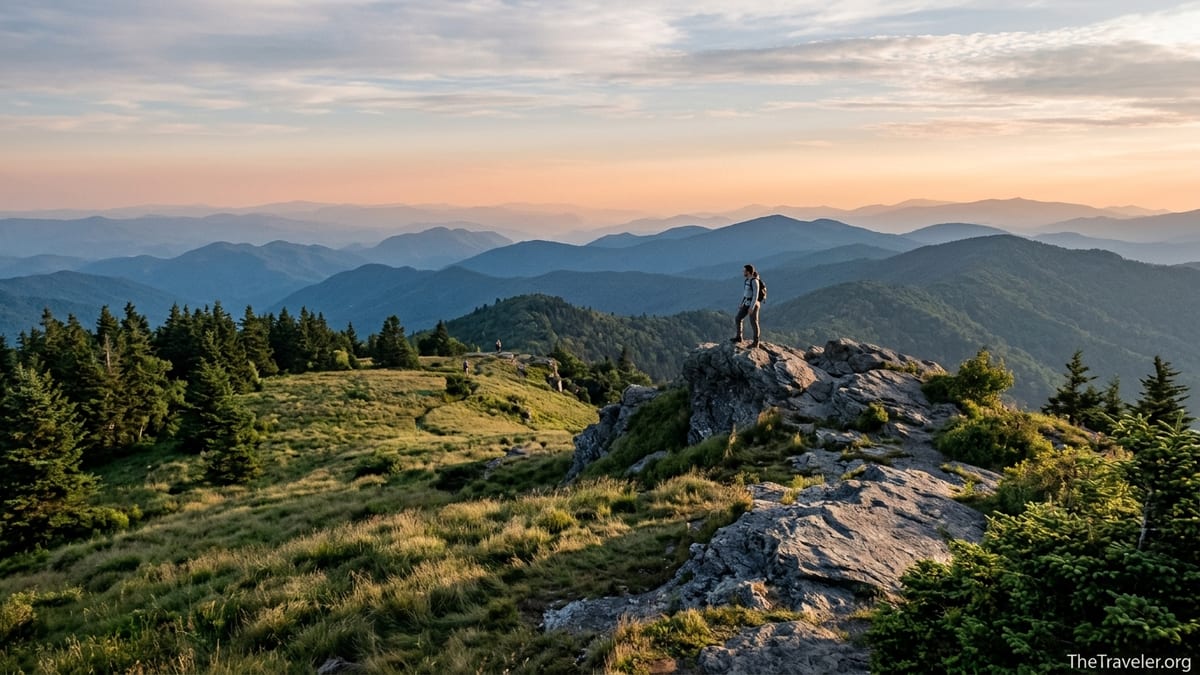
The choice between Andrews Bald and Charlies Bunion is as much about mood and atmosphere as difficulty. Andrews Bald is the highest grassy bald in Great Smoky Mountains National Park, sitting near 5,920 feet. When you step out of the trees after about an hour of hiking, you emerge onto an open meadow dotted with shrubs, low evergreens, and rock outcrops. On clear days, long layers of blue ridges unfold toward Fontana Lake and the North Carolina side of the park. In June, rhododendron and azalea bloom around the edges of the meadow, turning the bald into a patchwork of greens and pinks.
This setting feels pastoral, almost gentle. Many visitors spread picnic blankets in the grass, with kids running short laps between scrubby firs while adults sip coffee from thermoses and take photos. A couple on a long weekend might bring a compact folding blanket, a few pastries from a Gatlinburg bakery, and enjoy a slow hour at the bald, snapping portraits with the Smokies as a soft, hazy backdrop.
Charlies Bunion delivers a different kind of drama. The rocky promontory juts from the main ridge like the prow of a ship, and when you stand on its weathered gray surface looking out, the sense of exposure is powerful. On a good-visibility day you can trace ridge after ridge fading into the distance, study the folds of the Greenbrier and Porters Creek valleys, and feel the wind funneling along the spine of the mountains. The view is hard-edged, vertical, and almost cinematic, even though the best photos tend to be the more candid ones: a hiker leaning on trekking poles as clouds blow through, or a small group sharing a quiet moment looking out over the layers of ridges.
For photographers, Andrews Bald excels at wide, open foregrounds: people silhouetted against the meadow with the mountains behind, especially in golden evening light. Charlies Bunion shines in shots that emphasize depth and scale: a person near the edge to show how far the landscape drops away beneath them, best captured in the softer light of early morning or late afternoon to avoid harsh midday contrast.
Crowds, Atmosphere, and the Kind of Experience You Want
Both hikes are popular, but they attract slightly different crowds and energy. Andrews Bald tends to draw families, casual hikers, and visitors piecing the hike into a larger day built around driving up to Clingmans Dome. On a typical July afternoon, you might share the bald with a handful of families, a couple of photographers, and some day hikers lounging on rocks. The vibe is relaxed, often social, with kids throwing Frisbees, couples taking engagement photos, and groups setting up simple picnic spreads.
Charlies Bunion, by contrast, attracts more dedicated hikers, trail runners in training, and visitors comfortable with longer days on their feet. The Appalachian Trail between Newfound Gap and Icewater Spring Shelter can feel busy in prime season, with day hikers, section hikers, and thru-hikers all sharing the path. You may encounter AT hikers who have walked hundreds of miles from Georgia and are ducking into the shelter for a quick resupply from their food bags. The rock outcrop itself ebbs and flows; in mid-morning on a clear Saturday in October you might temporarily wait a few minutes for the most photogenic ledges to clear between groups, while on a gray weekday in April you might have the Bunion nearly to yourself.
If your ideal Smokies memory involves a mellow picnic in an open meadow, hearing the distant murmur of other groups but never feeling crowded, Andrews Bald is more likely to match that picture. If you are drawn to the culture of hiking itself, enjoy chatting with thru-hikers about their gear, and do not mind a steady stream of fellow day hikers sharing a narrow trail, Charlies Bunion offers that classic Appalachian Trail social energy along with its views.
Weather, Seasons, and When Each Hike Shines
At these elevations, weather shapes the experience as much as any trail detail. In late spring and summer, both Andrews Bald and Charlies Bunion can begin in cool, even chilly air at their high trailheads while Gatlinburg bakes below. Many hikers start from Newfound Gap or Clingmans Dome in light jackets and quickly strip down to base layers as they climb. Afternoon thunderstorms are common from June through August, so for Charlies Bunion in particular it is wise to plan an early start to avoid being on exposed ridges when lightning is most likely.
Each hike has a sweet spot in the calendar. Andrews Bald is arguably at its best in June, when flame azalea and other shrubs around the meadow burst into color. Families visiting during school summer breaks in June and July find that the shorter mileage and open summit pair perfectly with longer daylight hours. In October, the view from the bald over the North Carolina side of the park catches swaths of fall color on the middle elevations below, though the immediate foreground around the bald itself is mostly evergreens and grasses.
Charlies Bunion is spectacular from late September through late October, when the ridges on both sides of the Appalachian Trail glow with fall color. On some crisp mornings, a temperature inversion leaves clouds pooled in the valleys below while the ridge and Bunion sit in sunlight above a sea of mist. Early-spring hikers in April or early May get clearer air, patches of lingering snow in the shadows, and the first hints of wildflowers along the trail, though the forests on surrounding slopes may still look bare.
Winter hikes are realistic mostly for experienced, well-equipped travelers. Newfound Gap Road closes temporarily during snow and ice events, but on clear, cold days when it is open, Charlies Bunion can offer a stark, beautiful outing with rime ice on the trees and very few other people on the trail. Microspikes or similar traction, warm layers, and a flexible schedule are essential. Andrews Bald is harder to access in winter simply because the spur road to Clingmans Dome is typically closed for the season.
Who Should Choose Andrews Bald?
Andrews Bald is the stronger choice for visitors who want a scenic hike that still leaves plenty of energy and time for the rest of their Smokies day. If you are traveling with younger kids, older parents, or anyone new to hiking, the shorter distance and more forgiving terrain make success much more likely. A multigenerational family staying in a cabin between Pigeon Forge and Wears Valley, for example, might spend the morning at Cades Cove, drive across the park, and still comfortably fit in Andrews Bald before heading back to town for dinner.
Travelers who are pressed for time also see more “value per mile” with Andrews Bald. Even if you only have a half-day in the high country, you can pair the bald with a visit to the Clingmans Dome observation tower and roadside viewpoints along Clingmans Dome Road. Budget-conscious visitors might combine the hike with a picnic lunch packed from the grocery stores along the Gatlinburg Parkway instead of eating in town, enjoying their sandwiches on the grass with sweeping views instead of at a crowded restaurant.
Andrews Bald is also ideal for anyone whose goal is to experience the feel of a Southern Appalachian grassy bald without a punishing climb. Compared with more remote balds like Gregory Bald, which require longer hikes to reach, Andrews Bald offers a “best of” sampler of open meadows and long-range views accessed by a half-day outing from one of the most visited parking areas in the park.
Finally, if you are nervous about heights, Andrews Bald is almost always the better fit. You can enjoy big views while standing or sitting far from any steep drop-offs, which means less anxiety for hikers who prefer solid-feeling ground and wide-open spaces underfoot.
Who Should Choose Charlies Bunion?
Charlies Bunion is the clear pick for hikers who are reasonably fit, already comfortable with 7 to 10 mile days, and excited by a sense of exposure and scale. If part of your Smokies bucket list is setting foot on the Appalachian Trail, this route checks that box in a big way. You spend the entire hike on the AT, passing Icewater Spring Shelter, trading trail greetings with section hikers from around the country, and following white blazes along the backbone of the mountains.
For travelers staying three or four nights in the area, Charlies Bunion also provides a great anchor hike around which to build a broader itinerary. A couple renting a cabin in Gatlinburg might plan one big hiking day for Charlies Bunion, one waterfall day for Laurel Falls and Grotto Falls, and one scenic driving day. For those already accustomed to longer hikes in their home states, such as 8-mile outings in the Rockies or New England, Charlies Bunion feels like a satisfying but not overwhelming objective.
The hike particularly rewards visitors who care deeply about dramatic mountain vistas and do not mind spirited climbs to earn them. If your camera roll from other trips is full of exposed ridgelines and cliff-edge shots rather than meadow picnics, the Bunion’s rock outcrop will likely deliver exactly the kind of images you love. Backpackers considering future Appalachian Trail section hikes also use this route as a low-commitment “test drive” of high-elevation AT terrain, weather, and crowds.
That said, Charlies Bunion is not a good fit for everyone. Visitors recovering from knee or ankle issues, hikers who strongly dislike heights, and travelers unaccustomed to several hours of continuous effort at altitude often find the outing more stressful than enjoyable. If you are unsure, starting your trip with Andrews Bald and saving Charlies Bunion for a later day after you have felt out your fitness and comfort level can be a smart approach.
The Takeaway
Choosing between Andrews Bald and Charlies Bunion ultimately comes down to the kind of day you want in the Smokies, the people you are with, and how much effort you genuinely want to invest. Andrews Bald is a shorter, family-friendly taste of high-elevation scenery, ideally paired with a visit to Clingmans Dome. It is perfect for travelers who want big views in exchange for a few hours on the trail rather than a full day of effort.
Charlies Bunion, by contrast, is a full-on mountain hike that immerses you in the culture, terrain, and weather of the Appalachian Trail. It demands more fitness, more time, and more respect for exposure but rewards that investment with some of the park’s most dramatic vistas and a genuine sense of accomplishment.
If you are traveling with kids, mixed-ability friends, or older relatives and want to be confident everyone will finish smiling, choose Andrews Bald. If you and your group already enjoy longer mountain hikes and are excited by cliff-edge viewpoints and ridge walking, set your alarm early and aim for Charlies Bunion.
And if you are lucky enough to have several days in Great Smoky Mountains National Park, the true luxury is not having to choose at all: start with Andrews Bald to warm up, then, once you have had a feel for the altitude and terrain, tackle Charlies Bunion for a bigger, bolder finale.
FAQ
Q1. Which hike is better for families with young children, Andrews Bald or Charlies Bunion?
Andrews Bald is usually better for families with young children. The shorter distance and broad, grassy summit are more forgiving, and there are no cliff-edge sections like those at Charlies Bunion.
Q2. How much time should I plan for Andrews Bald versus Charlies Bunion?
Most visitors should budget about 2.5 to 3 hours for Andrews Bald, including breaks at the bald, and 4.5 to 6 hours for Charlies Bunion, depending on pace, photos, and lunch stops.
Q3. Do I need special hiking gear for either trail?
You do not need technical gear, but sturdy footwear with good traction, layered clothing, and a small daypack with water and snacks are important for both. Trekking poles are optional but very helpful on Charlies Bunion’s longer climbs.
Q4. Is parking easier at Clingmans Dome for Andrews Bald or at Newfound Gap for Charlies Bunion?
Both lots can fill during peak seasons. Newfound Gap generally has more turnover, while Clingmans Dome can feel congested midday. Arriving before 9 a.m. improves your chances at either trailhead.
Q5. Which hike has the better views?
It depends on what you prefer. Andrews Bald offers open meadow views and a softer, pastoral feel. Charlies Bunion delivers a dramatic, cliff-edge panorama with more sense of exposure and depth.
Q6. Can I hike either trail in winter?
Charlies Bunion is sometimes accessible in winter when Newfound Gap Road is open, but you must be prepared for ice and cold. Clingmans Dome Road to Andrews Bald usually closes for winter, limiting access to that trail.
Q7. Are these hikes suitable for people afraid of heights?
Andrews Bald is usually more comfortable for those with a fear of heights, as the bald is open but not cliffy. Charlies Bunion’s final viewpoint is exposed, and some people with strong height anxiety find it unsettling.
Q8. Is it realistic to do both hikes in one day?
It is technically possible for very fit hikers with an early start, but most visitors would find it overly tiring. For a more enjoyable experience, plan Andrews Bald and Charlies Bunion on separate days.
Q9. Do I need a reservation or permit to hike Andrews Bald or Charlies Bunion?
As of mid-2026, you do not need a hiking permit for either trail, though the park does require a parking fee for most vehicles. Always verify current rules before your trip, as park policies can change.
Q10. If I have only one day in the Smokies, which hike should I choose?
If you want a moderate outing that fits into a day of scenic driving and viewpoints, choose Andrews Bald. If you want a single, big mountain challenge centered on hiking, choose Charlies Bunion.