


More news on this day
Denver International Airport endured a bruising travel day Sunday as a combination of thunderstorms, ongoing airfield construction and a heavy evening arrival bank contributed to more than 800 delayed flights and ripple effects across the country.
Get the latest news straight to your inbox!
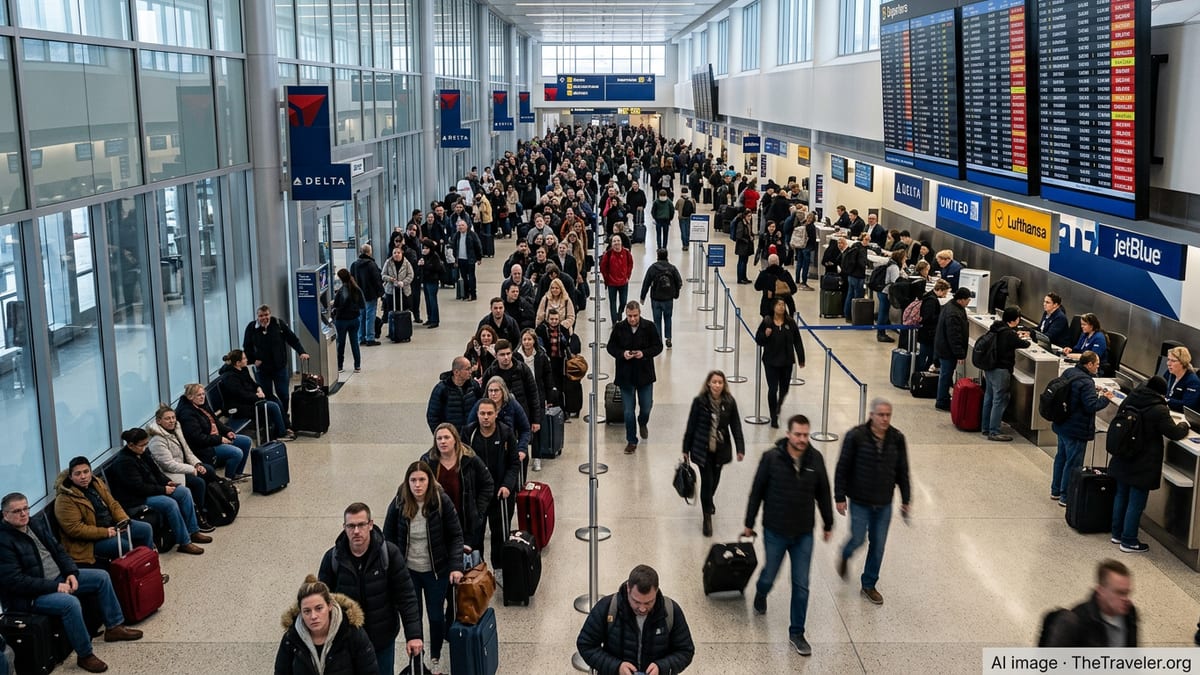
Hundreds of Flights Affected in One Day
Publicly available flight-tracking data and media coverage indicate that about 813 flights arriving at or departing from Denver International Airport were delayed on Sunday, placing the hub among the most affected airports in the United States for the day. The disruption hit airlines and passengers throughout the schedule but was most acute during late afternoon and evening hours when Denver typically handles some of its highest arrival volumes.
The elevated delay count represents a significant spike compared with Denver’s usual performance. Some operational trackers in mid-June show the airport often posting on-time departure rates near the upper 70 percent range, but Sunday’s performance dropped well below that benchmark as weather and capacity limits converged.
While cancellations were less widespread than the delays, they added another layer of complexity for travelers, straining rebooking options on already busy flights and creating long lines at customer service desks as the evening wore on.
Storms, Low Ceilings and a Constrained Airfield
Weather around the Denver area played a central role in the slowdown. Reports from aviation monitoring services show that thunderstorms and periods of low cloud ceilings periodically moved through the region, forcing air traffic controllers to adjust arrival and departure flows for safety. Even short-lived storms can sharply reduce the number of aircraft that can safely land each hour, especially at a high-altitude airport like Denver where performance margins are tighter.
At the same time, Denver International is in the midst of ongoing airfield and terminal work, including runway and taxiway projects highlighted in Federal Aviation Administration construction impact reports. These projects can temporarily reduce the number of runways available or alter preferred arrival and departure patterns, cutting into the airport’s maximum capacity when weather is less than ideal.
The combination of reduced runway options and convective weather created what some aviation analysts describe as a “perfect storm” for delays. When arrival spacing must be increased due to storms or shifting winds, fewer jets can land each hour. With construction already limiting flexibility, controllers have less room to make up lost time once the storms move through.
Peak Arrival Bank Magnified the Backlog
The timing of Sunday’s disruption added to its severity. Denver International typically experiences a pronounced arrival and departure bank in the late afternoon and evening, when aircraft from across the country converge before turning around for nighttime outbound flights. Industry capacity profiles for major hubs indicate that these peak banks are efficient when conditions are good but can quickly become choke points when weather and construction are in play.
Once the first wave of storms and associated traffic management programs slowed arrivals into Denver, aircraft began stacking up both in the air and on the ground at origin airports. With a fixed number of arrival slots available during the peak period, each incremental delay cascaded into the next hour. Flights scheduled to arrive within minutes of each other were pushed back in sequence, stretching what might have been a brief disruption into an hours-long backlog.
Because many of the impacted flights were part of broader connection banks, even small delays created missed connections for passengers heading to smaller markets in the Mountain West and Great Plains. The knock-on effect extended to airports that were not experiencing any local weather issues but were tied into Denver’s schedule.
Passengers Face Long Lines and Missed Connections
Travelers reported crowded gate areas, full fast-food lines and busy security and train corridors as Sunday’s delays mounted. Social media posts from passengers described sitting on airport trains, watching departure boards fill with yellow “delayed” notices, and scrambling to rebook missed connections when inbound flights arrived well behind schedule.
With hundreds of flights pushed off their original times, many travelers arrived at their final destination several hours late. In some cases, evening delays meant that travelers were rebooked for flights on Monday, extending what was meant to be a short weekend trip into an unplanned overnight stay.
The disruption also put pressure on airline staffing and equipment. Crews timed out under federal duty rules as their duty days stretched, and aircraft scheduled for multiple legs in a single day fell progressively behind. Once that happens, airlines have fewer spare aircraft and crews to recover the operation quickly, especially during busy summer travel periods when schedules are already tight.
What Sunday’s Chaos Signals for Summer Flyers
Sunday’s difficulties at Denver International highlight the vulnerability of large hub airports during the summer storm season, particularly when construction limits operational flexibility. With passenger volumes near or above record levels and many airlines operating tightly packed schedules, a few hours of bad weather at a major hub can ripple through the national network for an entire day.
Aviation performance data and previous advisory reports suggest that when runway or taxiway work coincides with peak-season storms, arrival rates may be scaled back in advance to maintain safe spacing between aircraft. While this approach helps prevent last-minute airborne holding and diversions, it often results in longer ground delays at origin airports and a larger number of total delayed flights.
For travelers planning to connect through Denver in the coming weeks, industry guidance points to several practical steps. Booking longer connection times, targeting morning flights that are less exposed to afternoon thunderstorms, and monitoring flight status tools before leaving for the airport can reduce the risk of missed connections. Travel experts also note that carrying on luggage when possible makes it easier to switch to alternative flights when delays begin to stack up.
Even as Denver International continues to expand capacity through construction projects and technology upgrades, Sunday’s 813 delays provided a clear reminder that weather, infrastructure work and tightly banked schedules remain a potent combination for disruption at one of the country’s busiest hubs.