


More news on this day
Hundreds of travelers moving through São Paulo and Campinas have faced cancellations and rolling delays after six flights operated by GOL Linhas Aéreas, Azul Brazilian Airlines, and EuroAtlantic Airways were grounded, disrupting a mix of domestic and long-haul routes during one of Brazil’s busiest early-winter travel periods.
Get the latest news straight to your inbox!
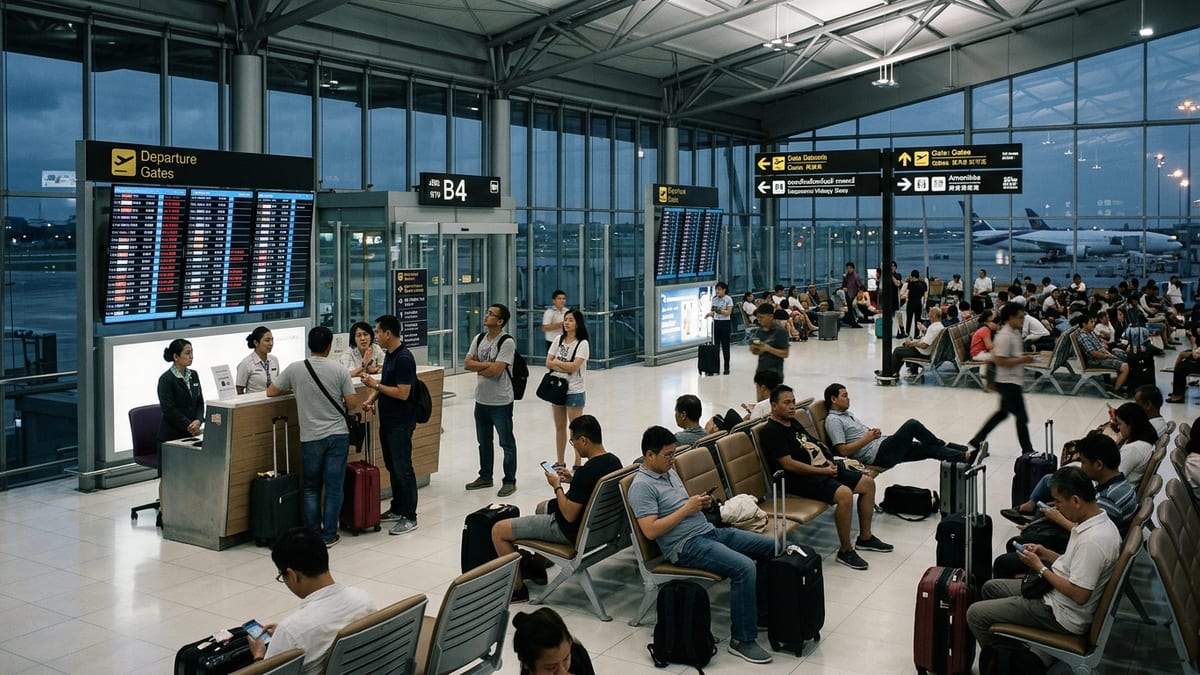
Grounded Flights Snarl Operations at Key São Paulo Hubs
Initial reports from Brazilian aviation tracking platforms and local media indicate that four Azul-operated services and two flights linked to GOL Linhas Aéreas and EuroAtlantic Airways were grounded within a compressed window, affecting operations at São Paulo–Guarulhos International Airport, Congonhas Airport, and Campinas–Viracopos International Airport. The disruptions occurred as traffic through the southeast corridor remained close to or above pre-pandemic volumes, leaving airlines with less room to absorb schedule shocks.
In Campinas, Azul’s main hub, affected services included a mix of domestic departures and long-haul operations, with passengers on northbound international routes facing the longest knock-on delays. Publicly available data shows that transatlantic services between Brazil and Europe already carried above-average delay margins in early June, and the additional groundings intensified the pressure on Azul’s long-haul network through Viracopos.
At São Paulo’s Guarulhos and Congonhas airports, disruptions tied to GOL and EuroAtlantic primarily affected high-frequency domestic services that connect Brazil’s southeast to secondary capitals, as well as contract operations feeding long-haul itineraries. The combination of aircraft kept on the ground and tight turnarounds created a ripple effect that spread across late-evening and early-morning banked departures.
Although the total number of grounded flights remained limited, the concentration on heavily used routes at peak times magnified the impact, rapidly filling available seats on alternative departures and constraining rebooking options for stranded travelers.
Delays Cascade Across Domestic and International Routes
Real-time flight-tracking dashboards and airline schedule data reviewed on June 10 show that the six grounded flights triggered a sequence of delays across at least a dozen additional services touching São Paulo and Campinas. Short-haul legs that feed into long-haul departures were particularly vulnerable, as missed connections forced airlines to reshuffle passengers and crew.
In Campinas, Azul’s domestic network to Brasília, Porto Alegre, Recife, and other key cities experienced rolling delays as aircraft and crew were repositioned to cover higher-priority departures. Published data for Viracopos arrivals and departures in recent days shows a pattern of services operating behind schedule, consistent with a network working through accumulated disruption rather than isolated punctuality issues.
On international routes, knock-on effects were most visible on flights linking Campinas and São Paulo to North American and European hubs. Long-haul services already operating with modest delays saw additional schedule slippage as incoming aircraft arrived late or required extended ground time. Some travelers reported overnight or multi-hour rebookings as carriers attempted to consolidate affected passengers on fewer departures.
For GOL and EuroAtlantic, the disruption intersected with an already tight South Atlantic and regional schedule. Contracted and codeshare operations, particularly those connecting Brazil’s southeast to onward transatlantic services, faced added strain as schedule buffers were consumed by cascading delays.
Passenger Experience Marked by Long Waits and Crowded Terminals
The operational disruption translated quickly into a difficult on-the-ground experience for travelers moving through the São Paulo metropolitan area’s airports and Viracopos in Campinas. Passengers described longer check-in queues, slower security processing, and crowded boarding areas as delayed flights continued to hold passengers near the gates.
Standard passenger protections in Brazil require airlines to provide assistance such as food vouchers, communication support, and, in some cases, accommodation when delays or cancellations reach certain thresholds. Travel advisories and consumer-rights organizations routinely encourage passengers to retain boarding passes, receipts, and any written notices from carriers to document disruption and seek reimbursement where applicable.
However, the clustering of delays across multiple carriers can make it more challenging for travelers to obtain timely assistance. With staff stretched across full departure boards and rebooking counters handling multiple disrupted flights at once, many passengers encountered extended waits before being assigned new itineraries or receiving clarity on their options.
Travel industry observers note that these events underscore the vulnerability of hub-and-spoke systems when disruptions coincide with peak travel days. Even a small number of grounded aircraft can produce hours of additional travel time for passengers whose journeys rely on tight connections through São Paulo and Campinas.
Airlines Adjust Schedules as Southeast Brazil Faces Recurrent Strain
According to recent published coverage of Brazil’s aviation sector, the country’s southeast airports have experienced several episodes of operational stress in 2026, ranging from weather-related slowdowns to brief stoppages connected to airspace and infrastructure issues. São Paulo’s main airports and Viracopos in Campinas have been at the center of these events, reflecting their role as primary connectors for both domestic and international traffic.
In response, airlines including Azul and GOL have been adjusting schedules, tweaking departure banks, and adding capacity where feasible. Publicly available timetable updates show a focus on reinforcing key trunk routes from São Paulo and Campinas, though strong demand and limited spare aircraft mean that recovery from each new disruption can still take several days.
EuroAtlantic, which operates select long-haul and charter-style services into Brazil, faces a distinct challenge when disruptions occur. With fewer weekly frequencies on many routes, a single grounded aircraft can leave passengers with limited immediate alternatives, forcing rerouting through other European or Brazilian hubs or requiring overnight stays until the next scheduled departure.
Analysts following Brazil’s aviation recovery trend suggest that as passenger volumes continue to rise, carriers may need to build in larger operational buffers around peak traffic periods in São Paulo and Campinas. Without added flexibility, isolated technical issues or weather events can quickly evolve into multi-day irregular operations affecting thousands of travelers.
What Travelers Through São Paulo and Campinas Should Do Now
For travelers scheduled to pass through Guarulhos, Congonhas, or Viracopos in the coming days, industry guidance emphasizes proactive monitoring of flight status. Airline websites and mobile apps, as well as airport information boards, are being updated frequently as carriers work through revised rotations following the grounded flights.
Passengers with tight same-day connections or onward international travel are being advised by travel agents and consumer advocates to leave extra time between segments where possible, or to consider rebooking onto itineraries with longer connection windows through São Paulo or Campinas. Those who have already experienced delays are encouraged to request written confirmation of disruptions, which can support claims for refunds, rebooking at no additional cost, or other remedies under Brazilian consumer rules.
Observers note that the latest wave of disruption highlights both the resilience and the fragility of Brazil’s air network. While airlines and airports have generally restored operations quickly after each incident in 2026, the recurrence of bottlenecks in the southeast corridor continues to challenge schedule reliability for domestic and international travelers alike.
With the early-winter travel season progressing and demand set to remain high into the July holiday period, passengers routing through São Paulo and Campinas are likely to keep a close eye on operational stability at Brazil’s busiest hubs, even as carriers work to prevent further rounds of grounded flights and rolling delays.