


More news on this day
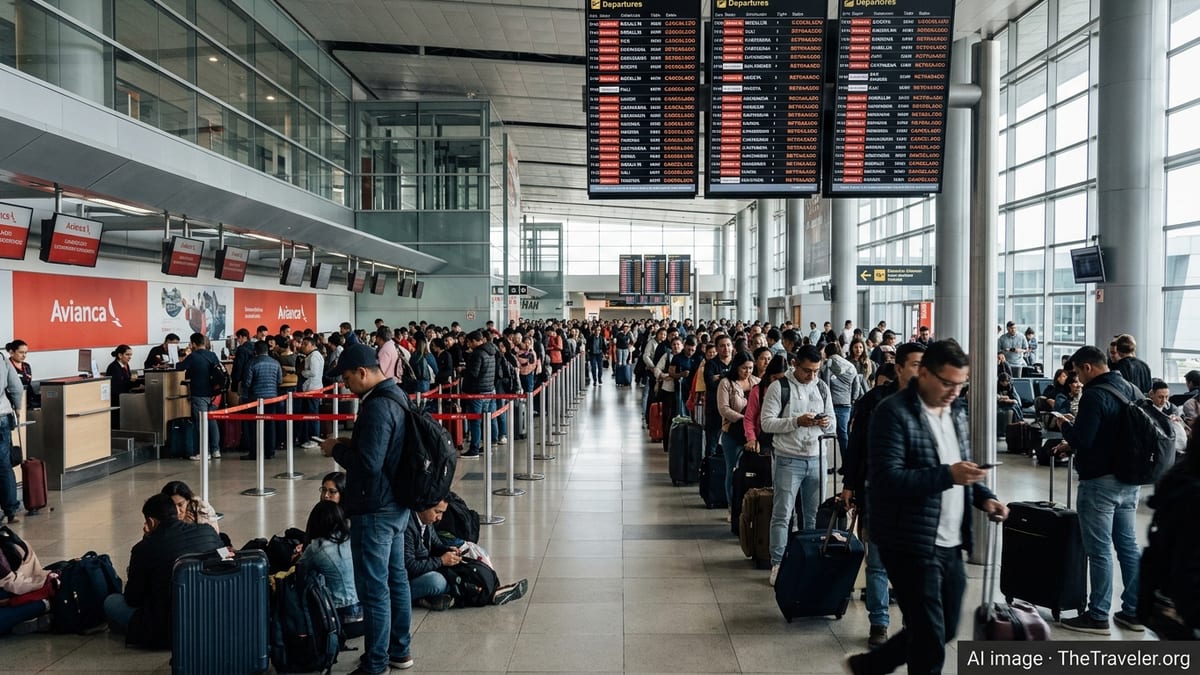
Hundreds of travellers were left stranded in Colombia on June 9 as a fresh wave of cancellations and extensive delays hit flights in and out of Bogotá and Cali, disrupting services at major carriers including Avianca, Air Canada, LATAM Colombia and regional operator Clic Air.
Get the latest news straight to your inbox!
Dozens of Flights Scrubbed on Key Domestic and Regional Routes
Preliminary tallies from flight-tracking platforms and airport information screens on June 9 indicated more than a dozen outright cancellations and a far higher number of delayed services on core routes linking Bogotá and Cali, two of Colombia’s busiest hubs. The most-affected sectors included the high-frequency shuttle between El Dorado International Airport in Bogotá and Alfonso Bonilla Aragón International Airport serving Cali, as well as connecting flights feeding onward services to other Colombian cities.
Data showed multiple gaps in the usual schedule between Bogotá and Cali, with some departures removed entirely and others pushed back by several hours. Codeshare services involving foreign airlines, notably Air Canada-marketed flights operated by Avianca aircraft, were also caught up in the disruption, forcing international passengers connecting through Bogotá to scramble for alternatives.
The turbulence hit at the start of a busy travel week, compounding pressure on an already stretched Colombian aviation network. Passengers reported queues at customer-service counters, congestion around boarding gates and difficulty securing timely rebooking options, particularly on morning and late-evening departures.
Although operations continued at both airports, the pattern of cancellations and rolling delays pointed to a sharp, localized shock to the system rather than isolated one-off problems on individual flights.
Avianca, LATAM Colombia, Air Canada and Clic Air in the Spotlight
Publicly available schedules and tracker data indicated that Colombia’s largest carrier, Avianca, bore a significant share of the disruption, reflecting its dominant position on the Bogotá–Cali corridor and other domestic routes. Several Avianca flights on this axis were listed as cancelled or showing extended delays, affecting both point-to-point travellers and those seeking to connect to long-haul services.
LATAM Airlines Colombia, another major operator on the Bogotá–Cali route, also appeared with disrupted services on June 9, including missing or rescheduled frequencies that normally support early-morning and midday demand. Given LATAM’s role in linking regional Colombian airports to international networks via Bogotá, the impact rippled beyond direct flights between the two main cities.
Air Canada, which markets certain legs within Colombia through codeshare agreements, found its passengers caught up when partner-operated segments between Bogotá and Cali were delayed or cancelled. Travellers originating in or bound for North America reported missed connections and forced overnight stays after their domestic feeder flights did not operate as planned.
Regional carrier Clic Air, a key player in secondary Colombian markets with links into Cali, also faced operational challenges. While its network is smaller than those of Avianca and LATAM Colombia, disruptions on Clic Air services added additional strain by limiting rerouting options for passengers hoping to bypass Bogotá or reposition via Cali to reach their final destinations.
Passengers Face Long Lines, Missed Connections and Limited Alternatives
Social media posts and traveller accounts shared publicly on June 9 described lengthy waits at check-in and ticketing counters in Bogotá and Cali, as stranded passengers sought clarification on their options. Many recounted being moved from one departure to another multiple times, only to face fresh delays as downstream congestion built up across the rest of the day.
For international travellers, the consequences were especially severe. Those flying into Bogotá with plans to connect onward to Cali, or vice versa, reported missed long-haul flights and last-minute changes to itineraries. In several cases circulating online, travellers had to negotiate new routings via other Latin American hubs or accept significant date changes and overnight accommodation, often at their own expense while they waited for confirmation of support from the airlines.
Domestic travellers were not spared. Reports from passengers moving between interior cities and the country’s main business hubs pointed to a domino effect, where a cancelled leg into Bogotá or Cali undermined entire multi-stop itineraries. With many peak flights close to full, same-day and next-day rebooking options were limited, especially for larger family groups and travellers on lower-fare tickets.
The situation underscored how quickly a cluster of cancellations on a few trunk routes can strand large numbers of people, particularly in a market where several carriers rely on shared hubs and codeshare arrangements to feed international networks.
Underlying Pressures on Colombia’s Air Travel System
The latest disruption arrives against a backdrop of mounting strain on Colombia’s aviation infrastructure in 2026. Earlier in the year, waves of delays and cancellations across multiple carriers had already highlighted challenges ranging from tight aircraft utilization and staffing constraints to congestion at key airports and periodic ground-transport disruptions around Cali and other cities.
Industry commentary and prior regulatory reports have pointed to a mix of structural and short-term factors. A rapid post-pandemic rebound in demand has often outpaced the pace at which airlines and airports can add capacity, while external pressures such as high fuel prices and airspace restrictions in parts of the region have further reduced operational flexibility. When even minor technical or weather issues arise, these underlying vulnerabilities can magnify their impact and cascade through entire networks.
Unlike single-event disruptions such as isolated storms, the pattern visible on June 9 appeared to build on pre-existing fragilities. The concentration of cancellations on high-density corridors, combined with the involvement of several operators, suggested that carefully balanced schedules may have had little room to absorb last-minute changes or equipment swaps.
Observers of the Colombian market have repeatedly noted that while airlines have introduced new routes and increased frequencies, investment in ground handling, contingency planning and communication tools has not always kept pace, creating a gap between advertised connectivity and on-the-day reliability.
What Travellers Can Do as Disruptions Continue
With airlines working to stabilize operations in the wake of the June 9 disruptions, publicly available guidance from consumer advocates and passenger-rights organizations stresses the importance of proactive planning. Travellers are encouraged to monitor flight status across multiple channels, including airport displays and airline apps, and to act quickly when cancellations appear, as rebooking inventory can vanish within minutes during large-scale disruptions.
Passengers on itineraries involving more than one airline, such as Air Canada codeshares operated by Avianca or LATAM Colombia, are advised to keep copies of all booking references and boarding passes, and to document any additional expenses incurred while stranded. This documentation can be important when seeking refunds, vouchers or statutory compensation, depending on the route and applicable regulations.
Experts in air-passenger rights note that travellers should familiarize themselves with each carrier’s contract of carriage and with regional rules covering cancellations and long delays. In some circumstances, especially when disruptions are not attributed to extraordinary circumstances, airlines may be expected to provide meals, accommodation or partial fare refunds, though the specifics vary significantly by jurisdiction and ticket type.
For now, the events of June 9 serve as another reminder of the fragility of air travel in Colombia’s most heavily trafficked corridors. Until airlines and authorities deliver more resilient timetables and clearer communication during disruptions, passengers using Bogotá and Cali as gateways are likely to continue facing periodic bouts of severe inconvenience when operations falter.