


More news on this day
Travelers moving between Japan and South Korea are facing mounting disruption after a cluster of sudden cancellations and delays at Kumamoto Airport cut key links to Osaka Itami, Nagoya’s Chubu Centrair, and Seoul Incheon, stranding passengers and tightening already stretched domestic and cross-border capacity.
Get the latest news straight to your inbox!
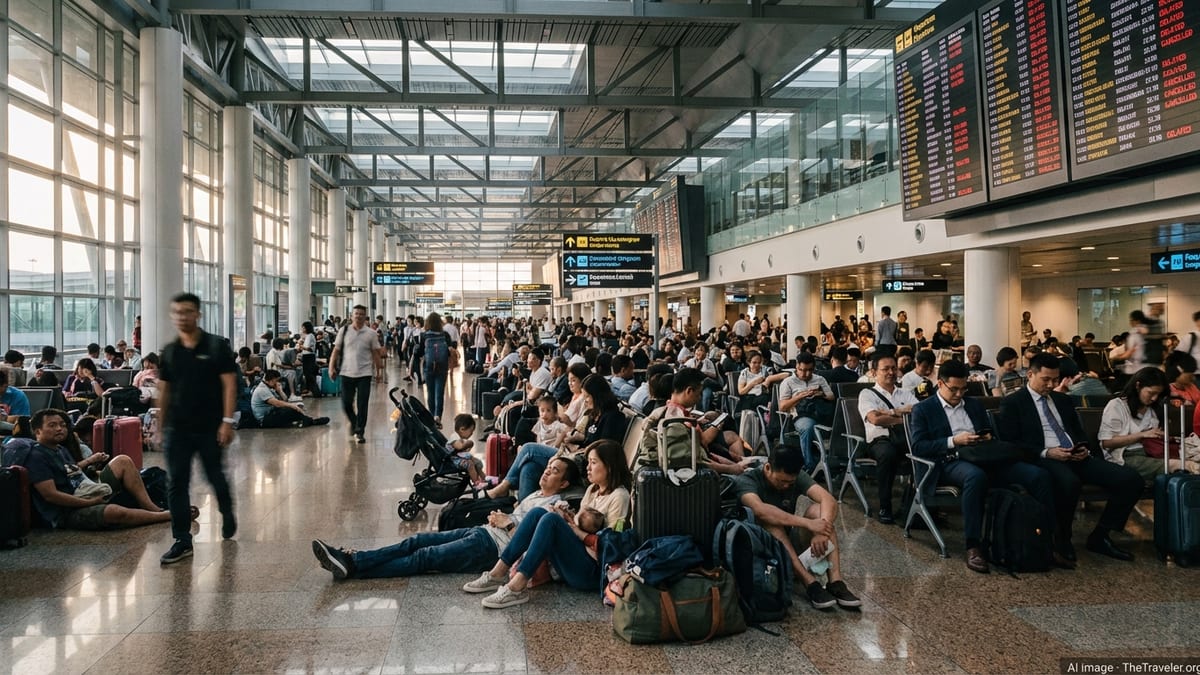
Six Kumamoto Flights Scrapped as Weather and Operations Collide
Publicly available airport data and airline notices indicate that at least six services touching Kumamoto have been cancelled within a short window, affecting routes to and from Osaka Itami, Nagoya’s Chubu Centrair, and Seoul Incheon. The disruptions come as airlines in the region navigate unsettled early summer weather patterns alongside operational constraints.
Recent flight boards from Kumamoto show multiple domestic services either delayed or marked as cancelled, including Japan Airlines codeshare flights on the Osaka route and regional operations coordinated with Fuji Dream Airlines. One Osaka-bound Japan Airlines service from Kumamoto was flagged as cancelled on the evening schedule, while other flights on the same corridor operated with delays.
International connectivity has also been hit. Scheduled services between Kumamoto and Incheon, typically operated under Korean Air branding or in cooperation with partner carriers, were reported as impacted amid wider network adjustments between Japan and South Korea. The cancellations have left passengers facing missed onward connections and forced overnight stays.
The cluster of cancellations has effectively narrowed Kumamoto’s role as a connector between Kyushu and major Japanese and Korean hubs, amplifying the impact beyond the immediate region. For travelers relying on Kumamoto as a feeder gateway to Osaka and Seoul, the loss of six flights in quick succession represents a significant short-term capacity shock.
Japan Airlines and Fuji Dream Adjust Joint Operations
The disruption is particularly visible on routes jointly marketed by Japan Airlines and Fuji Dream Airlines. According to published corporate information, the two carriers expanded their cooperation on the Nagoya Chubu to Kumamoto corridor earlier this year, with Fuji Dream operating flights under Japan Airlines codes. That collaboration was intended to strengthen regional access into Kyushu and support Kumamoto’s recovery as a tourism and business destination.
The latest cancellations and delays have, however, underscored the vulnerability of these regional links to both weather and fleet pressures. Even when only a portion of services on a route are cancelled, the relatively small aircraft used by Fuji Dream and similar regional operators mean that each lost flight removes a notable share of daily seat capacity.
Passengers booked on code-share services between Kumamoto and Osaka or Nagoya are facing particular uncertainty, as reservation systems and airport displays may list flights under different flight numbers depending on the marketing carrier. Travel industry observers note that such arrangements can complicate rebooking during disruption, especially for travelers unfamiliar with Japan’s domestic regional networks.
Despite the cancellations, core trunk routes linking Kumamoto with Tokyo and other major cities are continuing to operate, albeit with some delays. The main impact so far has been concentrated on secondary but strategically important links such as Osaka Itami and Chubu Centrair, which serve as onward gateways for both domestic and international itineraries.
Korean Air and Regional Carriers Confront Cross-Border Ripple Effects
Across the Korea Strait, cross-border operations involving Korean Air and other South Korean carriers have also felt the knock-on effects from weather and schedule adjustments. Recent coverage in Korean media describes a pattern of delays and cancellations on Japan-bound flights following early June storms, affecting departures from key South Korean airports to cities across western Japan.
While not all of these disruptions are centered on Kumamoto, the combined effect has been to erode reliability on shorter international hops between Kyushu and the Korean Peninsula. On some days, passengers connecting via Osaka or Fukuoka to reach smaller Japanese cities have faced back-to-back delays when their onward regional flights from hubs such as Itami or Centrair were also adjusted or cancelled.
In the case of Kumamoto, the suspension of select services to Incheon effectively closes one of Kyushu’s more direct links to the South Korean capital for the duration of the cancellations. Travelers instead must route through larger Japanese hubs or consider alternate airports such as Fukuoka, increasing total journey times and costs.
Publicly available data for flights running between Kumamoto and South Korea in June indicate that schedules were already relatively lean compared with pre-pandemic levels. This means that even a small number of cancellations can leave few same-day alternatives, particularly for leisure travelers and small tour groups.
Typhoon Season and Regional Weather Add to Operational Strains
The current wave of disruption is unfolding against the backdrop of the northwest Pacific typhoon season, which typically brings heavy rain, strong winds, and low visibility to parts of Japan and South Korea. Recent storm systems tracking near Kyushu have already prompted large-scale preemptive cancellations across several Japanese carriers on other routes, as airlines adopt conservative safety postures and reposition aircraft.
Reports from Japanese and Taiwanese outlets earlier this month detailed hundreds of flight cancellations across Kyushu and surrounding regions as a strong storm brushed the area, demonstrating how quickly airline operations can unravel when severe weather intersects with tightly scheduled fleets. Kyushu’s airports, including Kumamoto, are particularly exposed because many rely on short-haul rotations that must remain on time to keep the network functioning.
In practice, this means that a weather-related delay early in the day can cascade through multiple sectors, forcing airlines to consolidate or cancel later flights to restore balance. For regional airports such as Kumamoto, where frequencies to major hubs may already be modest, the resulting cancellations are highly visible to passengers and local communities.
Travel analysts note that weather is only one factor. Maintenance requirements, crew availability, and aircraft-sharing arrangements between partner airlines can all influence which specific flights are removed from the schedule when capacity has to be trimmed at short notice.
Passengers Scramble for Alternatives Across Japan and Korea
For affected passengers at Kumamoto, Osaka Itami, Chubu Centrair, and Incheon, the immediate challenge has been securing alternative travel on short notice. With six services cancelled around Kumamoto and additional delays elsewhere in the network, same-day rebooking options on comparable departure times have been limited, particularly on popular evening departures.
Some travelers have turned to Japan’s high-speed rail network as a fallback, connecting from Kumamoto or neighboring cities to Osaka and Nagoya by Shinkansen when flights were no longer practical. Others have opted to reroute via larger airports, with domestic sectors rebooked through Fukuoka or Tokyo to reach onward international departures.
In South Korea, domestic links feeding into Incheon have also faced heavier loads as passengers displaced from cancelled Japan-bound flights seek to protect their itineraries. Low cost carriers and regional operators on routes to Kyushu and western Japan have reported fuller flights in recent weeks, according to scheduling and load information referenced in industry coverage.
Consumer advocates in both countries recommend that travelers heading to or from smaller regional airports such as Kumamoto monitor their flight status frequently during the typhoon season and build additional buffer time into itineraries involving tight connections. With airlines across Japan and South Korea still fine-tuning their networks for the summer peak, passengers on routes linking regional cities to major hubs remain among the most exposed to sudden schedule changes.