


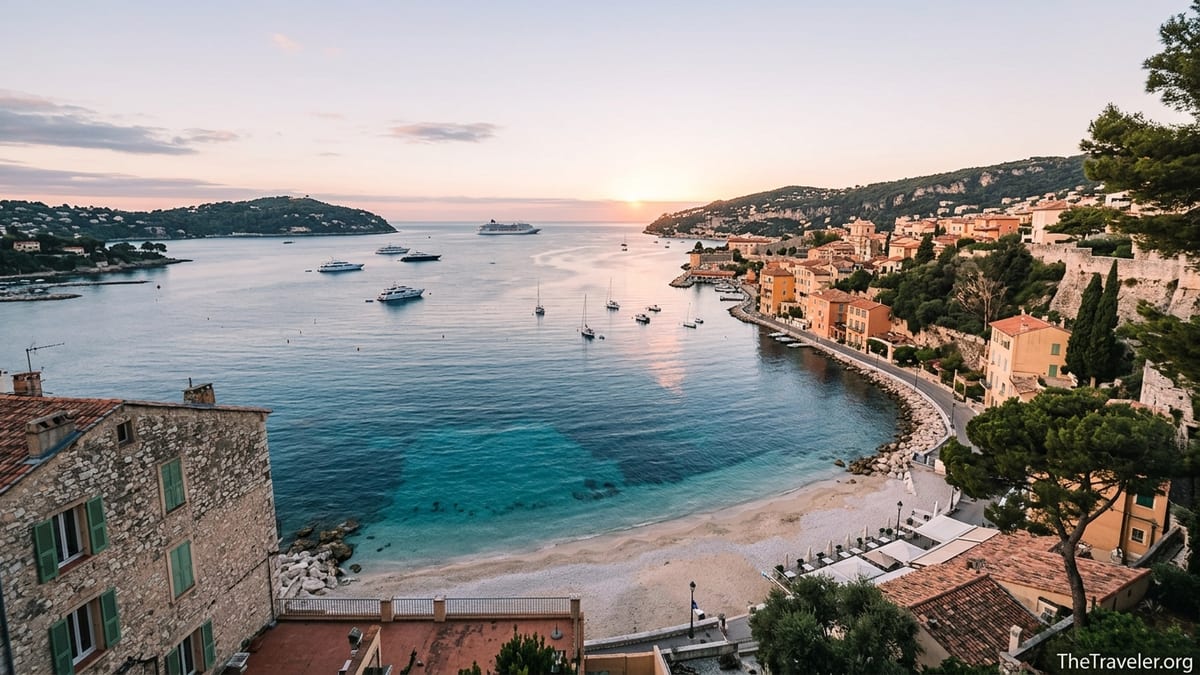
Wedged between Nice and Monaco, Villefranche-sur-Mer is one of the French Riviera’s most atmospheric seaside towns: a deep-blue bay, pastel facades sliding down to the water, and a compact old town that still feels lived-in rather than themed. Whether you are arriving for a week in an apartment, a day trip by train from Nice, or a cruise ship tender stop, knowing the local logistics and small on-the-ground details will make the difference between simply passing through and really experiencing this place.
Get the latest updates straight to your inbox!
Where Exactly Is Villefranche-sur-Mer and Why It Matters for Your Itinerary
Villefranche-sur-Mer sits on the Côte d’Azur in southeastern France, tucked just east of Nice and west of Monaco. By road it is roughly 6 kilometers from central Nice and around 15 kilometers from Monaco, which means you can sleep in Villefranche and still spend a morning at the Cours Saleya market in Nice and an evening at the Monte Carlo Casino without changing hotels. The town itself climbs steeply from sea level up the flanks of Mont Boron and Mont Alban, so you will feel the hills in your legs, but you gain sweeping views of the bay in return.
The bay of Villefranche is a natural deep-water harbor, one of the deepest in the Mediterranean. Today that translates into two very practical realities for visitors. First, many cruise ships anchor here and tender passengers ashore, making the town a common gateway to the Riviera for cruise travelers. Second, the water in the bay tends to feel slightly cooler but remarkably clear and calm compared with some more exposed beaches along the coast, something swimmers notice on summer mornings when the sea in nearby Nice can be choppier.
Because Villefranche is positioned between several headline destinations, it works well as a Riviera base if you prefer a quieter atmosphere than Nice but do not want to rely on a car. In practice this means you can spend one day wandering the ochre lanes of old Villefranche, another hopping the train to Antibes or Cannes, and a third walking the coastal path toward Beaulieu-sur-Mer, all while coming “home” each night to the same sea view.
Geographically, the old town spreads along the curve of the bay, while newer residential areas climb higher up the hills. Most visitors will spend their time between the waterfront promenade around the small Port de la Santé, the Old Town streets behind it such as Rue du Poilu, and the main sandy arc of Plage des Marinières that stretches under the railway line at the far side of the bay.
Getting There and Getting Around: Trains, Buses and Walking
For most travelers, the easiest arrival route is via Nice Côte d’Azur Airport. From the airport, you can take the tram or bus into central Nice and then connect to a regional TER train from Nice-Ville station toward Ventimiglia or Monaco. The ride from Nice-Ville to Villefranche-sur-Mer is around five minutes, and recent coastal train fare tables list the full-fare one-way adult ticket at roughly 3.50 euros, with occasional small adjustments year to year. Trains generally run at least twice an hour during the day, though schedules thin out late at night, so always check the latest times before returning from dinner in Nice.
The Villefranche-sur-Mer train station sits slightly above Plage des Marinières, reached by a short walk along the seafront promenade and then up ramps and steps. The national rail operator has made some changes to station access in recent years, and signage now directs you via the seaside Promenade des Marinières and Chemin de la Fouan rather than through older stairways that could be slippery in bad weather. If you are rolling luggage, be prepared for a few inclines but nothing extreme. Taxis do not routinely wait outside the station the way they do in Nice, so pre-arrange a transfer if mobility is an issue.
Local buses connect Villefranche with Nice, Beaulieu-sur-Mer and Monaco, and can be a cost-effective alternative to the train, especially if you hold a multi-trip pass. For example, a Riviera bus ticket between Nice and Villefranche has typically cost just a few euros, though journey times can stretch during rush hour as the coastal road clogs with commuters. In summer, many travelers prefer the train because it avoids traffic and offers elevated sea views between tunnels.
Within town, walking is the default. The waterfront from the cruise tender pier at Port de la Santé to the heart of the Old Town and onward to Plage des Marinières is a straightforward 10 to 15 minute stroll for most people. What often surprises visitors is the vertical dimension once they turn inland. Narrow stepped lanes such as Rue Obscure climb steeply, and many residential rental apartments sit several flights above street level with no lift. If you know stair-climbing will be an issue, look for accommodation on or close to the seafront level and confirm floor access in advance.
When to Visit: Weather, Crowds and Seasonal Trade-offs
Villefranche-sur-Mer shares the classic Mediterranean climate of the Côte d’Azur, with mild, fairly wet winters and hot, dry summers. July and August bring the most reliable beach weather, long daylight hours and water temperatures that regularly tempt even hesitant swimmers. They also bring peak crowds and the highest accommodation prices. In practice, that might mean a simple seafront studio that rents for around 120 to 150 euros per night in June jumping to over 200 euros per night in high summer, especially during major events in nearby Nice or Monaco.
For many travelers, late April through June and September through early October offer the best balance. In May and late September, daytime highs often sit comfortably in the low to mid 20s Celsius, warm enough for terrace lunches and light swimming, while evenings cool down just enough to justify a jacket on the seafront. Cruise ship calls still occur in shoulder seasons, but you will often find visibly fewer passengers in the lanes of the Old Town than on a Saturday in August when multiple large ships are anchored in the bay.
Winter has its own appeal if your priority is atmosphere rather than sunbathing. On a clear day in January, you might sit at a café on Place Amélie Pollonais with a coffee and watch locals walk dogs along the quay, with only a handful of visitors about. Accommodation prices are generally at their lowest then, and weekly apartment rentals can be significantly more affordable. The trade-off is that some seasonal restaurants and beach clubs close or shorten opening hours outside the main season, and sudden storms can make the seafront feel raw and windy.
Another factor is the rhythm of local works and renovations. The municipality has engaged in multi-year improvements around Plage des Marinières and its parking areas, which can periodically affect car access or create short-term noise on weekdays outside of peak summer. For example, resurfacing of the seafront road and upgrades to beach infrastructure have been scheduled in spring shoulder periods rather than July, which is friendlier for most holidaymakers but still worth checking if you are especially sensitive to construction.
What to See and Do in Villefranche-sur-Mer
For such a small town, Villefranche-sur-Mer offers a satisfying mix of simple pleasures and specific points of interest. The most famous sight is arguably Rue Obscure, a vaulted, partially covered street dating back to the Middle Ages that runs behind the waterfront houses. Walking its dim, arched length takes only a few minutes, but the combination of stone, echoing footsteps and glimpses of modern doorways gives a vivid sense of how densely built the old town once was.
Above the harbor rises the Citadelle Saint-Elme, a 16th century fort whose ramparts now enclose gardens, event spaces and several small museums, including one dedicated to sculptor Volti. Entry to the citadel grounds is typically free, and strolling the walls offers changing views across the bay to Cap Ferrat, making it a good stop if you are watching your budget. On summer evenings, open-air concerts or film screenings sometimes take place in the inner courtyards, and it is worth checking posters around town to see if something is scheduled during your visit.
Down at sea level, Plage des Marinières is the main town beach, an arc of sand and fine shingle that runs under the railway viaduct. Families gravitate here because the water usually shelves gently and lifeguards monitor sections in season. On a July afternoon you might rent a pair of sun loungers and an umbrella from one of the private beach operators for somewhere between 25 and 40 euros for the day, or simply spread a towel on the public section at no cost. On the far side of the port, near La Darse, a smaller pebble beach and rocky swimming spots appeal to locals and confident swimmers looking for quieter water.
Beyond the beach and old town, you can easily extend your day with low-key coastal walks. One popular route follows the seafront and then climbs toward the Batterie du Mont Boron for elevated views; another idea is to walk or take the short train hop to neighboring Beaulieu-sur-Mer and then follow the Cap Ferrat coastal path, returning to Villefranche by late afternoon. Because distances are short, you can improvise based on weather and energy levels, stopping at small harborside cafés along the way rather than planning a rigid sightseeing schedule.
Costs, Dining and Everyday Practicalities
Prices in Villefranche-sur-Mer are generally in line with the rest of the French Riviera, though you may find slightly better value than in the most upscale corners of Saint-Tropez or central Monaco. For a simple breakfast of coffee and a croissant at a seafront café, expect to pay roughly 5 to 7 euros. A casual lunch of a salad or pizza with a soft drink on or just behind the waterfront will often come to 18 to 25 euros per person, while a three-course dinner with wine at a mid-range bistro on Rue du Poilu or a nearby lane can easily reach 40 to 60 euros per person depending on seafood choices.
Self-catering is a realistic option if you are staying in an apartment. There is a small supermarket and several bakeries and food shops in town, but many residents and longer-term visitors still hop into Nice by train for larger hypermarkets where prices per kilo on items like fruit or fish may be lower. A common pattern is to take an early train into Nice, shop at the Cours Saleya market and nearby stores, and then return to Villefranche before midday heat, using the apartment kitchen for a mix of simple dinners and picnic-style lunches on the balcony.
Tap water is safe to drink, and public toilets exist near the beach and around the port, though they can be busy in summer when cruise groups are ashore. Credit and debit cards are widely accepted, but it is wise to carry some cash for small gelato stands, bus tickets from onboard machines, or tips. Opening hours follow a Mediterranean rhythm, with some shops closing for a lunch break and restaurants rarely serving dinner much before 7 p.m. On Sundays, many non-tourist shops shut, so plan grocery shopping accordingly.
It is also worth budgeting for sunbeds and shade if you are visiting in high summer and do not enjoy lying directly on pebbles. A family of four renting loungers and umbrellas for the day at Plage des Marinières can easily spend 80 euros or more once you factor in drinks and snacks, so some visitors alternate between paid beach days and free swims from the public sections or rocky platforms near La Darse to manage costs.
Staying in Villefranche: Accommodation Types and Location Tips
Accommodation in Villefranche-sur-Mer skews heavily toward small hotels, guesthouses and self-catering apartments rather than large resorts. Many travelers choose apartments that cling to the slopes above the bay, offering postcard views of tiled roofs and anchored yachts. The trade-off is stairs and sometimes a 10 to 15 minute walk down to the waterfront. Before you book an online listing, look closely at mentions of “no elevator,” “steep access,” or “old town lane” to avoid surprises if you have heavy luggage or limited mobility.
On the waterfront near the small port and along the curve of the bay you will find a handful of traditional hotels, some with rooms that open directly onto balconies above the quay. These can be ideal if your priority is waking up to sea views and being able to step out for coffee within a minute or two, but they tend to command a premium in high season. A typical sea-view double in July can be significantly more expensive than a similar room a few streets back or higher up the hill that trades immediate waterfront access for partial views and quieter nights.
Farther from the center, villas with pools dot the hills, often accessed by narrow winding roads. These properties cater to families or groups willing to rent a car and trade proximity to cafés and the train for more privacy and outdoor space. If you choose this option, factor in the cost and logistics of parking both in town and at neighboring Riviera destinations, since free curbside spots can be scarce in summer and paid parking at Plage des Marinières or near the port may fill by mid-morning.
For short-stay cruise passengers, overnighting in Villefranche is less common, but some travelers do book a local hotel before boarding or after disembarking in nearby ports such as Nice. In that case, prioritizing a property within easy walking distance of the port area and train station simplifies luggage handling and maximizes your usable time in town, especially if you have only one night before continuing onward.
Arriving by Cruise: How the Tender Port Works
Villefranche-sur-Mer is a tender port, which means cruise ships anchor in the bay rather than docking at a pier. Passengers board smaller tender boats from the ship and are brought ashore to the Gare Maritime at Port de la Santé, right at the edge of the old town. On a typical morning when a large ship arrives, early independent passengers line up for tender tickets shortly after docking, and the first boats to shore can fill quickly. If you have a privately arranged tour that departs from the waterfront, allow extra time to clear the tender queue, especially in high season or when more than one ship is calling.
Once you step off the tender, you will find a small terminal area with tourist information counters and sometimes local tour operators offering last-minute excursions to Nice, Monaco or hilltop villages. Many cruisers simply walk out of the terminal, turn left and follow the waterfront into the old town, exploring the lanes and citadel on foot. Others head directly to the train station to catch a TER to Monaco or Cannes. The walk from the tender pier to the station is usually about 10 to 15 minutes along the bay, with clear signage, but it can feel longer in midday heat or if you have children in tow.
If your cruise line sells transfers to Nice or Monaco, these typically use coaches that pick up near the tender landing and follow the coastal or upper roads. Going independently by train is generally cheaper and often faster, but requires you to keep an eye on the clock and allow time for the return tender line. Anecdotally, cruisers report that late-morning trains back from Monaco toward Villefranche can be crowded on busy days, so boarding a slightly earlier train and pausing for a gelato by the harbor while you wait to re-board the ship can be less stressful than racing for the last tender window.
Because weather can disrupt tender operations, ships occasionally adjust or cancel Villefranche calls if swell in the bay makes boarding unsafe. In practice this is not common in mid-summer but can happen in shoulder seasons. If you have prepaid private tours based on a Villefranche tender, it is wise to confirm cancellation policies in case the ship is forced to dock directly in Nice or skip the stop.
The Takeaway
Villefranche-sur-Mer is not the largest or most famous name on the French Riviera, but its combination of a dramatic natural harbor, authentic old town and easy connections to Nice and Monaco makes it a smart base or day-trip choice. Success here is less about ticking off a long list of formal sights and more about understanding how the town works: which train to grab, how long it really takes to walk from the station to the beach, when to book that sea-view balcony, and where to spend or save on extras like beach clubs.
If you plan ahead for seasonal patterns, mobility and budget, you can shape a stay that suits your style, whether that means dawn swims at Plage des Marinières followed by homemade breakfasts on a rented terrace, or a cruise day focused on wandering the citadel, riding the train to Monaco and finishing with a glass of rosé by the harbor. Either way, arriving with realistic expectations and a feel for the town’s layout will let you relax more quickly into the rhythm of this corner of the Riviera.
FAQ
Q1. Is Villefranche-sur-Mer a good base compared with staying in Nice?
Villefranche-sur-Mer is quieter and more compact than Nice, with a village feel and easy train access. It suits travelers who prefer a smaller, scenic base yet still want quick connections to larger Riviera cities.
Q2. How long does it take to get from Nice to Villefranche-sur-Mer by train?
The regional TER train ride from Nice-Ville station to Villefranche-sur-Mer typically takes about five minutes, plus a few extra minutes for walking to and from the stations at each end.
Q3. Can I visit both Monaco and Nice in one day from Villefranche?
Yes, it is feasible. Many travelers take the morning train to Monaco, return via Villefranche in the afternoon, and then continue on to Nice for an evening meal before coming back to Villefranche at night.
Q4. Is the main beach in Villefranche suitable for children?
Plage des Marinières is popular with families because the water usually shelves gently and parts of the beach are lifeguarded in season. Pebbles mix with sand, so water shoes can be helpful for small children.
Q5. Do I need a car if I stay in Villefranche-sur-Mer?
You can comfortably rely on trains, buses and walking for most Riviera highlights. A car is useful only if you plan to explore inland villages extensively or stay in a villa in the hills where public transport is limited.
Q6. How expensive is eating out in Villefranche compared with other Riviera towns?
Prices are broadly comparable to the rest of the Côte d’Azur. Simple café meals and pizzas are moderately priced, while seafood dinners with wine on the waterfront can be quite costly, especially in peak summer.
Q7. Is Villefranche-sur-Mer accessible for travelers with limited mobility?
The seafront promenade and areas around the port and main beach are relatively flat, but the old town is steep with many steps. Choosing accommodation close to the waterfront and planning routes carefully is important.
Q8. What should cruise passengers know about the Villefranche tender process?
Ships anchor offshore and use tender boats to bring passengers to the small port. Lines can build at peak times, so allow extra time for coming ashore and returning, especially if you are planning independent excursions.
Q9. Is the water clean and safe for swimming in Villefranche’s bay?
The bay is generally known for clear, calm water, and local authorities monitor bathing water quality. On rare occasions after storms, temporary advisories may be posted, which are signaled on boards near the beach.
Q10. Are there nightlife options in Villefranche-sur-Mer?
Nightlife is low-key, centered on harborfront bars and restaurants rather than clubs. For late-night venues and bigger crowds, most visitors take the short train or taxi ride into Nice or Monaco and return afterward.