

More news on this day
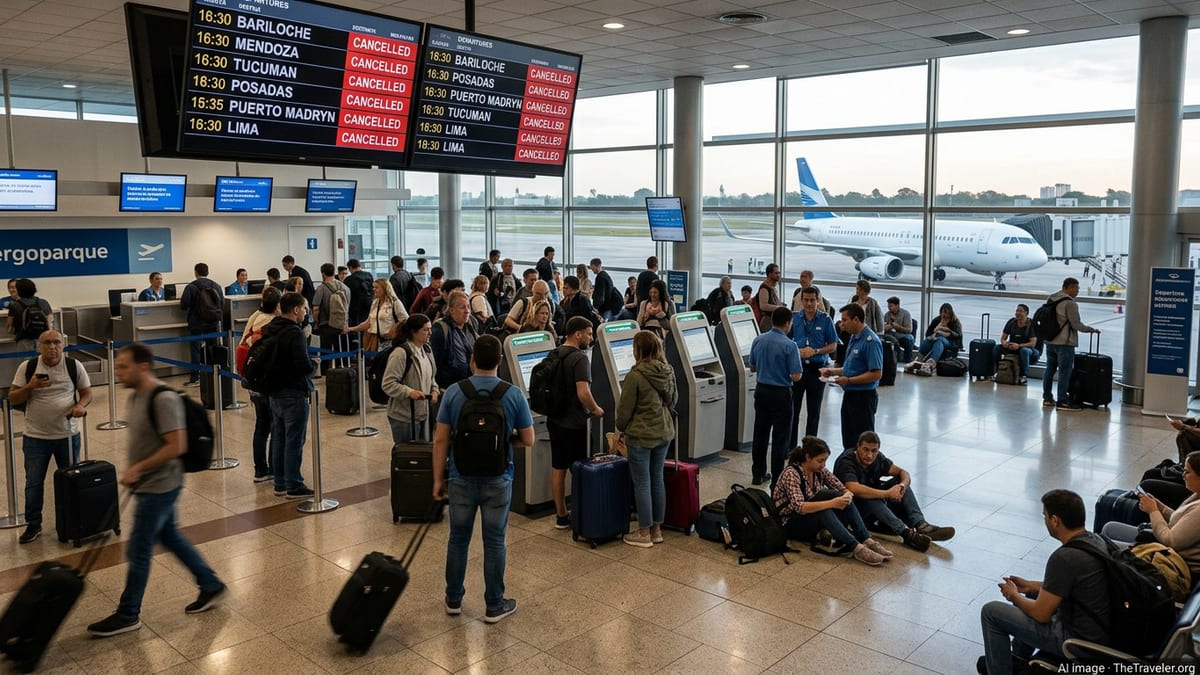
Air travel across Buenos Aires suffered severe disruption as Aerolineas Argentinas and low cost carrier Flybondi registered 41 delays and 8 cancellations in a single operating window, leaving hundreds of passengers facing long queues, missed connections and uncertain rebooking options at the city’s main airports.
Get the latest news straight to your inbox!
Heavy Operational Disruptions Hit Buenos Aires Hubs
Reports from flight tracking platforms and local media on June 17 indicate that a combination of delays and cancellations involving Aerolineas Argentinas and Flybondi created substantial bottlenecks at Buenos Aires’ Aeroparque Jorge Newbery and Ezeiza International Airport. The two airlines, which together handle a large share of Argentina’s domestic and regional traffic, logged a combined 41 delayed services and 8 outright cancellations within a compressed period, disrupting both internal routes and international connections.
The irregularities affected flights linking Buenos Aires with key domestic destinations such as Jujuy, Posadas and Ushuaia, as well as regional and long haul services including routes to Rio de Janeiro, Rome and Miami. Publicly available schedule and status data show multiple departures pushed back well beyond their planned times, with delays in some cases cascading across the day as aircraft and crews rotated late from earlier sectors.
The knock on effect was visible in crowded terminals, long customer service lines and aircraft left waiting for gates. Social media posts and local coverage describe passengers sleeping on terminal floors, rushing to secure scarce hotel rooms and scrambling to find alternative carriers during a busy early winter travel period in Argentina.
Flybondi’s Reliability Problems Deepen
The disruption comes amid mounting scrutiny of Flybondi’s performance. Over the past year, public reports and specialist aviation outlets have documented a sharp rise in cancellations and protracted delays for the ultra low cost airline, which once marketed itself as the symbol of mass access to air travel in Argentina. Industry analysis cited in recent press coverage indicates that between mid 2025 and mid 2026 the company canceled thousands of flights and reduced its operated schedule by more than half.
Operational data suggest that Flybondi’s current problems are rooted in the availability of aircraft for service. Several of the airline’s Boeing 737 aircraft are reported to be out of operation for heavy maintenance or grounded over financial and leasing issues, leaving the carrier with a very small active fleet. When a single aircraft encounters a technical problem, weather delay or crew rotation issue, knock on disruptions can quickly multiply, affecting large numbers of passengers in a single day.
Local outlets have highlighted episodes in which Flybondi suspended dozens of flights over a single long weekend, and recent days have seen continued instances of services departing hours late from cities such as Posadas bound for Buenos Aires. Consumer complaints circulating on social media and in travel forums describe repeated schedule changes, last minute cancellations and difficulties in obtaining timely refunds or rebookings.
Aerolineas Argentinas Faces Pressure Despite Higher On Time Record
Aerolineas Argentinas, the state controlled flag carrier, has generally posted stronger punctuality statistics than its low cost rival, but it was not spared from the latest wave of disruptions in Buenos Aires. Real time status boards on June 17 showed the airline with a cluster of delayed departures from both Aeroparque and Ezeiza, particularly on high demand domestic sectors where tight turnarounds and congested airspace make operations vulnerable to knock on delays.
Earlier in the year, Aerolineas Argentinas adjusted parts of its international network, including revisions to planned services from Córdoba to Miami, citing fleet and scheduling considerations. Analysts note that these changes reflect a broader attempt to balance capacity and reliability in a challenging operating environment marked by currency volatility, inflation and fluctuating demand.
While the carrier has not experienced the same level of systemic cancellations reported at Flybondi, the latest disruption underscores how quickly a combination of weather, air traffic management constraints and previous delays can ripple across a network. Travellers in Buenos Aires reported missed onward connections on long haul routes and late arrivals into key regional destinations when aircraft left the capital significantly behind schedule.
Passengers Confront Long Queues and Limited Alternatives
The immediate impact of the 41 delays and 8 cancellations was felt most acutely at check in desks and boarding gates. Images and descriptions shared publicly show long lines at customer service counters as travelers sought rebooking, hotel vouchers or information about their options. With Flybondi operating a reduced fleet and Aerolineas Argentinas carrying a heavy share of domestic demand, available seats on same day alternative flights were limited.
Some travelers reportedly opted to purchase last minute tickets on rival carriers or to switch to long distance buses, particularly on domestic routes where road links offer a practical fallback. Others faced multi day waits for new departures during what remains a relatively busy time for internal tourism and business travel.
The situation also highlighted challenges for international visitors using Buenos Aires as a gateway to Patagonia, the northwest or neighboring countries. Travel forums and community platforms in recent months have consistently advised visitors to build in extra buffer time, particularly when connecting from international arrivals to domestic low cost services. The latest round of disruptions appears to validate those precautions, with several accounts describing missed tours and prepaid reservations in other provinces after flights out of Buenos Aires were delayed or canceled.
Scrutiny Grows Over Oversight and Consumer Protections
The accumulation of operational problems has drawn heightened attention to regulatory oversight and passenger rights in Argentina’s aviation sector. Earlier this year, the national transport authorities announced sanctions against Flybondi following a series of mass cancellations at Aeroparque that affected thousands of travelers, and required the airline to present a plan to reduce disruptions. Consumer advocates argue that recurring irregularities indicate that the measures taken to date have not fully stabilized operations.
Publicly available information on penalties and enforcement actions suggests that regulators are weighing how to balance the need for investment and competition in the market with the obligation to ensure minimum reliability standards. Analysts interviewed in regional aviation publications have suggested that Flybondi may require a substantial capital injection to restore fleet strength and maintenance capabilities, while Aerolineas Argentinas continues to face questions over cost control and long term sustainability.
For travelers, the immediate priority is practical rather than structural. The events in Buenos Aires underline the importance of monitoring flight status closely, considering travel insurance with disruption coverage and allowing generous connection times, especially when combining different airlines or switching between the city’s two main airports. With both the national carrier and a major low cost operator now implicated in a single day of severe disruption, confidence in the reliability of Argentina’s air network is again under pressure just as the country seeks to attract more international visitors and revive domestic tourism.