


More news on this day
Travel across South America is facing renewed turbulence after São Paulo–Guarulhos International Airport recorded 53 delayed flights and three cancellations in a short period, unsettling LATAM, Azul, and GOL services linking Rio de Janeiro, Buenos Aires, and Lima.
Get the latest news straight to your inbox!
Regional Network Feels the Strain
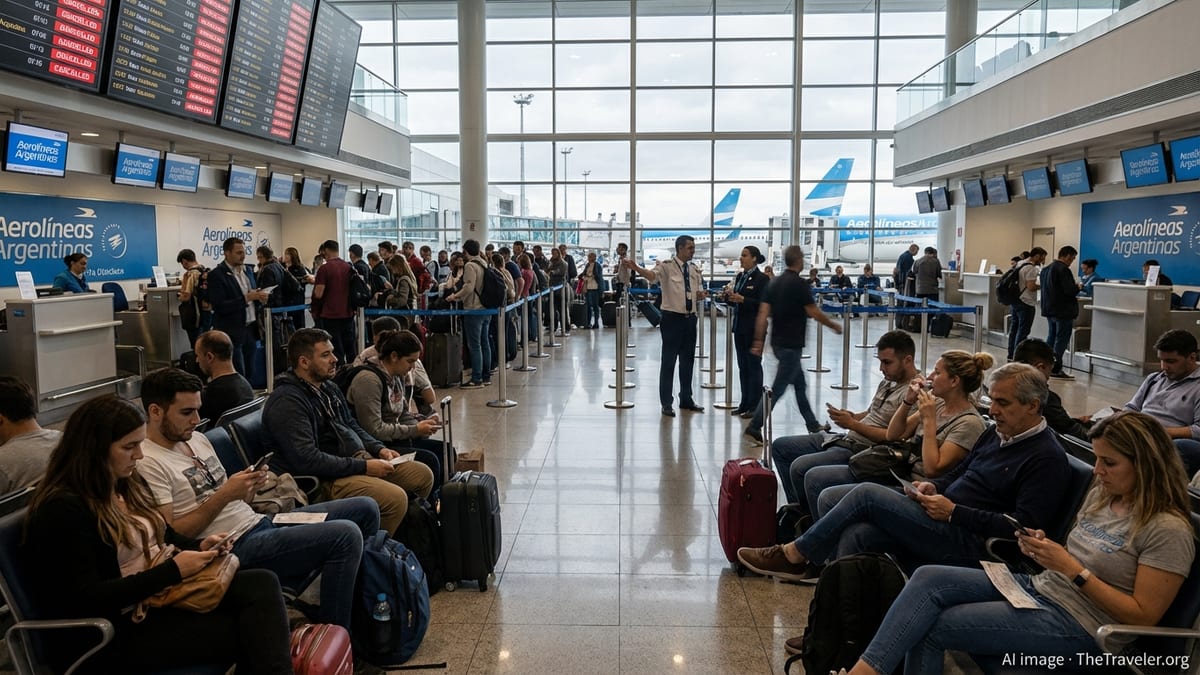
Operational data compiled from airport trackers and aviation analytics platforms for April 11 and 12 indicate that São Paulo–Guarulhos, one of Latin America’s busiest hubs, has experienced a concentrated wave of delays and a handful of cancellations affecting key regional routes. Publicly available information points to 53 flights running late and three being canceled, disrupting connections between Brazil, Argentina, and Peru.
The affected services include high frequency shuttles between São Paulo and Rio de Janeiro as well as cross border flights to Buenos Aires and Lima. These city pairs are among the most heavily trafficked in South America, which means even a modest spike in irregular operations can quickly ripple outward as aircraft and crews struggle to return to normal rotations.
Recent coverage of the broader Brazilian air network shows that Guarulhos has become a focal point in a series of nationwide disruptions reported since early April. Travel and aviation outlets describe hundreds of late or canceled services across major Brazilian airports, with São Paulo repeatedly cited among the principal sources of schedule instability.
Against this backdrop, the latest disruption at Guarulhos is emerging as part of a wider pattern rather than a one off incident, reinforcing concerns about how fragile tightly planned airline schedules can become when unexpected constraints hit air traffic management or airport operations.
LATAM, Azul, and GOL Under Pressure
LATAM Airlines Brasil, Azul Brazilian Airlines, and GOL Linhas Aéreas are at the center of the current episode, according to data reviewed from flight status platforms and regional media reports. These three carriers dominate domestic and short haul international traffic into and out of Guarulhos, making them particularly exposed when constraints develop around runway capacity or air traffic flow.
Publicly available tallies indicate that the majority of the 53 delays involve departures or arrivals operated by the trio, while the three cancellations are also associated with their regional networks. Many of the affected flights are short haul sectors that typically operate several times per day, which increases the risk that disruption on one rotation will cascade into subsequent services.
Industry analyses note that Brazilian airlines have been operating on tight margins in terms of aircraft utilization and crew scheduling, a strategy that maximizes efficiency during normal periods but leaves limited room for recovery when delays start to stack up. When irregular operations originate at a key hub such as Guarulhos, the effect can quickly extend to secondary airports as aircraft arrive late, turnarounds are compressed, and downstream rotations are pushed back or scrubbed altogether.
Despite the disruption, tracking data and media monitoring suggest that most LATAM, Azul, and GOL flights on the São Paulo links to Rio de Janeiro, Buenos Aires, and Lima continue to operate, albeit with a heightened risk of departure or arrival outside the planned schedule. For travelers, that combination of partial normality and elevated uncertainty can make planning connections more complicated.
Knock On Effects Across Rio, Buenos Aires, and Lima
The impact of the Guarulhos delays is being felt well beyond São Paulo. Aviation monitoring indicates that flights between Guarulhos and Rio de Janeiro’s main airports, Galeão and Santos Dumont, have seen a cluster of late departures and arrivals as aircraft originating in São Paulo struggle to depart on time. Short haul shuttle routes are particularly vulnerable because any delay early in the day can snowball across multiple rotations.
On the international side, Buenos Aires and Lima are experiencing schedule distortions on selected services that rely on Guarulhos as an origin or connecting point. Published coverage points to late arrivals into Buenos Aires Ezeiza and Aeroparque as displaced aircraft arrive behind schedule, with some departures in the opposite direction also pushed back as crews and ground handlers race to turn flights around.
Lima, a major hub in its own right, is also absorbing delays tied to São Paulo operations. When São Paulo departures leave late, aircraft may arrive in Peru with reduced ground time, prompting airlines to adjust departure slots and, in some cases, reassign aircraft to protect later banked connections. This kind of behind the scenes juggling can help limit outright cancellations but often results in rolling delays for passengers across multiple sectors.
While most regional airports remain open and functioning, the uneven distribution of aircraft and the knock on effect of crew duty time limits are contributing to a patchwork of delays across South America’s southern cone. Travelers may not immediately realize that a late departure in Buenos Aires or Lima traces back to earlier disruption in São Paulo, but operational data indicates that these chains of causality are increasingly common.
Background: A Week of Volatility in Brazilian Airspace
The latest figures from Guarulhos follow a volatile period for Brazilian aviation. Earlier in the week, domestic media and aviation industry observers reported that a technical issue affecting air traffic control operations in the São Paulo region had triggered widespread delays and temporary suspensions at multiple airports. Subsequent reports described a cascading effect across the national network as aircraft and crews fell out of position.
Further coverage in Brazil has highlighted additional local factors, including precautionary measures taken around a possible gas leak at an air traffic control tower in São Paulo, which temporarily suspended operations and added fresh pressure to an already congested system. Although the most acute phase of those incidents has eased, the residual imbalance in schedules continues to surface in the form of rolling delays at Guarulhos and other major hubs.
Statistics compiled by aviation data firms over recent years show that São Paulo–Guarulhos typically maintains on time performance levels that compare favorably with other large international hubs. The current streak of delays therefore stands out against the airport’s usual metrics and illustrates how a cluster of operational challenges can quickly undermine even generally resilient infrastructure.
Analysts following the region suggest that it may take several days of relatively smooth operations before the system fully digests the disruption of early April, particularly given the density of traffic on trunk routes such as São Paulo to Rio de Janeiro and São Paulo to Buenos Aires.
What Travelers Can Do Right Now
For passengers booked on LATAM, Azul, or GOL flights touching Guarulhos, the latest round of disruption underscores the importance of close monitoring and contingency planning. Travel experts and consumer advocacy groups commonly recommend checking real time flight status through airline apps, airport information pages, or independent tracking platforms before leaving for the airport and again upon arrival at the terminal.
Brazilian aviation and consumer protection rules provide for assistance in cases of significant delay or cancellation, including measures such as meal vouchers, accommodation, and ground transport when waiting times exceed certain thresholds. Passenger rights organizations in Brazil and neighboring countries regularly stress that travelers should familiarize themselves with these entitlements and retain documentation such as boarding passes and delay notifications.
For those connecting through Guarulhos on journeys from or to Rio de Janeiro, Buenos Aires, or Lima, industry guidance generally favors building generous buffers into itineraries, particularly when separate tickets or low cost carriers are involved. Longer layovers can help absorb schedule shifts and reduce the risk of missed onward flights if an inbound service runs late.
Travel publications also point to the value of flexible planning during periods of operational stress. Options such as refundable fares, travel insurance that specifically covers delays and missed connections, and the willingness to accept alternative routings can provide additional resilience when schedules at key hubs like São Paulo–Guarulhos become unpredictable.