


More news on this day
Investigators are examining a freight train derailment along CSX tracks near Neshaminy Falls in lower Bucks County, Pennsylvania, after several rail cars left the tracks earlier this week, disrupting travel and prompting a substantial response from emergency crews.
Get the latest news straight to your inbox!
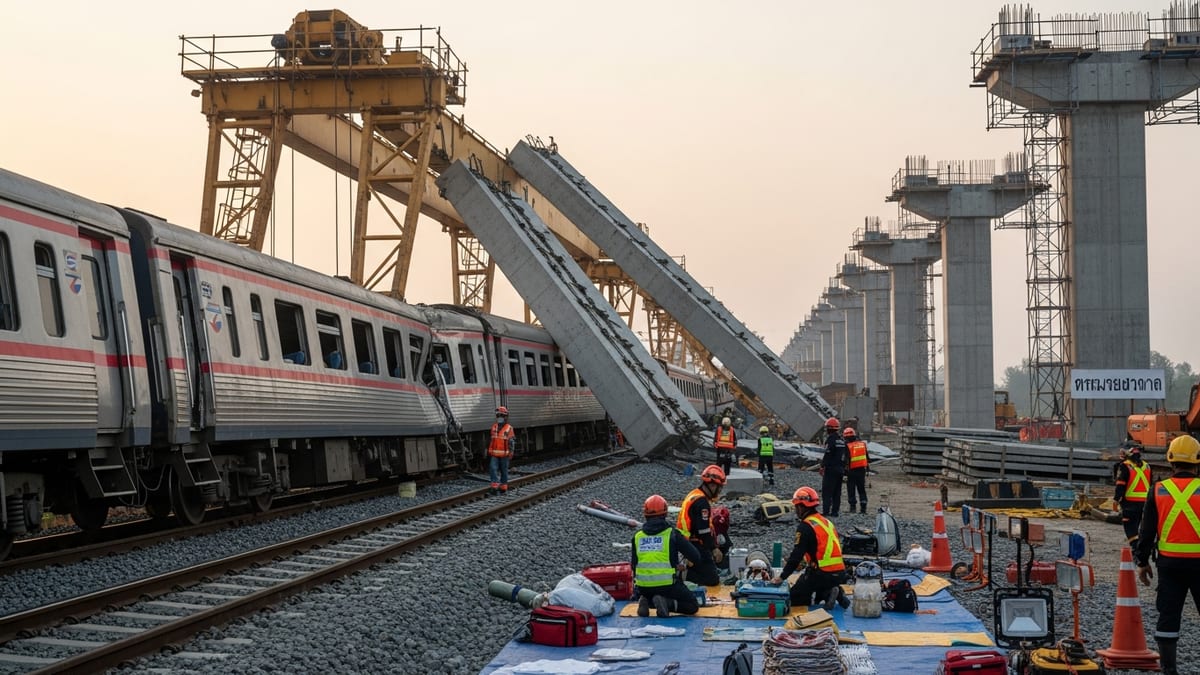
Derailment near Neshaminy Falls draws major response
Publicly available information from Bensalem Township and state emergency management reports indicates that the derailment occurred on the afternoon of June 30 along freight tracks between Street Road and the Neshaminy Falls station area in the Trevose section of lower Bucks County. Multiple rail cars from a CSX freight consist left the tracks, coming to rest in a narrow corridor bordered by residential neighborhoods, commercial properties, and commuter rail infrastructure.
Digital crime and incident bulletins from Bensalem authorities describe how local police, fire, emergency medical services, and hazardous materials teams were dispatched to the scene shortly after initial reports of a derailment. Aerial imagery from department drones documented several cars off the rails, some tilted or partially overturned adjacent to the active right of way.
State-level situation reports from the Pennsylvania Emergency Management Agency list the Bucks County derailment as a rail incident involving roughly a dozen freight cars. The documentation notes that emergency responders monitored the site, implemented safety perimeters, and coordinated with rail operators to assess any potential threat to nearby communities and transportation corridors.
The incident occurred in one of the most densely developed sections of Bucks County, a part of the Philadelphia region where freight lines, commuter tracks, and major roadways run in close proximity. The derailment therefore quickly drew regional attention as travelers, commuters, and local residents encountered disruptions and visible emergency activity along the busy corridor.
Questions over cargo and environmental risk
Early public reporting and community discussions around the derailment have focused heavily on what the affected freight train was carrying and whether any of the derailed cars posed an environmental or public health risk. Routine documentation from state emergency officials describes the incident as a freight derailment, but does not indicate a major hazardous materials release or long-term evacuation in lower Bucks County.
Posts on local community forums and social media, including threads dedicated to Bucks County events, reference stacked freight cars and scattered equipment rather than widespread smoke plumes or chemical odors. Commenters describe an array of railcars pushed together near the right of way and ongoing work by rail maintenance and utility crews to stabilize and clear the affected section of track.
Photography distributed through regional media partners and image services shows CSX and utility contractors operating along the tracks at Neshaminy Falls in the days following the derailment, with heavy machinery, bucket trucks, and power company crews clustered around damaged cars and rail infrastructure. The imagery suggests a focus on mechanical recovery, power restoration, and track repairs rather than large-scale decontamination operations.
While detailed commodity lists for individual freight trains are typically not published in real time, the absence of extended shelter-in-place orders, large exclusion zones, or air-quality warnings in public documents and news coverage suggests that the Bucks County derailment did not evolve into a high-profile hazardous materials disaster of the kind seen in other regions in recent years. Nonetheless, the event has renewed local concern about what regularly moves through suburban rail corridors and how emergencies are communicated to residents.
Travel disruption in a key regional corridor
The location of the derailment in lower Bucks County underscores how closely intertwined freight operations and passenger mobility have become in the Philadelphia metropolitan area. The affected section near Neshaminy Falls sits adjacent to a busy commuter rail line and within a short distance of major road connections used by drivers traveling between the city and the northern suburbs.
Regional rail riders and motorists in online discussions describe cascading delays in the hours and days after the incident, as rail operators and transportation agencies worked around the blocked freight tracks and any related signal or power issues. Some passengers reported altered schedules and crowded trains as equipment and crews were repositioned to maintain service while freight recovery operations continued a short distance away.
State emergency reports indicate that while response activities were intensive immediately after the derailment, rail traffic and local transportation patterns gradually returned to normal as track assessments were completed and repairs progressed. In the interim, travelers encountered detours, slower-than-usual rail movements near the affected area, and flashes of construction-style activity along the right of way.
For visitors and residents who rely on rail to connect with Philadelphia’s historic core, Trenton-bound lines, and regional airports, the incident served as a reminder that infrastructure interruptions can ripple quickly through tightly scheduled travel plans. Even without widespread injuries or large evacuations, a freight disruption in a suburban node like lower Bucks County can have outsized effects on commuting, weekend excursions, and tourism flows across the region.
Investigation focuses on track conditions and operations
According to transportation documents and regional media coverage, the circumstances of the Bucks County derailment remain under investigation by rail operators and relevant safety agencies. Reviews of incident summaries show standard procedures in progress, including inspections of track geometry, assessments of rolling stock, and examination of operating conditions at the time the cars left the rails.
Recent rail incidents nationwide, including a separate passenger derailment near College Park in the Washington metropolitan area, have highlighted multiple risk factors, from extreme heat affecting track alignment to underlying maintenance and inspection practices. Public discussion around the lower Bucks County freight derailment often references these broader trends, noting the intense heat affecting Pennsylvania in late June and early July and ongoing national scrutiny of freight safety.
Safety advocates and transportation analysts in published commentary frequently call for more robust monitoring of track conditions, expanded deployment of sensors, and more transparent reporting of near-miss incidents. In the context of the Bucks County derailment, these themes are surfacing again as community members weigh the balance between efficient freight movement and the need to protect people living and traveling along established corridors.
Formal findings on the precise causes of the derailment, and any recommendations that may emerge from the review, are expected to shape how railroads and local governments approach future infrastructure upgrades and emergency planning in the lower Bucks County area. For now, the investigation remains a key point of focus as crews complete clean-up work and rail traffic patterns normalize.
Local communities look for clearer communication
The derailment has prompted discussion in lower Bucks County about how residents are notified when major transportation incidents occur near homes, schools, and businesses. Comments shared in neighborhood groups describe a patchwork of awareness, with some individuals learning of the derailment through emergency alerts or online postings, while others first noticed the event only when they encountered blocked roads or saw equipment clustered around the tracks.
County emergency management information outlines an existing framework for coordinating among local departments, volunteer agencies, and state partners during rail or industrial incidents. Training calendars and planning documents emphasize readiness to save lives and protect property when disasters strike, but the Bucks County derailment is reinforcing calls for more consistent direct messaging to the public when rail events unfold in densely populated areas.
In travel-focused circles, including transit enthusiast forums and regional planning discussions, the derailment is being cited as another example of why clear, rapid communication matters for both safety and mobility. Visitors staying in hotels near major corridors or relying on unfamiliar commuter lines may be especially vulnerable to confusion when incidents occur without widely distributed, real-time guidance.
As lower Bucks County continues to grow and attract both new residents and short-term travelers, the June 30 freight derailment is likely to inform future conversations about public information systems, siren and alert coverage, and the use of digital platforms to keep people updated about disruptions that can affect not only local life but also the broader travel network connecting Pennsylvania communities with destinations across the Northeast.