


More news on this day
Travelers at Nashville International Airport experienced significant disruption as 11 flight cancellations and 106 delays piled up, stranding hundreds of passengers and affecting connections to major North American destinations.
Get the latest news straight to your inbox!
Wide Ripple Effects on Domestic and International Routes
Publicly available flight tracking data for Nashville International Airport on June 15 indicates unusually heavy disruption, with 11 departures or arrivals canceled and more than one hundred delayed. The impact extended across a mix of domestic and international services, underscoring how quickly schedule problems at a busy regional hub can cascade through airline networks.
The disruptions affected flights linked to popular leisure destinations including Cancun, as well as key Canadian cities such as Toronto, Vancouver and Montreal. Several of these routes typically operate as one-stop or connecting itineraries through larger hubs, meaning a cancellation or lengthy delay in Nashville can cause onward trips to unravel for hours or even days.
Reports from aviation tracking dashboards show that both early morning and late afternoon departure banks were hit, reducing options for same day rebooking. With many flights already operating near capacity at the start of the summer peak, passengers struggled to secure alternative seats, especially on cross border routes where frequencies are often lower than on major domestic corridors.
The timing at the outset of the busy vacation season increased the knock on effects. Families traveling for long planned holidays and business travelers on tight schedules found itineraries reshuffled or abandoned as available seats on remaining services quickly disappeared.
Multiple Airlines Caught in a Single Day Surge
According to operational data published for June 15, the disruption at Nashville did not center on a single carrier. Regional operators Endeavor Air, Republic Airways and PSA Airlines were among those registering irregular operations, alongside large mainline brands including Delta Air Lines, Southwest Airlines and JetBlue.
Endeavor Air and Republic Airways, which operate regional flights under the banners of major U.S. network airlines, play a crucial role in feeding passengers from cities like Nashville into larger hubs. When regional flights are canceled or heavily delayed, travelers can miss long haul departures to destinations such as Cancun or Canadian gateways, even if those onward flights are operating on time.
Southwest and JetBlue, both with established presences at Nashville, also appeared in delay tallies. For point to point carriers, a disruption early in the day can affect multiple subsequent legs as aircraft and crews fall behind schedule. Industry performance statistics from the U.S. Department of Transportation show that even carriers with relatively low cancellation rates can experience sudden spikes during weather or congestion events, increasing the risk of knock on delays across their networks.
PSA Airlines, another regional operator, has previously been associated with elevated cancellation percentages in federal on time performance data. When a carrier with small aircraft and tightly scheduled crews faces operational headwinds, it can be more difficult to recover quickly, magnifying the impact on passengers at mid sized airports such as Nashville.
Weather, Congestion and Seasonal Strain Contribute to Disruption
While a single root cause for the Nashville disruptions has not been isolated in public data, patterns across the national air travel system suggest a combination of seasonal weather, airspace congestion and crew or equipment constraints. Aviation analysts note that summer brings an uptick in thunderstorms and convective weather across large portions of the United States, conditions that can force ground stops, reroutes or extended spacing between aircraft.
Federal aviation records describe how non extreme weather, air traffic control initiatives and airport constraints together form the national aviation system category of delays. When these constraints emerge at large hubs that sit upstream of Nashville in airline networks, the result can be late arriving aircraft and crews that ripple into the Tennessee capital’s schedule.
Travel community discussions and passenger reports have increasingly pointed to staffing and capacity limits in air traffic control as another factor behind widespread delays. Reduced flexibility in the system means that once a line of storms or a temporary ground delay program disrupts a major hub, there is less slack available to recover quickly, causing regional airports to experience lingering effects even after local conditions improve.
At the same time, strong summer travel demand leaves fewer empty seats across the system. Public statistics on U.S. carriers show high load factors on many routes, making it harder to accommodate stranded customers when cancellations occur. This dynamic turns a relatively small number of canceled flights into a much larger customer service challenge.
Stranded Passengers Face Long Lines and Limited Options
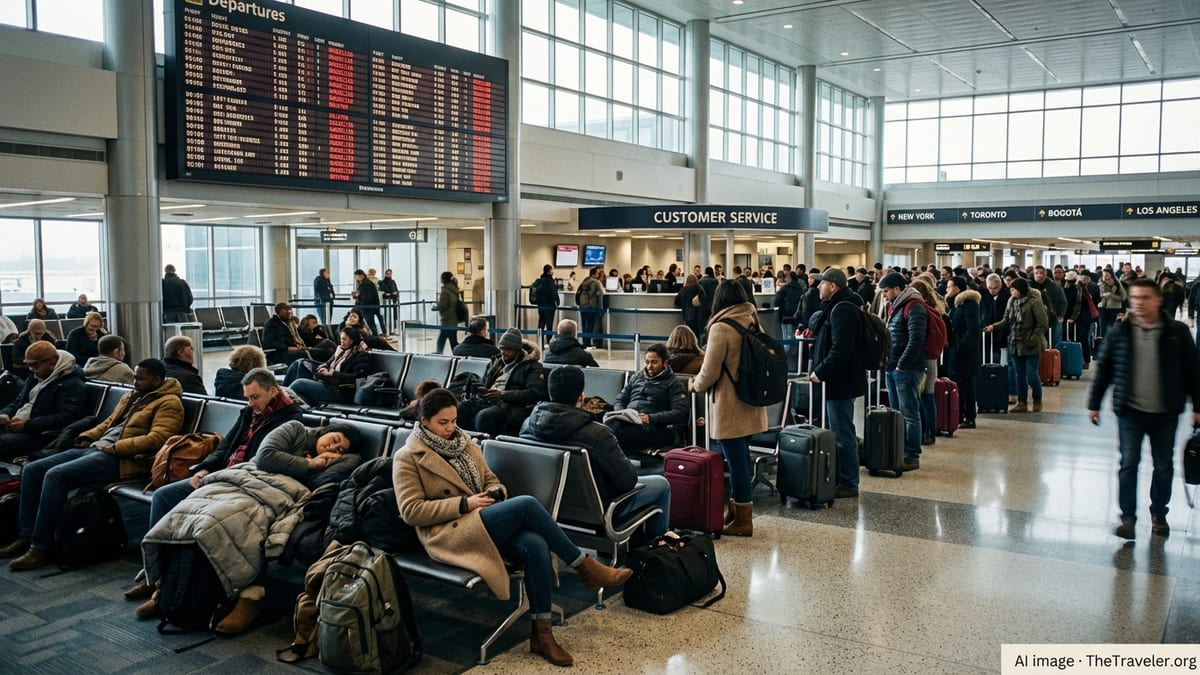
As cancellations and delays accumulated at Nashville, passengers encountered long queues at check in counters and customer service desks. Social media posts and forum discussions from June 15 describe travelers waiting in extended lines to rebook, inquire about hotel vouchers or adjust complex itineraries involving international segments.
Those traveling to or from Cancun, Toronto, Vancouver and Montreal were particularly exposed due to the reliance on specific connections and limited nonstop options. Missing a single feeder flight at Nashville or a partner hub often meant an enforced overnight stay and a complete reworking of plans, with some travelers choosing to cancel trips rather than accept multi day delays.
Travel advocates emphasize that in such situations, passengers benefit from checking their rights for assistance and compensation, which can vary depending on the airline, route and cause of disruption. In general, when problems stem from factors within a carrier’s control, such as maintenance or crew scheduling, airlines may offer more substantial support than during events classified as weather or air traffic related.
With hotel rooms and rental cars in the Nashville area also in high demand during peak season, same day alternatives proved hard to secure for those who suddenly found themselves overnighting near the airport. Some travelers turned to nearby cities within driving distance in search of alternative departures the following day.
What Travelers Can Do During Similar Airport Disruptions
Recent nationwide statistics on flight performance indicate that sharp, sudden spikes in cancellations and delays, similar to those seen at Nashville on June 15, are likely to recur periodically as airlines, airports and regulators work to balance strong demand with infrastructure and staffing limits. For travelers, preparation and rapid response can reduce the impact when such events unfold.
Consumer guidance from transportation regulators and travel industry experts consistently recommends monitoring flight status closely on the day of departure, enrolling in airline alerts and arriving at the airport with backup options in mind. Rebooking via airline apps or websites can sometimes be faster than waiting in a physical line, particularly during large scale disruptions.
For itineraries involving connections to international destinations such as Cancun or Canadian cities, passengers are often advised to build in longer layovers where possible and to avoid tight connections at weather sensitive hubs during peak storm seasons. Travel insurance policies that cover missed connections, additional accommodation and rebooking fees can also offer a financial buffer in the event of cascading delays.
As Nashville International Airport continues to grow in passenger numbers and route offerings, the events of June 15 highlight the importance of resilient operations and clear communication with travelers. Published data from aviation agencies and airlines suggests that improving on time performance at both regional and national levels remains an ongoing challenge as the summer travel rush intensifies.