


More news on this day
Flights at Houston’s William P. Hobby Airport faced a Federal Aviation Administration ground stop on Monday morning as severe thunderstorms moved across southeast Texas, disrupting travel at one of the region’s key domestic hubs.
Get the latest news straight to your inbox!
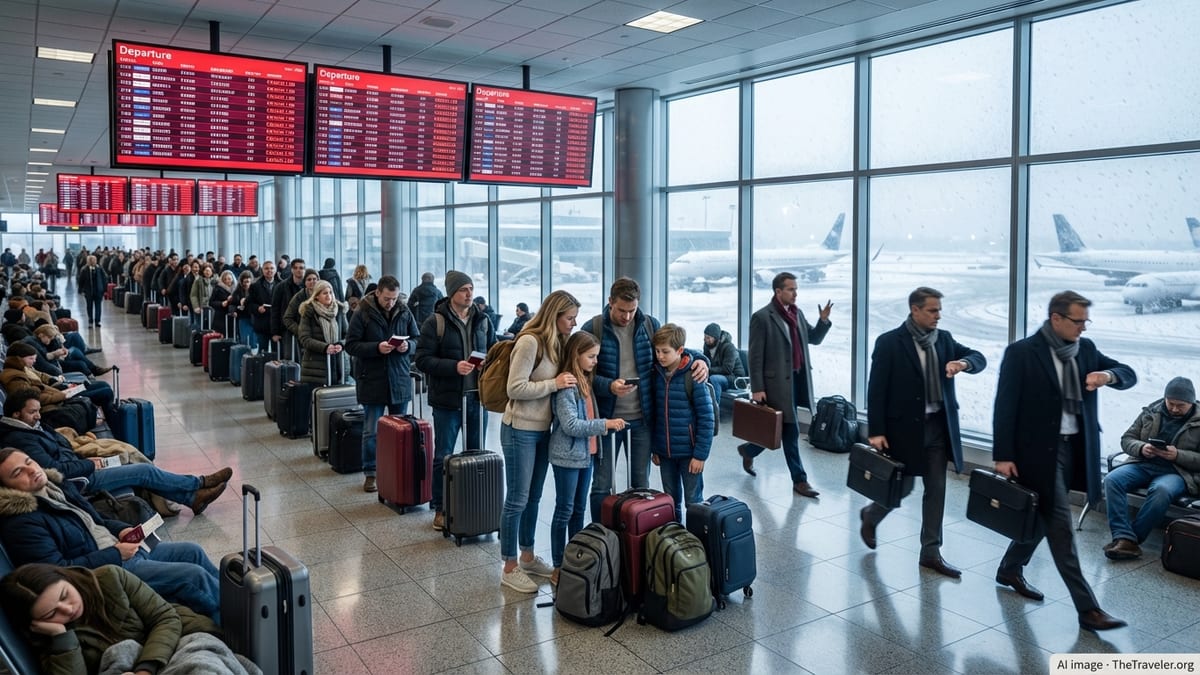
FAA Ground Stop Halts Traffic at Hobby
According to publicly available air-traffic management data and industry reports, the Federal Aviation Administration implemented a ground stop for William P. Hobby Airport on Monday, June 15, as storms intensified over the Houston area. The measure temporarily paused departures bound for the airport and restricted some arrivals, with the aim of easing pressure on airspace and runway operations while visibility and storm activity fluctuated.
Coverage from national travel outlets indicates that Hobby and George Bush Intercontinental were among several U.S. airports experiencing weather-related traffic management programs on Monday morning. The disruption formed part of a broader pattern of delays and cancellations across the country as rounds of thunderstorms affected major hubs in Texas and the Northeast.
Real-time tracking boards showed a growing number of flights operating behind schedule at Hobby as the morning progressed, reflecting the ripple effects of the stop on both inbound and outbound operations. While some early flights remained listed as on time, later departures began to stack up as crews and aircraft waited for clearance to move.
The FAA ground stop was described in operational summaries as a short-term response to convective weather near the field and along key arrival and departure routes, rather than a long-term closure of the airport. However, the cumulative impact for passengers was significant, with knock-on delays expected to continue even after the formal stop was lifted.
Storm System Brings Heavy Rain and Thunderstorms
Meteorological information for the Houston region on Monday pointed to a moist, unstable air mass capable of producing heavy rain, frequent lightning and localized strong wind gusts. Forecasts called for repeated storms through the day, with periods of reduced visibility around both of the city’s commercial airports.
Weather data specific to Hobby showed overcast conditions early in the morning, with temperatures in the mid to upper 70s Fahrenheit and high humidity ahead of more intense cells. Regional forecasts highlighted the risk of heavy rain bands training over the metro area, prompting wider flood watches across southeast Texas.
Travel and aviation analysts noted that thunderstorms in and around Houston can quickly trigger ground stops because of the dense air traffic in the region and the need to maintain separation between aircraft during takeoff and landing. Lightning, low ceilings and shifting wind patterns can all slow operations, while heavy rain increases braking distances on the runway.
The same storm system contributed to broader national disruption, with flight-tracking services reporting hundreds of delays and cancellations across multiple hubs by early Monday. Houston’s airports were listed among the hardest hit in the early part of the day, alongside major facilities in the New York area.
Impact on Travelers and Airlines
Publicly visible departure boards for Hobby showed a mix of status updates on Monday morning, ranging from minor delays to more substantial schedule changes as airlines adjusted to the evolving conditions. Some carriers proactively padded departure times to account for anticipated air-traffic restrictions, while others held aircraft at gates awaiting improved conditions along their planned routes.
Travel industry coverage emphasized that passengers connecting through Houston were particularly vulnerable to missed onward flights as the ground stop disrupted morning banks of departures. Even relatively short holds on the ground in originating cities can cascade into longer waits once crews exceed duty limits or aircraft miss their assigned slots in Houston’s airspace.
Operational summaries from national aviation trackers indicated that airlines were working within the FAA’s traffic-management initiatives, rerouting where possible and utilizing available gaps in the weather to move flights through. However, with thunderstorms affecting both departure and arrival corridors, opportunities to catch up were limited during the peak of the morning activity.
Observers noted that recovery from a weather-related ground stop can take much of the day, as aircraft and crews are repositioned and backlogs worked down. Travelers scheduled to depart from Hobby later on Monday were advised by airline alerts and airport messaging to monitor their flight status frequently and allow extra time at the terminal.
Guidance for Passengers Flying Through Hobby
Consumer travel advisories circulating on Monday stressed the importance of using airline apps and text alerts to track real-time changes related to the Hobby ground stop. Many carriers updated estimated departure and arrival times throughout the morning as new FAA guidance was issued and conditions evolved over the Houston area.
Industry experts recommended that passengers with same-day connections consider longer minimum connection times when storms are in the forecast, especially at weather-sensitive hubs like Houston. For those beginning trips at Hobby, arriving early at the airport can provide more options if a flight is rebooked or switched to a different routing because of ongoing weather impacts.
Travel coverage also underscored the value of flexible tickets and change-fee waivers, which some airlines issue when large-scale weather disruptions affect multiple airports. As storms continued to affect routes through Texas and beyond, such policies were an important tool for travelers seeking to avoid the worst of the delays.
With more unsettled weather expected in the region through midweek, passengers planning to use Hobby are encouraged to keep a close eye on forecasts and operational updates. While Monday’s ground stop was expected to be temporary, the broader pattern of storms signaled the potential for additional delays if conditions deteriorate again.
Houston’s Role in the Wider U.S. Air Travel Network
William P. Hobby Airport serves as a major base for domestic operations, particularly for short and medium haul routes throughout the South and across the country. Industry data shows that its schedule density means even a brief ground stop can create visible ripples across the network, affecting flights well beyond Texas.
Aviation planners note that when severe weather hits Houston, it often coincides with the active summer travel season, when load factors are high and spare seat capacity is limited. That dynamic can make it more challenging for airlines to rebook passengers from disrupted flights, especially later in the day once multiple waves of delays have accumulated.
Houston’s dual-airport system, with Hobby focused largely on domestic service and George Bush Intercontinental handling a significant share of long haul and international traffic, means that weather events can strain both facilities at once. When traffic management initiatives are in place at both airports, airspace congestion over the region becomes a key factor in national delay statistics.
Monday’s storms and the resulting Hobby ground stop offered a reminder of how quickly convective weather can reshape U.S. flight patterns. For travelers and airlines alike, the episode highlighted the need for flexibility during the storm-prone summer months, as even short-lived restrictions at a single airport can have far-reaching consequences across the wider network.