


Banff National Park rewards the traveler who slows down. Yet every summer, visitors arrive with an aggressive checklist: sunrise at Moraine Lake, a quick hike at Lake Louise, a gondola ride, the Icefields Parkway, maybe even a side trip to Yoho, all in two or three days. On paper it looks efficient. On the ground it often turns into traffic jams, shuttle frustrations, rushed photo stops, and a nagging feeling that you are skimming past one of the world’s great mountain landscapes instead of really being there. The biggest mistake travelers make in Banff is trying to do too much, too fast.
Get the latest updates straight to your inbox!
Why Banff Punishes Overpacked Itineraries
Banff is not a theme park where you can sweep through the main attractions in a single loop. It is a large mountain park with high demand, limited road capacity, and strict rules that protect wildlife and fragile terrain. On a busy July day, Parks Canada estimates tens of thousands of people are moving through the Lake Louise and Moraine Lake corridor alone, with shuttle buses now the primary way to reach Moraine. That means lineups, timed departures, road closures, and parking lots that can fill before many visitors finish breakfast. Building an itinerary as if you can simply drive from one viewpoint to the next is the first step toward disappointment.
The geography also works against the “do it all” mindset. Iconic sights are spread out: the town of Banff, Lake Louise, Moraine Lake, Sunshine Meadows, and the Icefields Parkway are separated by long, winding mountain highways. In summer, a simple drive from Banff townsite to Lake Louise can easily stretch beyond an hour when traffic is heavy. Add in construction slowdowns or wildlife jams and the time you thought you had for a half-day hike evaporates. Travelers who stack three or four major locations into a single day quickly discover they are racing the clock instead of enjoying the scenery.
Weather adds another layer of reality. In June or September it is common for low cloud or rain to hide famous peaks for hours at a time. If your plan demands perfect weather at 8 a.m. at one lake and at 2 p.m. at another, you are at the mercy of conditions you cannot control. Slower itineraries, with backup options and spare time, make it far easier to adapt when Banff’s mountains decide to throw in a surprise snow squall or smoky skies from a distant wildfire.
Lake Louise and Moraine Lake: Where Overplanning Collides With Reality
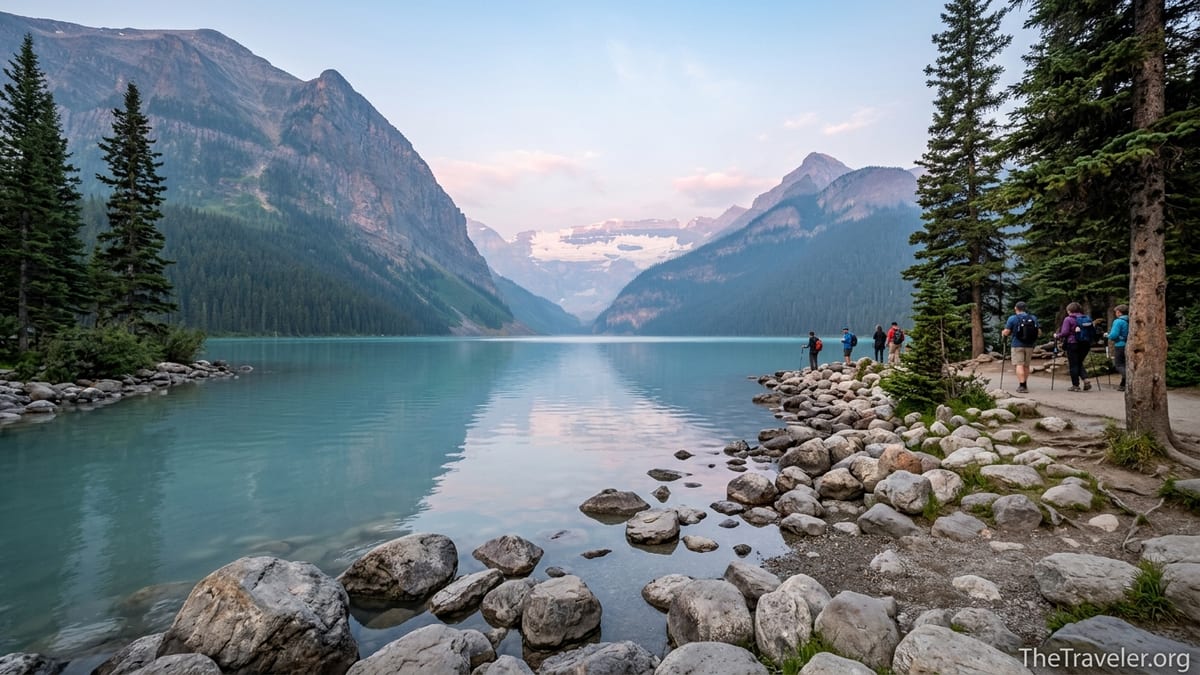
Nowhere does the “do everything” mistake show up more clearly than at Lake Louise and Moraine Lake. Both lakes are world famous, and visitation has surged in the last decade. In response, Parks Canada closed Moraine Lake Road to personal vehicles year-round. Private cars can no longer simply drive up; instead, visitors must book a Parks Canada shuttle, use Roam Transit, or join a licensed commercial bus or tour. At Lake Louise, parking at the lakeshore is now paid and often fills very early on summer mornings. Many travelers still arrive assuming they can park wherever they like and then move freely between both lakes in a single, relaxed morning. That is rarely how it plays out.
A common scenario looks like this: a couple staying in Canmore sets their alarms for 5 a.m., planning to see sunrise at Moraine Lake, then drive over to Lake Louise for a mid-morning hike to the Lake Agnes Teahouse, and still be back in Banff for an afternoon gondola ride. They wake to discover there is no road access to Moraine Lake without a shuttle reservation and that most shuttle seats for their dates sold out weeks earlier on the April booking day. They pivot to Lake Louise first, drive the 45 minutes from Canmore, and reach the lakeshore parking area around 7:30 a.m., only to find it signed as full and being turned back down the road by staff. By the time they reach the park-and-ride lot for the shuttle, the early buses are already booked, and the next available time is late morning. Half the day is gone, and they have not yet begun their first hike.
Even when plans technically work, they can be exhausting. Imagine a family that succeeds in booking the 6:30 a.m. shuttle to Moraine Lake in July. They leave their Banff hotel at 5 a.m. to reach the park-and-ride, stand in a line for boarding, ride the bus to the lake, take hurried photographs, and walk partway along the lakeshore trail. By 9 a.m., they are back at the park-and-ride to catch a connector shuttle to Lake Louise, hoping to start the Plain of Six Glaciers trail by mid-morning. By early afternoon, the kids are tired, the adults are anxious about catching a return shuttle, and everyone is staring at their watches instead of the glaciers. Technically, they have “done” both lakes. In practice, the day feels like a logistical drill.
The Time Trap: Underestimating Hikes, Drives, and Lineups
The overpacked Banff itinerary is built on optimistic numbers that rarely match reality on the ground. Take hiking time, for example. Guidebooks may describe the Lake Agnes Teahouse trail as a 7-kilometer round trip that most people complete in about three hours. On a summer weekend, it is not unusual for casual hikers to take four or more hours, especially if they stop for photos at Mirror Lake, queue briefly at narrow sections, and enjoy tea and cake on the teahouse veranda. Add the time needed to find parking or board a shuttle, and that “quick” hike can easily consume most of a day.
Johnston Canyon on the Bow Valley Parkway is another real-world example. Guides often describe one to two hours to the Upper Falls and back. On a calm shoulder-season morning in May, that is reasonable. On a July afternoon when the catwalks are crowded and every viewpoint becomes a mini photo session, progress slows to a shuffle. Visitors with itineraries that call for Johnston Canyon before lunch, then a picnic at Two Jack Lake, then a gondola ride, often find themselves choosing which activity to cut mid-day. The driving distances between each stop may only be 20 to 40 minutes, but congestion, parking searches, and bathroom breaks compound the delay.
Transit also demands margin. The Parks Canada park-and-ride lot for Lake Louise and Moraine Lake has over a thousand spaces, but buses depart on a schedule, and many mid-morning seats are reserved well in advance. Even with a reservation, you must arrive 30 to 60 minutes early to check in, wait in the loading area, and board. Roam Transit’s express buses between Banff and Lake Louise are efficient, yet they, too, can see standing-room-only conditions and short lineups at peak times. If your plan has you stepping off one bus at Lake Louise and boarding another for Moraine within minutes, you are effectively betting your day on everything running perfectly.
How Overdoing It Erodes the Banff Experience
The most obvious downside of trying to do too much in Banff is stress. Visitors who have flown across the world and paid high-season hotel prices often feel pressure to “get their money’s worth.” That mindset easily morphs into anxiety when shuttle reservations do not align, when a thunderstorm rolls over the valley, or when a child needs an unplanned midday rest. Instead of savoring an alpine meadow or watching the color of the lake shift as the sun moves, people are checking their phones, watching the time, and arguing about what to skip.
Rushing also makes the park feel more crowded than it actually is. The majority of visitors concentrate in a relatively small number of famous spots: the boardwalk at Moraine Lake, the Lake Louise lakeshore, the Banff Gondola, Johnston Canyon, and a handful of roadside viewpoints. If you race from one hotspot to another at exactly the same times as everyone else, you will naturally encounter the heaviest crowds. Travelers who narrow their focus, choose one marquee location per day, and build in unplanned time often discover that even popular places have quiet moments. A sunrise at Lake Louise followed by a leisurely coffee in the village and a side trail away from the shoreline can feel surprisingly peaceful compared to sprinting between multiple attractions.
There is also a safety dimension. When people try to compress ambitious hikes into limited time, they tend to start late, push through fatigue, or hurry down steep, rocky sections to make a dinner reservation or shuttle departure. In Banff, trail conditions can include lingering snowfields in June, slick roots, or sudden afternoon thunderstorms. Tired hikers trying to beat the clock are more likely to slip, miss a junction, or ignore a bear warning sign. A slower plan, with a realistic turnaround time and space for weather delays, is not only more enjoyable but also more in tune with mountain safety.
Designing a Realistic Banff Itinerary
A more rewarding approach to Banff starts with a simple rule: one major area or big experience per day. Instead of attempting to see both Lake Louise and Moraine Lake, plus the Icefields Parkway, in 24 hours, pick a single focal point and build everything else around it. For example, you might devote a full day to the Lake Louise area: a sunrise or early-morning lakeshore stroll, a mid-morning hike up to Lake Agnes or the Plain of Six Glaciers, an unhurried picnic near the shore, and a quiet evening walk along the riverside trail in the village. Moraine Lake can be a separate day, combined with a half-day hike like Consolation Lakes or Larch Valley in larch season.
Start by plotting anchor reservations before filling in details. In high season, this typically means securing Parks Canada shuttle seats for Moraine Lake or Lake Louise, booking a campground or hotel, and possibly reserving a popular activity such as a guided hike at Sunshine Meadows or a cruise on nearby Lake Minnewanka. Once those fixed points are in place, design each day around them with generous buffers. If your Moraine Lake shuttle leaves the park-and-ride at 8 a.m., avoid booking anything else important before noon. Treat that morning as entirely devoted to the lake and its trails.
It is also wise to embrace the idea of “Plan B days.” Weather in the Canadian Rockies can change rapidly, and smoky conditions from distant wildfires occasionally reduce visibility. Have a flexible list of lower-elevation options, such as walking the Fenland Trail near Banff, exploring the Bow Falls area, or visiting the Whyte Museum. That way, if clouds blanket the high peaks, you are not forcing yourself through an expensive gondola ride or a long, sock-soaking hike just because it is on the calendar.
Experiencing More by Doing Less: Concrete Alternatives
Paradoxically, travelers who strip their Banff plans down to fewer big items often come away with richer memories. Consider a three-day visit. One option is to chase a dozen highlights: both lakes, two gondolas, a glacier walk on the Icefields Parkway, Johnston Canyon, and a wildlife drive. Another is to slow the pace and give each day a distinct character. For example, day one could be devoted to the town of Banff itself: a leisurely walk along the Bow River, a soak at the Banff Upper Hot Springs, and an evening stroll up Tunnel Mountain for sunset views. This day involves minimal driving and allows you to adjust to the altitude and time zone.
Day two might focus on Lake Louise. Instead of trying to pair it with Moraine Lake, linger. Start early at the lakeshore, then hike only as far as Lake Agnes if your group includes younger children or less experienced hikers. Sit on the teahouse terrace long enough to watch clouds move over Mount Whyte, and do not worry if you do not make it to the Plain of Six Glaciers signpost. In the late afternoon, wander through the small Lake Louise village, pick up snacks at the bakery, and enjoy the quieter Bow River loop trail behind the shops.
On day three, you could choose one higher-elevation adventure such as Sunshine Meadows. In summer, visitors typically ride a gondola from the Sunshine Village base area to a high alpine plateau where several easy to moderate loop trails wind past tarns and wildflower meadows. Instead of trying to squeeze this into a half day between other commitments, plan to spend most of the day there. Walk a couple of different loops, enjoy a relaxed lunch on a bench overlooking the Continental Divide, and take breaks to simply sit and listen to marmots whistling in the rocks. By dedicating a full day, you avoid the stress of timing gondola rides and buses around other obligations.
Using Shuttles and Transit Without Losing Your Day
Because private vehicle access to Moraine Lake is no longer allowed and Lake Louise parking is constrained, learning to use shuttles and transit is now part of traveling smart in Banff. The key is to treat shuttle rides as part of the experience rather than as quick transfers you must squeeze between tightly scheduled activities. When Parks Canada opens shuttle reservations in April for the coming summer, the most popular early-morning slots disappear quickly. Visitors who plan several months in advance and anchor their itineraries around these bookings tend to have smoother trips than those who try to improvise a week before arrival.
For example, if you secure an 8 a.m. departure from the park-and-ride to Lake Louise, plan to arrive at the lot at least 45 minutes early. Factor in driving time from Banff or Canmore, plus a margin for highway construction or wildlife slowdowns. Once you reach the shore, give yourself the entire morning and early afternoon there. Do not attempt to catch a mid-day connector for Moraine Lake unless you are prepared to cut your hike or lakeside time short. If you want to see both lakes via shuttle on one day, accept that this will be your main activity, and build in time to sit, eat, and rest at each stop.
Roam Transit buses between Banff and Lake Louise, and between Banff and nearby attractions like Lake Minnewanka, can also help you avoid parking stress. However, they too can get busy at peak times. If you are relying entirely on public transit, make sure your lodging is near a bus stop or consider staying in Banff town rather than farther-flung locations that require additional driving. Carry snacks and warm layers on every transit-based day, as mountain weather can shift quickly and a missed bus can mean an unexpected extra hour outdoors.
The Takeaway
Banff National Park is an easy place to overload, both in the imagination and on the itinerary. Modern social media feeds present it as a string of unmissable viewpoints: Moraine Lake at sunrise, Lake Louise at golden hour, a perfectly timed wildlife sighting, a glacier walk, and a gondola sunset, all packed into a long weekend. On the ground, visitors confront shuttle systems, paid parking, crowded trails, and volatile mountain weather. The travelers who leave happiest are usually not the ones who checked off the most icons but the ones who allowed the park to unfold at human speed.
By accepting that you cannot see everything in a single trip and deliberately choosing fewer focal points, you create space for what truly makes Banff special: the quiet of early morning on a lakeshore, the sound of a distant waterfall on a forested trail, a long conversation over coffee while peaks emerge from the clouds. Slowing down does not mean settling for less. In Banff, it is how you trade a hectic string of rushed photos for a handful of deep, vivid memories that linger long after you have left the Rockies behind.
FAQ
Q1: Can I visit both Lake Louise and Moraine Lake in one day?
Yes, it is possible, but it often feels rushed. You will need to coordinate shuttle or transit schedules carefully, and you may have limited time for hiking at either lake. Many travelers find the experience more enjoyable if they dedicate most of a day to just one of the two.
Q2: How early do I need to book the Parks Canada shuttles?
Shuttle reservations for Lake Louise and Moraine Lake typically open in April for the summer season, and the most popular early and sunrise times can sell out quickly. Aim to book as soon as your dates are firm, then plan the rest of your itinerary around those confirmed times.
Q3: Is it still worth renting a car if shuttle systems are required?
A rental car is still useful for reaching trailheads and viewpoints outside the most crowded areas, and for flexibility when exploring the Icefields Parkway or nearby parks. However, around Lake Louise and Moraine Lake you should expect to rely on shuttles or buses even if you have a car.
Q4: How many days should I plan for a first visit to Banff?
For a relaxed first visit that avoids trying to do too much, three to five full days is a realistic minimum. That allows time for one or two days in the town of Banff, a full day at Lake Louise, and one or two additional days for Moraine Lake, Sunshine Meadows, or the Icefields Parkway.
Q5: What is a good daily structure to avoid feeling rushed?
A practical pattern is to choose one main destination or activity for each day, start early, and leave the afternoon partly open. For example, hike in the morning while trails and parking are quieter, then use the afternoon for unscheduled exploring, a short walk, or simply resting by the river.
Q6: Are there quieter alternatives to the most famous spots?
Yes. While places like Lake Louise and Moraine Lake are understandably busy, you can often find more space on nearby trails or at less publicized lakes and viewpoints. Short walks near the Banff townsite, lesser-known picnic areas, and secondary trails in the Lake Louise area can offer surprisingly peaceful experiences.
Q7: How do weather and smoke affect overpacked plans?
Mountain weather is unpredictable, and occasional wildfire smoke can reduce visibility. If you stack multiple must-see views into a single day, poor conditions can disrupt all of them. A looser plan, with backup indoor or lower-elevation options, makes it much easier to adapt without feeling that your trip is ruined.
Q8: Is it realistic to hike and drive the Icefields Parkway on the same day?
It depends on how much you want to do. Driving the Icefields Parkway with a few short roadside stops can fit into a day trip, but combining a long hike with a full out-and-back drive is ambitious. If you want to enjoy the scenery and trail without rushing, consider staying overnight near the halfway point or keeping hikes short.
Q9: How can families with children avoid burnout in Banff?
Families do best when they limit long travel days, schedule regular breaks, and mix easy walks with playtime by the river or in town. Choosing accommodations with quick access to green space, allowing slow mornings, and not insisting on every early sunrise outing helps children and adults enjoy the trip more.
Q10: If I have only two days, what is the best way to avoid doing too much?
With just two days, pick a home base such as Banff town or Lake Louise village and choose one major area per day. For instance, spend one day exploring around Banff itself and a second day focused purely on Lake Louise or Moraine Lake. Accept that you will return another time rather than trying to see everything at once.