


More news on this day
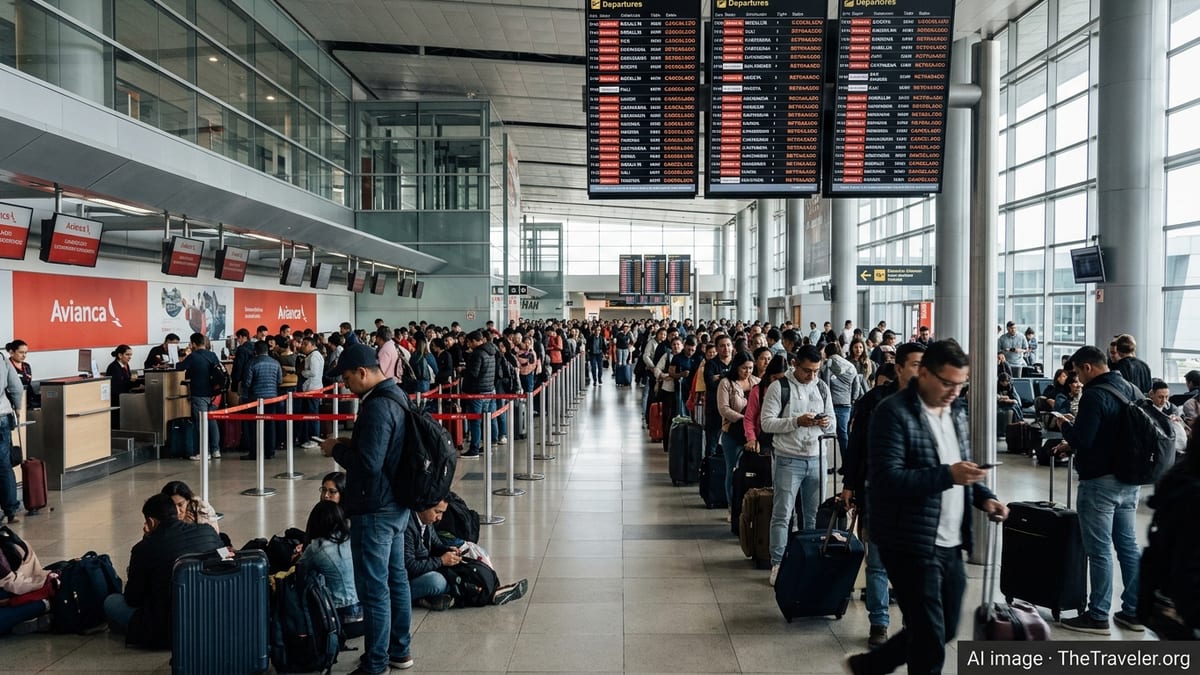
Scores of passengers were left facing long waits and missed connections at Bogotá’s El Dorado International Airport on July 12 as a wave of disruption delayed 33 flights and canceled four more, snarling operations for Avianca, LATAM Airlines, Copa Airlines, American Airlines and other carriers on busy domestic and international routes.
Get the latest news straight to your inbox!
Major Hub Experiences Wide Ripple of Disruptions
El Dorado International Airport, Colombia’s primary air hub and one of Latin America’s busiest gateways, saw operations constrained as delays and cancellations accumulated across the afternoon and evening. Publicly available flight-tracking data and airport information boards pointed to a mix of affected services, including departures and arrivals on trunk routes linking Bogotá with Medellín, Cartagena and Cali, as well as international connections to the United States and elsewhere in the region.
The disruption involved at least 33 delayed flights and four outright cancellations, affecting multiple airlines that use El Dorado as either a hub or key regional gateway. The pattern of delays created a bottleneck in both Terminal 1 and connecting areas, complicating travel for passengers with onward flights and placing additional pressure on ground handling and customer service desks.
While the core of the problem remained localized in Bogotá, the knock-on effects extended along the network, with delayed inbound aircraft from other Colombian cities and regional capitals in turn departing late back to El Dorado or beyond. Connections to and from popular coastal destinations and major secondary cities were among those impacted, increasing crowding at boarding gates and baggage claim areas.
As evening approached, travelers reported extended waits in security lines and at airline service counters, with some passengers attempting to rebook onto later departures or alternative routings through other hubs in the region.
Flag Carriers Among the Most Affected
Avianca, which maintains its main operational hub at El Dorado, faced some of the most visible disruptions. Real time flight-status data showed cancellations on certain domestic services to Medellín, alongside late departures to other major Colombian cities. Delayed Avianca arrivals from regional destinations also affected the carrier’s tight bank of evening departures, complicating onward connections for both domestic and international travelers.
LATAM Airlines, the country’s second largest carrier, experienced delays on routes linking Bogotá with key markets such as Cali and other Colombian cities. Aircraft scheduled to operate short-haul sectors in quick succession were forced into rolling delays, as late arrivals translated into later-than-planned departures, compressing turnaround windows and limiting slack in the schedule.
Copa Airlines and American Airlines also saw their Bogotá operations disrupted as congestion built at the airport. International flights arriving from and departing to major hubs, including gateways in the United States and Central America, were pushed back, leaving passengers transiting through El Dorado with reduced time to clear immigration and reach their connecting gates. In some instances, missed connections required passengers to be transferred to later flights or to overnight in Bogotá.
Other regional and low cost carriers that share infrastructure at Terminal 1 were indirectly affected as slot constraints, gate changes and ground-handling delays rippled through the day’s schedule.
Popular Domestic Routes to Medellín, Cartagena and Cali Hit Hard
The impact was particularly acute on some of Colombia’s busiest domestic corridors. Flights between Bogotá and Medellín’s José María Córdova International Airport, a heavily trafficked business and leisure route, experienced a combination of delays and at least one cancellation, leaving passengers to wait for later departures or seek seats on competing carriers.
Services to Cartagena and Cali, two of the country’s main tourism and commercial centers, were also disrupted. Delayed afternoon departures to the Caribbean coast forced some travelers to arrive late into hotel-heavy areas, while evening flights to Cali were subject to schedule changes that complicated same day returns and business itineraries. In addition, delays on return legs to Bogotá meant that aircraft and crews were not in position for subsequent flights, intensifying the strain on schedules.
Smaller domestic markets connected via Bogotá saw indirect consequences, as aircraft and crews assigned to secondary routes were held in Bogotá waiting for connecting flows of passengers or inbound aircraft from the main trunk routes. For travelers in these cities, this translated into later departures and arrival times that pushed into the night.
With many domestic travelers relying on Bogotá as a transit point rather than a final destination, the disruption underscored the vulnerability of Colombia’s point to point network when its primary hub experiences operational stress.
Passenger Experience Marked by Long Waits and Uncertainty
For travelers inside El Dorado, the operational issues translated into long queues at check in counters, security checkpoints and customer service desks. Publicly available accounts from passengers described crowded departure halls, repeated gate changes and difficulty obtaining clear information about revised departure times, especially for those with tight international connections.
Passengers on multi segment itineraries were particularly exposed to the disruption. Missed onward flights to destinations such as the United States and Southern Cone countries required rebooking onto later services or, in some cases, rerouting through alternate hubs. Travelers arriving from coastal or regional cities who had planned same day international departures found themselves negotiating new arrangements in an already congested terminal.
The bunching of delayed flights created challenges not only for passengers but also for airport services. Food and beverage outlets, seating areas and airline lounges reported heavier than usual occupancy as travelers remained in the terminal for several hours longer than planned. For some, contingency planning included seeking out nearby hotels when it became clear that same night travel would no longer be possible.
At baggage claim, delays in the delivery of checked luggage added to frustration for those whose flights had already arrived late. Passengers arriving into Bogotá after cancellations on earlier departures sometimes faced additional waits as their bags were transferred from one flight to another.
Operational Context and Next Steps for Travelers
El Dorado’s status as a major regional hub means that even a concentrated period of delay can have wider implications for airline networks in Colombia and beyond. The airport handles heavy daily traffic for Avianca, LATAM Airlines, Copa Airlines, American Airlines and other international carriers, and its schedule relies on finely timed arrival and departure banks to facilitate connections. When those banks unravel, recovery may extend into subsequent days as airlines reposition aircraft and crews.
Published carrier policies show that airlines operating out of El Dorado typically provide rebooking on the next available flight in cases of significant delay or cancellation, subject to seat availability and the cause of the disruption. Travelers affected by the latest wave of delays are being advised through publicly available guidance to monitor flight status tools closely, keep boarding passes and receipts for potential claims, and verify whether they are entitled to meal vouchers, hotel stays or reimbursement for unused segments.
Travel planners and frequent flyers pointed out that El Dorado’s congestion record and the complexity of Colombia’s domestic network make generous connection times particularly important, especially when linking a domestic flight to an international long haul departure. Allowing additional buffer in itineraries, they noted in public forums and travel advisories, can reduce the risk of misconnecting when weather, air traffic control restrictions or operational challenges disrupt tightly banked schedules.
As airlines work to stabilize their operations in Bogotá following the 33 delays and four cancellations, passengers booked on upcoming flights through El Dorado are being encouraged by publicly available travel guidance to reconfirm their itineraries, anticipate longer processing times at the airport and, where possible, check in online in advance to reduce time spent in queues.