


More news on this day
Air travel across Asia and the Middle East has been hit by another wave of disruption, with operational data indicating at least 212 flight cancellations and 3,887 delays affecting major hubs from Guangzhou and New Delhi to Tokyo, Amman and Dubai, and impacting carriers such as China Eastern, IndiGo, AirAsia and Japan Air Commuter.
Get the latest news straight to your inbox!
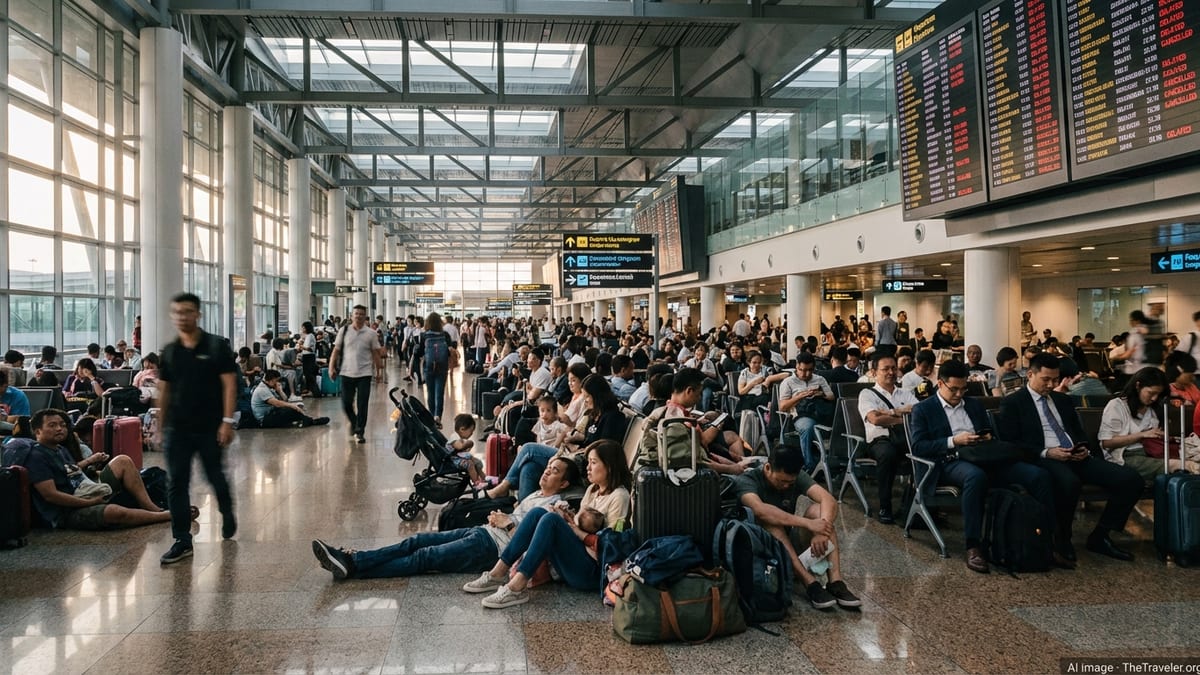
Regional Hubs Buckle Under Fresh Operational Strain
The latest disruption has rippled across a broad swathe of the region’s aviation network, concentrating on large connecting hubs that handle heavy transfer traffic. Guangzhou Baiyun, New Delhi’s Indira Gandhi International, Tokyo’s Haneda and Narita, Dubai International and Amman’s Queen Alia are among the airports showing elevated levels of late running and cancellations compared with typical seasonal patterns.
Publicly available tracking dashboards and aviation analytics suggest that the combined total of 212 cancellations and 3,887 delays reflects a single day of heightened strain rather than a long term schedule change. However, because many of the affected airports function as key connecting points between Asia, the Middle East, Europe and Oceania, the impact has extended far beyond the immediate region as missed connections cascade through airline networks.
Domestic and regional routes have borne much of the initial impact, particularly short haul flights linking Chinese, Indian and Southeast Asian cities with Tokyo, Dubai and other international gateways. These services typically operate on tight turnaround times, which leaves little margin when inbound aircraft arrive late or airspace restrictions force longer routings.
China, India, Jordan and Cambodia Among Most Affected States
Country level data compiled from flight tracking platforms indicates that China, India, Jordan and Cambodia are among the states recording the heaviest operational disruption in this latest wave. In China, Guangzhou has seen a concentration of late departures and arrivals, with knock on effects reported at other large hubs that connect into the Pearl River Delta region.
In India, New Delhi has again emerged as one of the most pressured airports, reflecting its role as both a domestic hub and an international gateway for routes to the Gulf, East Asia and Europe. Elevated delay figures there have coincided with additional congestion at other major Indian airports whose schedules are closely interlinked with the capital.
Further west, Amman has registered a spike in delays and selected cancellations as regional services connecting the Levant with the Gulf and South Asia run behind schedule. In Southeast Asia, Cambodia’s principal international gateways have reported pockets of disruption on services feeding into larger hubs in Thailand, China and the wider region, compounding the sense of a network wide squeeze.
China Eastern, IndiGo, AirAsia and Japan Air Commuter Under Pressure
Operational data and industry coverage show that a diverse group of airlines have been swept up in the current disruption, led by several high frequency regional carriers. China Eastern, which operates extensive domestic and international services through Chinese hubs including Guangzhou, has recorded a notable number of delays and selected cancellations on intra Asian routes.
India’s IndiGo, one of the region’s largest low cost operators, has also experienced schedule pressure on services linking Delhi and other Indian cities with Gulf and Southeast Asian destinations. Publicly available figures suggest that even modest increases in turnaround times can quickly translate into rolling delays across such a dense, point to point network.
Malaysia based AirAsia and its affiliates have likewise faced knock on effects where their flights interconnect with Chinese, Indian and Middle Eastern hubs. In Japan, regional operators including Japan Air Commuter have seen disruptions on domestic and short haul international sectors feeding major airports at Tokyo, where congestion and altered routings can rapidly reverberate through tightly timed schedules.
Despite the breadth of affected carriers, available information indicates that the disruptions are operational rather than structural. Airlines continue to adjust timetables, swap aircraft and reroute services in an effort to stabilise networks while keeping cancellations below the levels seen during previous major shock events.
Weather, Airspace Management and Congested Corridors Drive Delays
Analysis of recent weather bulletins and air navigation updates suggests that a combination of seasonal storms, temporary airspace constraints and already crowded traffic corridors has contributed to the latest spike in disruption. Periods of heavy rain, low cloud and reduced visibility around key hubs in China and Japan have required tighter spacing between aircraft, effectively reducing capacity and slowing departures and arrivals.
At the same time, airspace management measures along several high traffic routes between Asia, the Middle East and Europe have led to reroutings and extended flight times. Even modest detours can create scheduling challenges when airlines are already operating near the limits of aircraft and crew availability.
Crowded ground infrastructure at large hubs such as Dubai and Delhi has added a further layer of complexity. When multiple late running flights arrive simultaneously, bottlenecks can emerge around parking stands, ground handling resources and immigration facilities, making it harder for airlines to turn aircraft around quickly enough to keep later departures on time.
What Passengers Can Expect in the Coming Days
Travel industry reporting suggests that airlines and airports are working to absorb the immediate shock by selectively trimming frequencies, consolidating lightly booked services and adjusting aircraft allocations. While these steps can help restore punctuality, they may also mean fuller flights and fewer same day rebooking options for passengers whose services are cancelled.
Given the scale of the latest figures, passengers across the region are likely to see residual delays for at least the short term as carriers reposition aircraft and crew. This is especially true for travellers connecting through Guangzhou, New Delhi, Tokyo, Amman and Dubai, where missed onward flights can require complex re itineraries across multiple airlines.
Publicly available guidance from aviation agencies and consumer organisations continues to emphasise the importance of monitoring flight status closely in the 24 hours before departure and on the way to the airport. Travellers are encouraged to use official airline apps, airport information displays and recognised tracking services, and to allow additional time for security, immigration and potential schedule changes.
With the northern summer travel peak approaching and several key markets still rebuilding capacity, industry analysts note that Asia’s air travel system remains vulnerable to fresh bouts of disruption when weather, airspace constraints and high demand coincide, as they have on the day that produced the latest tally of 212 cancellations and 3,887 delayed flights.