


More news on this day
Travelers passing through Phoenix Sky Harbor International Airport faced fresh uncertainty as SkyWest-operated regional flights were canceled or significantly delayed, disrupting key connections to Durango, Philadelphia, Chicago, San Jose, Burbank and other destinations across the United States.
Get the latest news straight to your inbox!
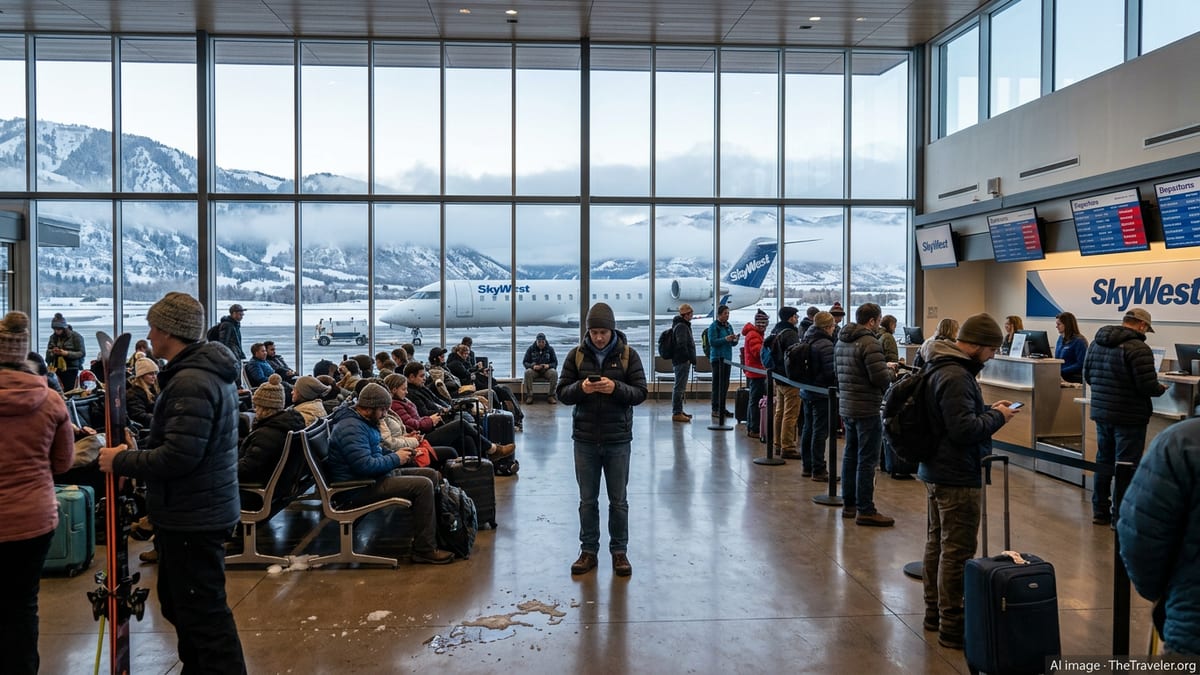
Cluster of Cancellations Hits Regional Network
Publicly available flight-tracking data and airport information indicate that SkyWest, which operates regional services for several major U.S. carriers, canceled at least four flights linked to Phoenix Sky Harbor while also recording a series of delays. The disruptions affected both departures and arrivals, rippling across the regional network that funnels passengers between large hubs and smaller communities.
Among the routes most directly affected were services touching Durango in southwestern Colorado as well as flights connecting Phoenix with larger East Coast and Midwest markets such as Philadelphia and Chicago. Additional knock-on delays appeared on westbound services involving San Jose in California’s Bay Area and Burbank in the Los Angeles region, underscoring how regional aircraft often feed multiple hubs in a single operating day.
Reports from flight-status boards and aviation data platforms show that the cancellations and late operations were concentrated across a narrow time window, creating bottlenecks at key connection banks. For many passengers, the apparent cluster of irregular operations meant missed onward flights and extended time in terminals as airlines worked to rebook them through alternative hubs or on later departures.
While the specific causes for each canceled or delayed service were not immediately clear from public information, operational challenges on regional fleets can range from crew availability and maintenance checks to upstream weather or airspace restrictions at other airports in the network.
Durango Link Underscores Reliance on Regional Operations
The impact on Durango-bound travelers highlights how dependent many smaller markets are on SkyWest and similar regional operators. Durango’s scheduled commercial service is primarily provided by aircraft that connect to larger hubs, and disruptions in Phoenix can quickly affect travelers hoping to reach the Four Corners region.
Recent aviation discussions and publicly accessible tracking records have drawn attention to the sensitivity of routes into mountainous airports like Durango, where weather and performance margins can be more complex. When an originating or connecting flight from a hub such as Phoenix is canceled or heavily delayed, door-to-door travel times for visitors heading to ski resorts, national parks and outdoor destinations in the region can lengthen dramatically.
For leisure travelers, this can mean lost vacation time or truncated itineraries. For locals, interruptions on these routes can complicate access to medical appointments, business trips or family events that rely on dependable air links to major cities.
The latest cancellations at Phoenix therefore carried consequences beyond the airport itself, reinforcing the role that regional airlines play in tying smaller communities into the broader U.S. aviation system.
Pressure on Long-Haul Connections to Philadelphia and Chicago
Travelers heading to or from major population centers such as Philadelphia and Chicago were also caught in the disruption when SkyWest-handled segments failed to operate as planned. Although the primary trunk routes between Phoenix and these cities are typically flown by mainline aircraft from large carriers, many passengers reach those long-haul flights by first boarding short regional legs operated by SkyWest.
When a regional feeder is canceled or departs significantly late, passengers can miss their onward transcontinental connection, particularly on tightly timed itineraries. That leaves travelers dependent on remaining seat availability later in the day, which can be limited on popular routes into major hubs.
According to published coverage and schedule data, Phoenix continues to handle millions of passengers annually, serving as a critical West–East transfer point for traffic moving between the Southwest and the Midwest or East Coast. Any fragmentation in that flow, even over the span of a few hours, can give rise to longer queues at rebooking desks and customer-service counters.
The recent SkyWest disruptions therefore added to the strain on a hub that already sees heavy summer traffic, with travelers including holidaymakers, visiting friends and relatives, and business passengers all vying for scarce rebooking options.
West Coast Travelers to San Jose and Burbank Face Knock-On Delays
On the West Coast, services linked to San Jose and Burbank felt the secondary effects of the irregular operations from Phoenix. Publicly available timetables show that Phoenix Sky Harbor functions as a key connection point for travelers heading toward California’s tech corridors and entertainment centers, and regional carriers help provide the necessary frequencies to support that demand.
When a SkyWest-operated arrival into Phoenix runs late, or an outbound leg is canceled, the disruption can cascade into subsequent flights. Aircraft and crews scheduled to continue to secondary West Coast airports may find themselves out of position, prompting rolling delays through the afternoon and evening.
For passengers bound for San Jose, a missed connection at Phoenix can translate into an unplanned overnight stay or a reroute through other large hubs such as Denver, Los Angeles or Dallas, depending on available capacity. Burbank travelers, many of whom choose the smaller airport as an alternative to the busier Los Angeles International, may likewise find that options are limited if a key regional link fails to operate on schedule.
These patterns underscore how regional disruptions at a single hub can recalibrate travel times along the entire West Coast, often turning what was planned as a same-day journey into a multi-day ordeal.
Managing the Passenger Experience Amid Repeated Disruptions
For those caught in the latest wave of cancellations and delays, the immediate priority has been securing alternative travel. Standard airline policies usually provide for rebooking on the next available flight, but during busy travel periods those options can be constrained, and some travelers may choose refunds or credit if same-day alternatives are not viable.
Reports indicate that passengers at Phoenix faced extended waits in customer-service lines as staff worked through rebooking requests, especially for complex itineraries involving multiple connections or international segments. Travelers with checked baggage on canceled flights often experienced additional uncertainty while their bags were located and retagged.
Publicly accessible guidance from airport and airline channels continues to recommend that travelers monitor their flight status frequently on the day of departure, arrive early at the airport during periods of operational stress and consider building in longer connection times, particularly when itineraries rely on regional feeder flights.
While SkyWest’s latest cancellations at Phoenix represent a small fraction of the airport’s overall operations, the breadth of affected destinations from Durango to Philadelphia, Chicago, San Jose and Burbank illustrates how sensitive modern air travel remains to localized disruptions on regional networks.